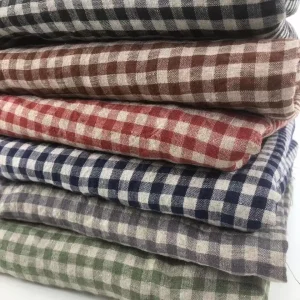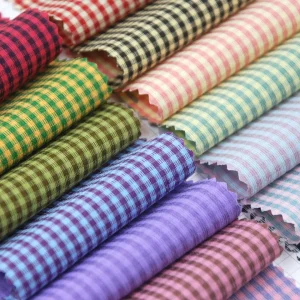
Tela de cuadros
- Hecho de poliéster, nailon y algodón reciclados.
- Plazo de entrega más corto
- Excelentes precios
Tela de cuadros a medida a granel a precio mayorista de los fabricantes
Custom-Made Gingham Fabric in Bulk at Wholesale Prices
Source gingham fabric for apparel, accessories, home textiles and private-label collections through FabricsTrades. Gingham is a light-to-medium-weight checked fabric traditionally woven from dyed cotton or cotton-blend yarns. Available options may also include recycled polyester and nylon-based constructions, subject to the current product listing and your required specification.
Located in the heart of Wujiang District, Suzhou, FabricsTrades operates within one of the world’s most concentrated textile manufacturing hubs. We are not limited to the production capacity of a single mill. Our proximity to thousands of specialized weaving, dyeing, printing and finishing factories allows us to act as a strategic sourcing partner: if a suitable fabric exists, we can find it; if it does not, we can help develop it.
Venta al por mayor Telas de la guinga
Gingham—also known as Vichy check—is recognized by its balanced checked pattern, commonly combining white with one additional color. Traditional gingham is produced by weaving pre-dyed yarns in a plain-weave construction, creating checks that appear on both sides of the fabric.
Its clean geometry, approachable appearance and broad color potential make gingham suitable for seasonal fashion, childrenswear, uniforms, hospitality textiles, crafts and interior decoration. Buyers can source different check scales, color combinations and fiber compositions according to the options shown in the current product listings.
What Is Gingham Fabric?
Gingham is a cotton or cotton-blend fabric made with a plain weave and a regular checked pattern. Horizontal and vertical yarns alternate consistently, producing equal-sized color blocks where the yarn colors intersect.
The classic format uses two colors—typically white paired with red, blue, green, pink or black. Contemporary interpretations may use pastel shades, oversized checks or printed simulations of the traditional yarn-dyed design.
The precise hand feel, drape, weight, breathability and care requirements depend on the fiber composition and finishing process. Buyers should therefore approve a sample based on the intended garment or end use rather than relying on the appearance of the check alone.
Reglamento sobre tejidos 2024-2026 & Actualización de cumplimiento
Gingham is often used in consumer apparel, childrenswear and household textiles, making fiber disclosure, chemical management and supply-chain traceability increasingly important. Under the EU Ecodesign for Sustainable Products Regulation, textiles and apparel are among the priority product groups being prepared for product-specific requirements. Buyers serving the EU should begin collecting reliable information on composition, recycled content, manufacturing stages and conformity documentation so that future Digital Product Passport data can be supported. See the ESPR and Digital Product Passport update.
Compliance must be evaluated against the finished specification and destination market rather than assumed from the word “gingham.” Printed, coated, stain-resistant or water-repellent versions may involve additional chemical risks that do not apply to untreated fabric. Recycled polyester or nylon options may also require order-specific chain-of-custody evidence. Buyers should define the applicable restricted-substance list, test methods and documentation before production and consult the Guía global de cumplimiento textil 2024-2026 when planning sourcing requirements.
No fabric should be represented as compliant solely because of its fiber name, construction or supplier declaration. Compliance depends on the approved material, colorants, finishes, trims, production route, test scope and individual shipment.
Why Choose FabricsTrades for Gingham Fabric?
Located in Suzhou’s Textile Manufacturing Hub
FabricsTrades is located in Wujiang District, Suzhou, at the center of one of the world’s most concentrated textile manufacturing clusters. Our proximity to specialized weaving, dyeing, printing and finishing factories helps us respond efficiently to different gingham sourcing requirements.Más que un proveedor de una sola fábrica
We combine manufacturing knowledge with strategic sourcing capabilities. Instead of limiting buyers to the equipment or constructions available from one mill, we can evaluate suitable resources across the local supply chain. If the fabric already exists, we help locate it. If it requires development, we help identify a practical production route.Custom Gingham Development
Depending on order requirements and production feasibility, we can evaluate custom:- Fiber compositions
- Check sizes and pattern repeats
- Yarn-dyed or printed constructions
- Colors and color matching
- Fabric weights and widths
- Finishes for specific end uses
Coordinación eficiente de muestreo y producción
Our location allows us to coordinate closely with specialized production partners during fabric selection, sampling, color development and bulk manufacturing. Lead time depends on the approved specification, order quantity and required testing.Specification-Based Quality Management
Production requirements can be confirmed against the approved sample and order specification, including composition, weight, usable width, color, check repeat and applicable performance criteria.Compliance-Aware Export Support
For international orders, we can coordinate requested composition information, testing requirements and supply-chain documentation according to the selected fabric and destination market. Compliance is assessed against the final specification and individual shipment rather than assumed from the fabric name alone.

Gingham Fabric Applications and Use Cases
Moda y Confección
Gingham is widely used for:- Summer dresses, tiered dresses and fit-and-flare silhouettes
- Button-down shirts, camp-collar shirts and lightweight overshirts
- Blouses with ruffles, smocking, pintucks or gathered sleeves
- A-line skirts, wrap skirts and coordinated separates
- Childrenswear, school-inspired collections and matching family outfits
- Aprons, chef garments and service uniforms
- Pajamas, robes and lightweight loungewear
- Contrast pocketing, collars, cuffs, facings and bias-cut trims
- Resortwear, picnic-inspired capsules and retro fashion collections
- Hair accessories, scarves, detachable collars and fabric-covered buttons
Home, Hospitality and Event Textiles
Suitable applications include:- Café curtains, kitchen curtains and decorative valances
- Tablecloths, runners, placemats and napkins
- Cushion covers, chair pads and lightweight slipcovers
- Basket liners, bread-basket cloths and storage accessories
- Picnic blankets with a separate waterproof backing
- Restaurant, bakery, farm-shop and market-stall décor
- Seasonal window displays and event backdrops
- Quilts, patchwork panels and coordinated bedding accents
Crafts, Packaging and Accessories
Gingham can also be used for tote bags, drawstring pouches, gift wrapping, fabric bunting, doll clothing, scrapbook details, appliqué, patchwork and decorative packaging. Lightweight constructions are convenient for gathered and folded projects, while more substantial versions may be preferred for bags or structured accessories.Guinga versus cuadros
Gingham and plaid are both checked designs, but their pattern structures are different. Gingham normally uses two colors and evenly sized horizontal and vertical checks. Plaid can combine several colors, line widths and repeat sizes, often creating a more complex or asymmetrical pattern. Traditional gingham is usually yarn-dyed and woven, so the pattern is visible on both sides. Printed gingham reproduces the checked appearance on the surface of a base fabric. This distinction can affect color depth, reverse-side appearance, production cost and suitability for reversible or unlined products.Physical Properties of Gingham
Gingham features several established characteristics:- It is generally a light-to-medium-weight fabric.
- It is breathable.
- It is nonstatic because it can readily absorb moisture.
- It offers strength and durability.
- It creases easily.
Types of Gingham Fabric
Classic Gingham
Classic gingham uses small, even checks in white and one additional color. It is commonly selected for shirts, dresses, blouses, childrenswear, aprons and decorative accessories.Large-Check Gingham
Large-check gingham creates a bolder visual effect and works well for statement apparel, table linens, curtains, cushions, retail displays and event decoration.Pastel Gingham
Pastel gingham uses soft, muted colors. Typical applications include baby clothing, nursery accessories, spring and summer collections, sleepwear and delicate home textiles.Printed Gingham
Printed gingham has the checked design applied to the fabric surface rather than formed by intersecting dyed yarns. Printing can support varied check scales, colors and base-fabric constructions.Embroidered Gingham
Embroidery may be added to a gingham ground for decorative apparel, napkins, tablecloths, craft products and occasion-focused collections.Yarn-Dyed Gingham
In yarn-dyed gingham, the yarns are colored before weaving. This method produces a check visible on both sides and can provide greater visual depth than a surface-printed imitation.Selecting the Right Gingham Specification
Before requesting a quotation, define the intended end use and provide as much of the following information as possible:- Composición de fibra requerida
- Fabric weight or preferred light-, medium- or heavier-weight hand
- Yarn-dyed or printed construction
- Check size and repeat
- Color reference, Pantone code or physical swatch
- Ancho requerido
- Target order quantity
- Mercado de destino
- Performance, testing or certification requirements
- Requisitos de acabado
- Lab-dip, strike-off, sample-meterage and bulk-delivery schedule
Strategic Gingham Sourcing from Suzhou
FabricsTrades combines manufacturing knowledge with access to Wujiang’s specialized textile supply chain. This enables us to coordinate suitable weaving, printing, dyeing and finishing resources according to the requested construction. Our sourcing process can include:- Reviewing the application, composition, check scale and target price.
- Identifying suitable existing fabrics or development routes.
- Coordinating available swatches, lab dips or strike-offs.
- Confirming the approved specification before bulk production.
- Managing production and quality expectations against the approved sample.
- Preparing order-specific documentation requested before shipment.