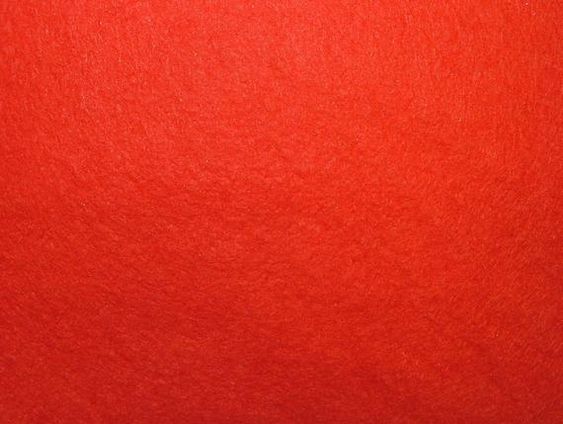
Felt is a textile sheet made by entangling, matting, and consolidating fibers. Traditional felt uses wool or animal hair, whose surface scales interlock under moisture, heat, pressure, and movement. Modern commercial felt may also use polyester, acrylic, viscose/rayon, or blends, usually consolidated by needle punching, thermal bonding, chemical bonding, or a combination of methods.
Unlike conventional woven or knitted fabric, true felt has no regular warp-and-weft or loop structure. That gives it clean-cut edges, useful thickness, cushioning, insulation, and shape retention. It also means that properties such as stretch, breathability, absorbency, abrasion resistance, and flame behavior cannot be assigned one universal rating: they depend on fiber composition, density, thickness, manufacturing route, finish, and end-use testing.
| Felt at a glance | Respuesta practica |
|---|---|
| tipo de material | Usually a nonwoven textile sheet; some products sold as “woven felt” are woven or knitted cloth that has been fulled |
| Fibras comunes | Wool, animal hair, polyester, acrylic, viscose/rayon, and blends |
| Main manufacturing routes | Wet felting/fulling, needle punching, thermal or chemical bonding, and fulling of a preformed cloth |
| Typical behavior | Low fraying, good cushioning and insulation, easy cutting and forming; performance varies widely by construction |
| Usos comunes | Hats, boot and garment components, bags, crafts, acoustic panels, padding, filtration, gaskets, polishing, and industrial components |
| Key buying rule | Specify composition, construction, mass, thickness, density, width, finish, tolerances, and required test methods—not “felt” alone |

What Is Felt Fabric?
Felt describes a structure and manufacturing process, not a single fiber. A wool felt and a polyester needle-punched felt can look similar but behave very differently.
In conventional wool felting, moisture, heat, pressure, and mechanical action encourage the scaly surfaces of wool fibers to migrate and lock together. The result is a coherent sheet without yarn formation or weaving. In synthetic felt, smooth man-made fibers do not wet-felt in the same way, so manufacturers commonly use barbed needles, heat-activated binder fibers, adhesives, or combinations of these technologies.
The term also needs care in sourcing conversations:
- Pressed or wet felt normally refers to fibers consolidated into a sheet through felting and fulling.
- Needle-punched felt is a nonwoven web mechanically entangled by repeated needle penetration.
- Woven felt is a trade term for woven or knitted wool cloth that has been heavily fulled so its yarn structure becomes obscured. It is felt-like, but it does not begin as a true nonwoven.
- Craft felt is a retail category rather than a precise composition; it may be acrylic, polyester, wool, rayon/viscose, or a blend.
A Short History of Felt
Felt is one of the oldest textile-making traditions, but its exact place and date of origin are uncertain. Archaeological finds and continuing craft traditions connect felt strongly with Türkiye, Iran, the Altai region, Mongolia, and other parts of Central Eurasia. Felt coverings remain integral to traditional yurts, whose collapsible wooden frames are covered with felt and braided ropes, as documented by UNESCO’s description of Kyrgyz, Kazakh, and Karakalpak yurt-making.
[Image placeholder: Felt star ornament. Alt text: Decorative star ornament cut and stitched from felt.]
Felt also shaped international trade. From the early 17th to the mid-19th century, European demand for beaver-felt hats helped sustain the North American fur trade. The Government of Canada’s history of the beaver trade notes that this demand contributed to the beaver’s near disappearance before protective measures supported recovery. Modern hatmakers may use wool, rabbit, hare, beaver, or blends, but animal origin, welfare expectations, and labeling must be confirmed for each market.
How Is Felt Fabric Made?
The correct process description depends on the fiber and felt type. A buyer should therefore ask for the actual production route instead of assuming that every felt is made with water, heat, and pressure.
Wool Wet-Felting and Pressed-Felt Production
- Fiber selection and opening: Wool or other animal fibers are selected by grade, opened, cleaned, and blended as required.
- Carding and web formation: Carding separates and distributes the fibers into a loose web. Cross-lapping may build multiple layers to achieve the target width and mass.
- Initial felting: Controlled moisture, heat, pressure, vibration, or rolling starts the migration and entanglement of the fibers.
- Fulling and densification: Continued mechanical action shrinks and compacts the material until it reaches the required thickness, density, and handle.
- Washing and drying: The felt is washed or neutralized as needed for the actual process, then dried under controlled conditions.
- Refinamiento: The mill may shear, press, calender, dye, impregnate, coat, laminate, mold, cut, or otherwise convert the felt.
Scouring, dyeing, carbonizing, and other chemical treatments may appear in particular wool-processing routes, but acid treatment is not a universal final step in felt manufacturing. Buyers should request a process flow and chemical declaration when residues, odor, skin contact, medical use, food-adjacent use, or restricted-substance compliance matters.
Needle-Punched and Bonded Synthetic Felt
- Staple fibers are opened, blended, and carded into a web.
- Cross-lapping builds the required mass and orientation.
- A needle loom repeatedly drives barbed needles through the web, mechanically entangling fibers through the thickness.
- Thermal bonding, resin bonding, or binder fibers may be added when the application requires greater stiffness, dimensional stability, or surface integrity.
- The felt is heat-set, calendered, coated, laminated, slit, die-cut, or molded to the buyer’s specification.
Fiber orientation and needling intensity affect tensile behavior, tear propagation, compressibility, surface fuzz, and dimensional stability. These parameters should be confirmed through samples and agreed test methods.
Fulled Woven or Knitted Felt
A wool-rich woven or knitted cloth can be washed and mechanically agitated so the fibers migrate, the fabric shrinks, and the yarn structure becomes less visible. This route produces a thinner, more drapable felted cloth than many pressed felts. Boiled wool and fulled wool are related categories, but the exact terminology varies by supplier, so buyers should inspect the base construction and final specification.
Main Types of Felt Fabric
| Tipo | How it is made | Fortalezas típicas | Important limitations or checks |
|---|---|---|---|
| Wool felt | Wet-felted/pressed wool fibers, sometimes with other fibers | Warmth, cushioning, moisture buffering, moldability, natural resistance to ignition | Can shrink, absorb water, attract moths, and vary by wool grade; confirm fiber percentage and flame test rather than assuming a rating |
| Fur felt | Felted rabbit, hare, beaver, or other animal hair | Fine surface, durability, and shapeability for hats | Animal-origin disclosure, welfare policy, legality, and market acceptance require review |
| Polyester felt | Usually needle-punched or thermally bonded polyester | Dimensional consistency, broad color range, durability, and suitability for industrial conversion | Fossil-based unless recycled; heat and flame performance depend on construction and finish |
| Acrylic felt | Commonly bonded or needle-punched acrylic fiber, often sold for crafts | Low cost, bright colors, and easy cutting | Not inherently flame resistant; hand, heat response, shedding, and skin-contact suitability vary |
| Viscose/rayon felt | Needle-punched, bonded, or blended regenerated-cellulose fibers | Absorbency, softness, and useful liquid uptake in selected applications | Wet strength, dimensional stability, chemical processing, and wood-pulp sourcing need confirmation; see this guía de tela de viscosa for fiber-level context |
| Pressed felt | Loose fibers consolidated and densified into sheets or shapes | Dense structure, precision conversion, cushioning, polishing, sealing, and engineering uses | “Pressed felt” does not disclose composition or performance grade; specify both |
| Needle-punched felt | Web mechanically entangled with barbed needles | Scalable production, adjustable thickness and density, and wide fiber choice | Surface fuzz, anisotropy, delamination resistance, and binder content can vary |
| Fulled or “woven” felt | Woven/knitted wool-rich cloth heavily fulled | More drape and textile-like strength than many pressed sheets | Not structurally identical to true nonwoven felt; base construction may remain visible |
Felt Fabric Properties: What Buyers Should Expect
Felt’s three-dimensional fiber network can provide useful performance, but generic labels such as “high absorbency” or “medium breathability” are not reliable specifications.
Thermal Insulation
Entrapped air and material thickness can slow heat transfer, which is why felt is used in boot liners, hats, padding, and thermal components. Insulation depends on fiber, density, thickness, moisture, compression, and test conditions.
Acoustic and Vibration Damping
Porous felt can absorb sound and help reduce vibration, particularly when thickness, airflow resistance, mounting method, and air gaps are engineered for the frequency range. An acoustic-panel claim should be supported by a relevant test report for the finished construction, not inferred from the fiber name.
Moisture Behavior
Wool can absorb water vapor within the fiber, while viscose is hydrophilic and many untreated polyester or acrylic fibers are less absorbent. Capillary wicking depends on pore structure and finish. “Absorbent,” “moisture-wicking,” and “water-repellent” describe different behaviors and should not be used interchangeably.
Stretch, Drape, and Shape Retention
Most dense pressed felts have limited stretch and relatively firm drape. Needle-punched products can be more extensible, especially at low density, while fulled knitted fabric may retain more give. Specify recovery and dimensional tolerances if the part must fit, mold, or resist deformation.
Cut Edges and Fraying
Because true felt has no conventional yarn intersections, cut edges usually resist fraying. This supports die cutting, laser cutting, appliqué, gaskets, and craft components. Laser-cut suitability must still be confirmed by composition because synthetic fibers can melt, discolor, emit fumes, or form hard edges.
Abrasion, Pilling, and Surface Fuzz
Performance varies with fiber length, blend, needling intensity, density, surface finish, and end use. A “high pilling” rating should not be assumed for all felt. Buyers should approve the relevant abrasion, pilling, fuzz, or linting method for the final application.
Flame Behavior
Wool is naturally resistant to ignition and often self-extinguishes after the ignition source is removed, but a finished felt’s classification depends on mass, construction, dyes, finishes, adhesives, laminates, and the applicable test method. Acrylic and polyester are not automatically suitable for flame-sensitive uses. No felt should be sold as flame-retardant or compliant without a current report for the specified product.
What Is Felt Used For?
Apparel, Accessories, and Footwear
Common applications include hats, insoles, boot liners, collars, bags, decorative panels, appliqués, shoulder pads, and garment reinforcement. Wool felt is valued for warmth and shapeability; synthetic felt is often selected for cost, consistency, or color range.
Crafts and Educational Products
Felt sheets are easy to cut and usually do not require edge finishing. Composition, small-parts safety, colorfastness, odor, and chemical requirements are especially important for children’s products.
Interiors and Acoustic Products
Felt may be used for wall panels, desk dividers, furniture pads, underlays, notice boards, decorative objects, and floor-protection components. Acoustic, fire, abrasion, and emissions requirements should be tested on the finished panel or assembly.
Industrial and Technical Uses
Industrial felts can serve in filtration, polishing, oil retention, seals, gaskets, vibration isolation, padding, wicking, conveyor components, and protective layers. These applications may require tight control of pore size, permeability, density, compressibility, temperature resistance, extractables, and dimensional tolerance.

Where Is Felt Fabric Produced?

Felt production is geographically distributed. Wool may be grown in one country, scoured and carded in another, converted into felt elsewhere, and finally dyed, laminated, or cut near the customer. Synthetic staple fibers and nonwoven converting capacity are also traded internationally.
Country rankings alone do not tell a buyer whether a supplier can meet a specification. Evaluate:
- experience with the required fiber and manufacturing route;
- control of mass, thickness, density, color, and width;
- finishing, laminating, molding, slitting, and die-cutting capability;
- test access and traceability to the production lot;
- minimum order quantity, color minimums, lead time, and packaging;
- chemical-management and documentation systems for the destination market.
FabricsTrades is based in Wujiang District, Suzhou, within a major Chinese textile and converting cluster. The company operates its own four-way stretch fabric factory and also works as a sourcing, product-development, customization, and supply-chain partner. A felt program should therefore identify during inquiry whether the material will be sourced from a specialist partner mill, converted by another facility, or combined with other fabrics, and which party controls testing and documentation.
How Much Does Felt Cost?
Wool and fur felt generally cost more than commodity synthetic craft felt, but no stable price comparison is possible without a specification. The main cost drivers are:
- fiber type, origin, grade, and blend percentage;
- recycled or certified content;
- mass per square meter, thickness, density, and width;
- color, dye method, and color minimum;
- needling, fulling, heat setting, pressing, or bonding intensity;
- flame-retardant, water-repellent, antimicrobial, adhesive, coating, or laminate treatments;
- tolerance, testing, inspection, conversion, packaging, and documentation;
- order volume, production location, freight, duty, and delivery terms.
Compare quotations only after suppliers acknowledge the same specification and test plan.
Felt Fabric Sourcing and Quality-Control Checklist
Before sampling, send a specification sheet that covers the following points:
- Composición: State each fiber percentage and whether content is virgin, recycled, animal-derived, or bio-based.
- Construcción: Identify wet-felted, pressed, needle-punched, thermally bonded, resin-bonded, fulled woven/knitted, or another route.
- Physical specification: Set nominal mass, thickness, density if relevant, usable width, roll length or sheet size, and tolerances.
- Apariencia: Approve color standard, shade tolerance, surface uniformity, fuzz level, odor, contamination limits, and allowable defects.
- Actuación: Select tests relevant to the application, such as dimensional stability, tensile/tear behavior, abrasion, pilling, compression recovery, air permeability, acoustic performance, absorbency, colorfastness, or flammability.
- Finishes and components: Declare binders, adhesives, backings, coatings, laminates, and functional finishes.
- Chemical and market requirements: Communicate the destination country, product category, skin-contact class, age group, retailer RSL, and any legal testing before quotation.
- Trazabilidad: Agree lot identification, sample retention, change notification, certificate scope, and document validity.
- Conversión: Confirm die-cutting, laser cutting, sewing, molding, edge quality, tolerances, and packaging through a production-representative sample.
- Inspection: Use an agreed defect standard and acceptance plan. This guía de inspección de calidad de la tela explains how to structure incoming and pre-shipment checks.
Consideraciones ambientales
No felt is sustainable merely because it is natural, recycled, or long-lasting. Evaluate the complete product and supply chain.
- Wool felt: Wool is renewable and can biodegrade under suitable conditions, but impacts may include land use, methane emissions, scouring, dyeing, transport, and animal-welfare concerns.
- Fur felt: Fur adds significant animal-welfare, traceability, and market-acceptance issues.
- Polyester and acrylic felt: These fibers are generally fossil-based unless verified recycled feedstock is used. They are not readily biodegradable and may shed fibers during manufacture, use, or disposal.
- Viscose/rayon felt: Regenerated cellulose can be biodegradable under suitable conditions, but forestry, pulp sourcing, chemical recovery, emissions, and wet processing determine the overall profile.
- Blended or bonded felt: Mixed fibers, resins, adhesive backings, and coatings can make recycling more difficult.
For recycled synthetic felt, request transaction and scope documentation appropriate to the claim. The Global Recycled Standard verifies and tracks recycled raw materials through the supply chain and adds processing requirements; it is not proof that every environmental impact is low. Buyers exploring verified recycled inputs can review FabricsTrades’ opciones de abastecimiento de telas recicladas and then confirm whether a suitable felt construction is available.
Certifications and Testing for Felt
Certification eligibility depends on the exact felt and product scope:
- Marca de lana: El Woolmark certification program includes product specifications for pressed-felt apparel fabrics and related wool products. It verifies fiber content and applicable quality requirements through authorized testing. It should not be described as a blanket sustainability, organic, or cruelty-free certification.
- ESTÁNDAR OEKO-TEX 100: OEKO-TEX ESTÁNDAR 100 is a label for textiles tested for harmful substances. Requirements become stricter with more intensive or sensitive skin contact. Confirm that the certificate is current and that its article description covers the supplied felt, color, backing, and finish.
- Global Recycled Standard (GRS): El Estándar Mundial de Reciclado can substantiate recycled material and chain of custody when the certified organization, product scope, and transaction documentation match the order. It does not by itself establish fitness for use or legal compliance in every market.
- ISO standards and management systems: ISO publishes many standards, but there is no meaningful claim called “ISO-certified synthetic felt” without naming the exact standard, certified organization, scope, and certificate. Product testing and management-system certification must not be confused.
Certification does not replace destination-market legal review or buyer-specific performance testing.
Actualización regulatoria y de mercado actual
As of August 11, 2026, felt buyers should pay particular attention to fiber labeling, chemical finishes, and traceable product data.
EU Fiber-Composition Labeling
Reglamento (UE) nº 1007/2011 remains the core EU rule for textile fiber names and related fiber-composition labeling. It applies to textile products placed on the EU market and treats products containing at least 80% by weight of textile fibers in the same way as textile products for scope purposes. Felt is a structure, not an approved fiber name, so a consumer-facing description may still need the actual fiber composition, such as wool, polyester, acrylic, or viscose, in the required market language and format.
PFHxA Restrictions for Treated Felt
Felt used in rainwear, footwear, bags, furnishings, or other treated products may receive water-, oil-, or stain-repellent finishes. Under Reglamento (UE) 2024/2462 de la Comisión, restrictions on PFHxA, its salts, and PFHxA-related substances begin on 10 de octubre de 2026 for specified consumer apparel, related accessories, and footwear, with concentration thresholds and exemptions defined in the regulation. A later date, 10 de octubre de 2027, applies to certain other consumer textiles within the stated scope.
This is not a universal ban on all PFAS or all felt. It is a substance-specific restriction with defined products, thresholds, dates, and exceptions. Buyers using repellent treatments should map every finish, coating, membrane, adhesive, and homogeneous material; communicate the intended market and sale date; and obtain appropriate supplier declarations or testing. FabricsTrades’ guide to the EU REACH PFHxA restriction and the China fabric supply chain provides related sourcing context, but the official regulation and current legal advice should control the final compliance decision.
ESPR y preparación del pasaporte de producto digital
The EU Ecodesign for Sustainable Products Regulation establishes a framework for product-specific ecodesign and information requirements. Textiles—particularly garments and footwear—are a priority in the 2025–2030 working plan. However, there is no blanket Digital Product Passport requirement for all felt or textile products as of August 11, 2026. The European Commission currently indicates planned adoption of a textile delegated act in Q4 2027, and the final scope, data fields, transition period, and compliance dates may change.
Buyers can prepare without claiming premature compliance by collecting stable data now: fiber composition, supplier and facility identity, country of processing, recycled-content evidence, chemical and finish declarations, batch records, test reports, and change-control history. See FabricsTrades’ overview of ESPR and Digital Product Passport preparation for Chinese fabric supply chains and the European Commission’s current textile-apparel implementation timeline.
Requirements vary by jurisdiction, product category, treatment, production batch, and date of sale. Confirm the current legal and retailer requirements before bulk production.
How to Care for Felt

Care instructions must follow the fiber, finish, structure, and finished-product test results.
- Remove loose dust with gentle brushing or low-suction vacuuming where appropriate.
- Blot spills rather than rubbing, which can distort the surface.
- Avoid uncontrolled hot washing or tumble drying of wool felt because heat, moisture, and agitation can cause further shrinkage.
- Test spot-cleaning chemicals on an inconspicuous area.
- Keep dense felt dry during storage and allow air circulation to reduce odor or mildew risk.
- Follow supplier and finished-product care testing for bonded, laminated, dyed, or printed felt.
Preguntas frecuentes
Is felt woven or knitted?
True felt is normally nonwoven: fibers are consolidated directly into a sheet without first forming yarns and interlacing or looping them. “Woven felt” is usually a fulled woven or knitted fabric whose original structure has been obscured.
Is all felt made from wool?
No. Felt may be made from wool, animal hair, polyester, acrylic, viscose/rayon, or blends. Composition should be stated as percentages because appearance alone is not reliable.
Does felt stretch?
Most dense pressed felt has limited stretch, but low-density needle-punched felt and fulled knitted felt can have more give. Test elongation, recovery, and dimensional stability when fit matters.
Is wool felt waterproof?
No. Untreated wool felt may resist initial wetting and can buffer moisture, but it is not automatically waterproof. Waterproof or water-repellent performance requires a defined construction, finish, and test result.
Is felt flame-retardant?
Not automatically. Wool is naturally resistant to ignition, while synthetic felts behave differently. Dyes, binders, coatings, laminates, thickness, and test method all affect results. Use a current report for the exact finished product.
Which felt is best for crafts?
Acrylic or polyester craft felt is widely used for low-cost, colorful projects. Wool felt generally offers a more natural handle, better molding, and different flame behavior but costs more. For children’s products, verify composition, chemical requirements, colorfastness, and small-parts safety.
Can felt be recycled?
Some clean, single-fiber felts may be mechanically recycled where a suitable collection and processing route exists. Blends, resin binders, adhesive backings, coatings, contamination, and small cut pieces can reduce recyclability. Confirm a real end-of-life route rather than relying on a generic “recyclable” claim.
What information should I send when requesting a felt quotation?
Send composition, manufacturing route, mass, thickness, density if relevant, width or sheet size, color, finish, tolerances, end use, destination market, test requirements, order quantity, conversion needs, packaging, and required certifications or documents. A physical reference sample is helpful, but it should be converted into measurable specifications.
Conclusión
Felt is a versatile textile structure rather than one uniform fabric. Wool wet-felt, polyester needle-punched felt, acrylic craft felt, viscose blends, pressed engineering felt, and fulled woven cloth require different manufacturing controls and should not share one generic performance description.
For reliable sourcing, define the fiber content, consolidation method, physical tolerances, finish chemistry, end-use tests, and documentation before comparing prices. FabricsTrades can support international buyers with supplier sourcing, product development, customization, sampling, testing coordination, inspection planning, and supply-chain documentation. Final performance and compliance should always be confirmed against the approved production specification and destination-market requirements.