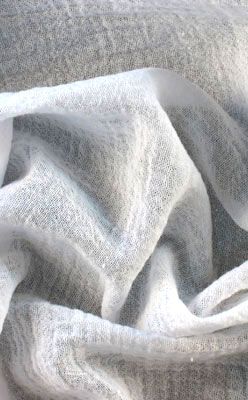
Cotton fabric is a woven or knitted textile made primarily from the natural cellulose fibers that grow around the seeds of cotton plants. It is widely used because it can be soft, breathable, absorbent, washable, and adaptable to constructions ranging from lightweight voile and gauze to denim, canvas, and heavy twill.
Those qualities vary considerably between fabrics. Cotton species, staple length, yarn construction, fabric structure, weight, dyeing, finishing, and quality control all influence how a particular material feels and performs.
For buyers, “cotton fabric” is therefore a starting point—not a complete specification.
| Attribute | General description |
|---|---|
| Fiber composition | Natural cellulose fiber obtained from cotton seeds |
| Common forms | Woven, knitted, nonwoven, or blended fabric |
| Breathability | Generally good, but affected by density, structure, and finish |
| Moisture behavior | Absorbent; drying speed depends on construction and environment |
| Heat retention | Low to moderate, depending on weight and structure |
| Natural stretch | Limited; knitted constructions offer more mechanical stretch |
| Wrinkling | Usually higher than polyester unless treated or blended |
| Pilling tendency | Depends on fiber length, yarn quality, surface structure, and use |
| Common applications | Shirts, dresses, underwear, denim, towels, bedding, bags, medical products, and industrial textiles |
| Typical care | Must be confirmed for the finished fabric or garment |

What Is Cotton Fabric?
Cotton fibers form as a protective layer around seeds inside the boll of the cotton plant. After the bolls mature and open, the fibers are harvested, separated from the seeds, cleaned, and processed into yarn.
The yarn can then be woven or knitted into fabric. It may also undergo preparation, coloration, printing, mechanical finishing, or chemical finishing to obtain the required appearance and performance.
Cotton fiber is composed mainly of cellulose. Its internal structure allows it to absorb moisture, which contributes to comfort and dye affinity. However, absorbency should not be confused with moisture-wicking performance. Wicking describes how effectively a fabric moves liquid across or through its structure, while absorbency describes how much moisture the fiber or fabric can take in.
Cotton has been cultivated independently in several regions for thousands of years, including South Asia and the Americas. It later became central to international textile trade and industrial spinning and weaving.

Key Properties of Cotton Fabric
Softness and skin comfort
Cotton is commonly selected for products worn close to the skin. Actual softness depends on staple length, yarn fineness, spinning method, construction, washing, and finishing.
Longer fibers can generally produce smoother yarns with fewer protruding fiber ends. This is one reason long-staple and extra-long-staple cottons are used in premium shirts, bedding, and other high-value products.
Breathability
Many cotton fabrics allow air and water vapor to move through their structure, making them suitable for warm-weather clothing. Breathability is nevertheless a fabric-level property rather than a guaranteed characteristic of the fiber.
A lightweight cotton voile and a densely woven cotton canvas will behave very differently. Coatings, laminations, resins, and other finishes can also reduce air permeability.
Absorbency
Cotton readily absorbs water and perspiration. This supports its use in towels, underwear, bedding, and casual clothing, but absorbed moisture may take time to dry in dense or heavy fabrics.
A sourcing specification should distinguish between:
- Moisture absorption
- Liquid-wicking performance
- Drying time
- Air permeability
- Water resistance
These are separate properties and require different evaluation methods.
Strength and durability
Cotton can provide good practical durability, and its wet strength is generally higher than its dry strength. Service life still depends on yarn quality, fabric density, construction, abrasion, laundering, finishing, and garment design.
Short or immature fibers, excessive mechanical processing, weak yarn, or unsuitable chemical treatment can reduce durability.
Wrinkling and shrinkage
Untreated cotton tends to wrinkle because cellulose chains can form new bonds after the fabric is bent or exposed to moisture. Cotton fabric can also shrink during washing or drying as tensions introduced during spinning, weaving, knitting, and finishing are released.
Sanforization, compacting, resin finishing, and other processes may improve dimensional stability. Buyers should request actual shrinkage results for the proposed fabric instead of assuming that all “pre-shrunk” materials will behave identically.
Stretch and recovery
Cotton fiber itself has limited elastic recovery. A knitted cotton fabric may stretch because of its loop structure, while woven cotton normally provides less give unless it uses a stretch construction or contains elastane.
For close-fitting garments, buyers should assess both extension and recovery. A fabric that stretches but does not recover adequately may grow, sag, or bag during wear.
Dyeability
Cotton has good affinity for several dye classes, especially reactive dyes. Final color performance depends on the dye, pretreatment, process control, shade, finish, and intended end use.
Colorfastness to washing, rubbing, perspiration, light, water, and other exposures should be tested according to the product specification and destination-market requirements.
How Is Cotton Fabric Made?
Image placeholder: Cotton production and fabric manufacturing process
1. Cultivation
Cotton is grown primarily in warm regions. Variety selection, soil conditions, irrigation or rainfall, pest management, harvesting method, and weather all affect yield and fiber quality.
Conventional, organic, regenerative, and other cotton programs use different production rules or claims. Buyers should not treat these terms as interchangeable and should request documentation appropriate to the specific program.
2. Harvesting
Cotton can be picked manually or mechanically. Mechanical harvesting offers high productivity, but the harvesting system and field preparation can affect the amount of leaf matter and other contamination entering the supply chain.
3. Ginning
A cotton gin separates lint fibers from the seeds and removes a proportion of the field debris. The resulting lint is compressed into bales for transportation.
Modern ginning is different from the simplified historical description of merely separating a “seed from a boll.” The objective is to separate, clean, and package usable lint while minimizing unnecessary fiber damage.
4. Bale opening, blending, and cleaning
At the spinning mill, bales are opened and fibers from selected lots may be blended to improve consistency. Opening and cleaning equipment loosens compressed material and removes contaminants.
Bale selection matters because mixing cottons with significantly different color, maturity, staple length, or strength can cause problems in spinning, dyeing, and finished-fabric appearance.
5. Carding and optional combing
Carding separates and aligns fibers into a web that is condensed into a continuous strand called sliver. Combing is an additional process that removes more short fibers and impurities and improves fiber parallelization.
Combed cotton yarn is generally smoother, more even, and more expensive than comparable carded yarn.
6. Drawing, roving, and spinning
Several slivers are drawn together to improve uniformity. Depending on the spinning system, the material may then be converted into roving before being spun into yarn.
Common cotton spinning systems include:
- Ring spinning, often selected for strength and versatility
- Compact spinning, designed to reduce the spinning triangle and yarn hairiness
- Rotor or open-end spinning, widely used for efficient production of coarser yarns
- Air-jet or vortex systems for certain yarn and product requirements
The appropriate system depends on the desired yarn count, hand feel, appearance, cost, strength, and application.
7. Weaving or knitting
Cotton yarn may be woven into plain, twill, satin, dobby, jacquard, or other structures. It may also be knitted into jersey, rib, interlock, fleece, pique, and many additional constructions.
Cotton is a fiber, not a single fabric structure. Poplin, denim, muslin, voile, canvas, corduroy, sateen, and terry are examples of fabrics that can be made wholly or partly from cotton.
8. Preparation and coloration
Greige cotton fabric may undergo processes such as singeing, desizing, scouring, bleaching, mercerization, dyeing, or printing.
Not every fabric receives every treatment. Processing should be selected according to the substrate, shade, performance target, buyer restrictions, and intended product.
9. Finishing and inspection
Mechanical or chemical finishes can change softness, shrinkage, wrinkle behavior, surface appearance, water interaction, or other properties.
Before bulk approval, buyers should define inspection and testing requirements. The FabricsTrades guide to fabric quality inspection procedures explains how defect review and specification control fit into fabric procurement.

Common Types of Cotton
Upland cotton
Gossypium hirsutum, commonly called upland cotton, supplies most of the world’s commercial cotton. It is used across apparel, home-textile, and industrial applications.
Pima and other extra-long-staple cottons
Gossypium barbadense includes cottons valued for long, fine fibers. Pima is one commercial category associated with this species.
“Supima” is not a generic synonym for every Pima cotton. It is a trademark used under the requirements of the Supima organization. Buyers comparing premium fiber claims can review the FabricsTrades guide to Pima cotton properties and production.
Egyptian cotton
“Egyptian cotton” describes cotton associated with Egyptian origin, but the term does not by itself establish a particular staple length or quality grade. Fiber origin, variety, length, and supply-chain documentation should be checked separately.
Tree and Levant cotton
Gossypium arboreum and Gossypium herbaceum are cultivated on a smaller commercial scale. They remain important in certain regional and traditional production systems.
Staple Length and Cotton Quality
Cotton is often described as short-, medium-, long-, or extra-long-staple. Exact category thresholds may vary by grading or commercial system, so purchase specifications should state the required measurement rather than relying only on a category name.
Longer staple length can support finer, stronger, and smoother yarn, but it does not determine quality alone. Buyers may also need to consider:
- Fiber strength
- Micronaire
- Length uniformity
- Maturity
- Color grade
- Trash and contamination
- Yarn count and evenness
- Hairiness
- Fabric construction and weight
- Finishing performance
A premium cotton name cannot compensate for weak process control later in the supply chain.
How Is Cotton Fabric Used?
Cotton is used in:
- T-shirts, shirts, dresses, skirts, and underwear
- Denim jeans and jackets
- Socks, sweatshirts, and knitwear
- Towels, bathrobes, and bathmats
- Sheets, pillowcases, blankets, and duvet covers
- Curtains, upholstery, and decorative textiles
- Bags, canvas products, and tarpaulins
- Medical and hygiene products
- Industrial yarns, filters, and technical textiles
Cotton may be blended with polyester to improve drying speed, wrinkle resistance, or cost efficiency. Cotton-elastane fabrics provide additional stretch, while cotton-linen and cotton-viscose blends can change drape, texture, and moisture behavior.
Buyers can compare available cotton fabric categories and blended cotton fabrics according to the end-use specification.

Where Is Cotton Produced?
Cotton cultivation and cotton fabric manufacturing are distinct stages and may take place in different countries.
As of the July 2026 outlook, the USDA Economic Research Service forecast global cotton production of 117.3 million 480-pound bales for the 2026/27 marketing year. China, India, Brazil, the United States, Pakistan, Australia, and Turkey remain important participants in global cotton supply, consumption, or trade.
USDA’s country ranking identified China, India, and Brazil as the three largest projected raw-cotton producers. Brazil and the United States are particularly important exporters, while China, India, Pakistan, Bangladesh, Vietnam, and Turkey play major roles in spinning and textile manufacturing.
These rankings and forecasts can change with planted area, weather, yields, government policy, trade conditions, and mill demand. A buyer should therefore distinguish among:
- Country where the cotton was grown
- Country where it was ginned
- Country where the yarn was spun
- Country where the fabric was woven or knitted
- Country where dyeing and finishing occurred
- Country of origin assigned to the final product under the applicable rules

How Much Does Cotton Fabric Cost?
There is no single market price for cotton fabric. Cost depends on:
- Raw-cotton market conditions
- Cotton variety, origin, and fiber grade
- Carded or combed yarn
- Spinning system and yarn count
- Fabric weight, width, density, and construction
- Dyeing, printing, and finishing
- Color and order quantity
- Testing and documentation
- Certification or chain-of-custody requirements
- Packaging, freight, tariffs, and payment terms
Raw-fiber quotations should not be used as a direct estimate of finished-fabric cost. Each manufacturing stage adds material loss, processing expense, quality risk, and commercial margin.
Buyers should request a quotation against a complete specification and confirm whether sampling, testing, packaging, shipping, and documentation are included.

Cotton’s Environmental and Social Considerations
Cotton is renewable and biodegradable under suitable conditions, but those qualities do not make every cotton product environmentally preferable.
Potential impacts can arise from:
- Irrigation and local water stress
- Fertilizer and pesticide use
- Soil degradation
- Energy used in ginning, spinning, weaving, knitting, and wet processing
- Dyeing and finishing chemicals
- Wastewater management
- Labor conditions
- Traceability gaps
- Garment durability and care
- End-of-life treatment
Impact varies greatly by growing region, farming system, yield, energy mix, processing route, and product lifetime. Broad claims that cotton is either inherently “sustainable” or inherently harmful are usually too simplistic.
Organic claims require appropriate farm-level certification and traceability. The Global Organic Textile Standard explains that GOTS is a post-harvest textile processing standard, not the farm standard that initially certifies the cotton crop. GOTS-certified textile products must meet the standard’s applicable processing, environmental, social, and chain-of-custody requirements.
Buyers should verify the exact claim being made, the issuing body, the certified scope, transaction documentation, and whether the certificate covers the relevant facility and product.
Current Regulatory and Market Update
Supply conditions in 2026
USDA’s July 2026 outlook projected world cotton mill use at 122 million bales for 2026/27, approximately 2% above 2025/26 and higher than projected production. Ending stocks were consequently forecast to decline.
These are forecasts rather than guaranteed outcomes. Buyers should monitor raw-material prices, lead times, fiber availability, and origin options when planning cotton programs.
Textile labeling
Cotton content claims must match the destination market’s labeling rules.
In the United States, the Federal Trade Commission’s Textile Fiber Rule generally requires covered textile products to disclose fiber names and percentages by weight, the responsible manufacturer or marketer, and the country where the product was processed or manufactured. FTC guidance also states that a product should not be described as “100% cotton” unless its fiber content supports that claim. Premium terms such as Pima or Egyptian cotton must be used truthfully and without misleading buyers about their proportion in the product.
Requirements in other markets differ. Buyers should communicate the destination country, product type, fiber composition, labeling format, and care-label needs before approving production.
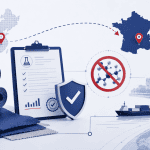
Traceability and the EU Digital Product Passport
The EU Ecodesign for Sustainable Products Regulation, Regulation (EU) 2024/1781, establishes a framework under which product-specific requirements and Digital Product Passports may be introduced through subsequent measures.
It does not mean that every cotton fabric already has the same active passport requirement. Obligations depend on applicable product-group rules and their implementation dates. Buyers preparing cotton products for the EU can review the FabricsTrades overview of ESPR and Digital Product Passport implications for fabric supply chains.
Practical preparation may include maintaining reliable records for:
- Fiber composition
- Cotton and yarn origin
- Supplier and facility identification
- Production batches
- Dyeing and finishing processes
- Chemical and test documentation
- Certified-content claims
- Packaging
- Product-level or batch-level traceability
Documentation requirements vary with the market, product category, production date, claims, treatments, and customer program. Buyers should verify current legal and retailer requirements before bulk production.
Cotton Fabric Care
There is no universal wash temperature for cotton fabric. Care instructions depend on color, construction, shrinkage control, printing, finishing, trims, and the completed product.
General precautions include:
- Follow the approved care label
- Wash dark and light colors separately
- Use lower temperatures when color or shrinkage is a concern
- Avoid excessive tumble-drying heat
- Test printed, coated, embroidered, or blended materials separately
- Confirm dimensional stability before assigning commercial care instructions
Industrial laundering, medical products, children’s products, upholstery, and technical applications may require specialized testing.
Cotton Fabric Sourcing Checklist
Before placing an order, confirm:
- Exact fiber composition and permitted tolerance
- Cotton type or origin claim, if commercially important
- Yarn count, spinning system, and combed or carded construction
- Fabric structure, width, weight, density, and usable width
- Color standard and acceptable shade variation
- Shrinkage and dimensional-stability requirements
- Strength, pilling, abrasion, and recovery requirements
- Required colorfastness tests
- Restricted-substance and destination-market requirements
- Certification and transaction-document needs
- Inspection standard and defect allowance
- Approved care instructions
- Packaging, roll length, labeling, and shipping terms
- Golden sample and bulk approval procedure
Performance should be confirmed on the actual fabric, color, finish, and production batch. A specification based only on a generic cotton description is rarely sufficient for dependable bulk production.
Frequently Asked Questions
Is cotton a natural or synthetic fabric?
Cotton is a natural cellulose fiber obtained from the seed hairs of cotton plants. Cotton fabric is produced by converting those fibers into yarn and then weaving, knitting, or otherwise forming the yarn into a textile.
Is cotton breathable?
Many cotton fabrics are breathable, but actual air permeability depends on weight, density, construction, and finishing. A lightweight cotton gauze will normally be more breathable than coated cotton canvas.
Is cotton moisture-wicking?
Cotton is absorbent, but absorbency and wicking are not identical. Wicking depends on yarn and fabric structure, surface treatment, and moisture-management design.
Does cotton shrink?
Cotton fabric can shrink when exposed to washing, moisture, heat, or mechanical action. Compacting, sanforization, and controlled finishing can reduce shrinkage, but buyers should confirm test results for the exact material.
Is cotton stretchy?
Cotton fiber has limited inherent stretch. Knitted cotton can stretch because of its loop structure. Cotton-elastane blends are used when greater stretch and recovery are required.
What is the difference between cotton and organic cotton?
“Cotton” identifies the fiber. “Organic cotton” is a production claim requiring recognized agricultural certification and supply-chain documentation. It should not be inferred from softness, color, appearance, or a supplier’s unsupported description.
What is the difference between Pima and ordinary cotton?
Pima is associated with extra-long-staple Gossypium barbadense cotton. Its longer fibers can support smooth, fine yarns, but quality still depends on authenticity, grading, spinning, construction, finishing, and quality control.
Which country produces the most cotton?
USDA projections available in July 2026 ranked China first in raw-cotton production, followed by India and Brazil. Rankings can change between marketing years. Raw-cotton production should also be distinguished from spinning, fabric manufacturing, and export volume.
How should buyers evaluate cotton fabric quality?
Evaluate objective specifications and test results rather than hand feel alone. Relevant factors may include composition, staple characteristics, yarn quality, weight, width, construction, shrinkage, tensile or tearing strength, pilling, abrasion, colorfastness, appearance, and restricted-substance requirements.
Sourcing Cotton Fabric
Cotton is versatile, but its commercial performance depends on far more than the fiber name. Fiber selection, yarn engineering, construction, coloration, finishing, testing, and documentation must work together.
Before sampling, communicate the end use, target market, composition, construction, weight, color, finish, performance requirements, care expectations, testing plan, documentation, and order quantity. This gives the supplier enough information to recommend a suitable substrate and reduces avoidable differences between an approved sample and bulk production.