What Is Velour Fabric?
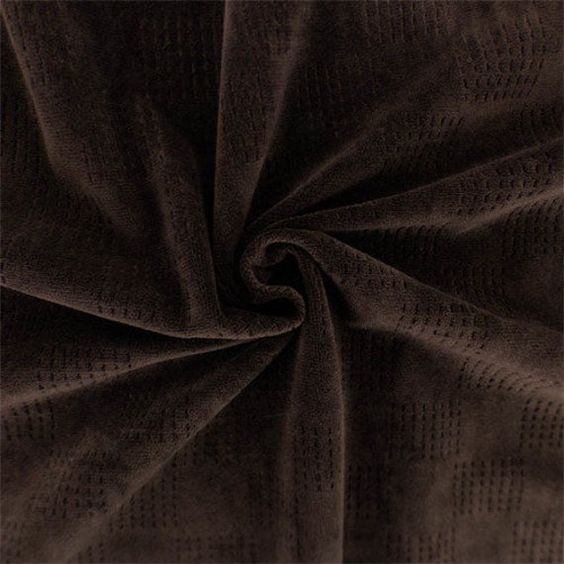
Velour is a soft pile fabric with a plush, velvet-like face. Modern apparel velour is commonly knitted, which usually gives it more stretch and flexibility than woven velvet. It may be made from cotton, polyester, elastane blends, or other fibers; the fiber content and construction determine its weight, drape, recovery, warmth, abrasion behavior, care requirements, and price.
The name describes a surface and construction family, not one fixed fiber recipe. Buyers should therefore avoid approving “velour” from appearance alone. A reliable specification identifies the fiber blend, knit structure, finished width, fabric weight, pile direction and height, stretch and recovery, colorfastness, shrinkage, and any required safety or chemical tests.
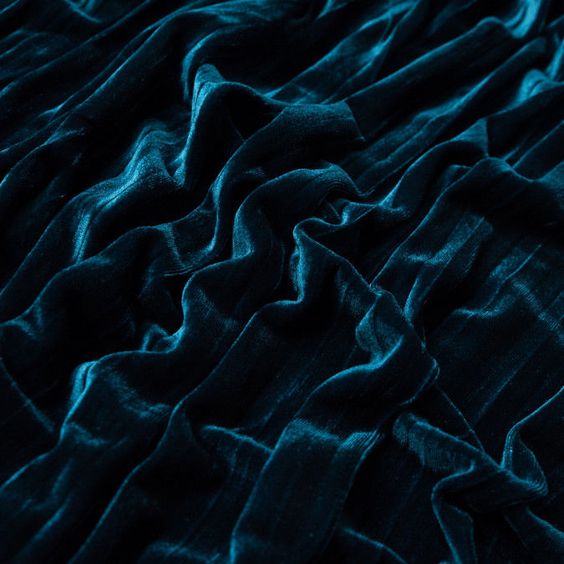
Velour Fabric at a Glance
| Atributo | Descripción práctica |
| Construcción típica | Usually a knitted ground with a cut or raised pile; woven products may also be sold under the velour name. |
| Fibras comunes | Polyester, cotton, cotton-polyester blends, and blends containing elastane. |
| Superficie | Soft, dense, directional nap with a subtle sheen. |
| Transpirabilidad | Moderate in many constructions, but strongly dependent on fiber, density, weight, and finishing. |
| Estirar | Often moderate to high in knitted versions; confirm by direction and test method. |
| Calor | Generally medium because the pile traps air; heavier fabrics retain more heat. |
| Pilling risk | Varies with yarn quality, fiber type, pile stability, abrasion, and laundering. |
| Usos comunes | Tracksuits, loungewear, dresses, dancewear, robes, stage curtains, upholstery, cushions, accessories, and presentation linings. |
| Cuidado | Construction-specific; cool gentle washing is common for washable apparel, but the supplier care recommendation governs. |
How Velour Is Made
Production varies by fiber and machine, but knitted velour typically follows four stages:
- Yarn preparation. Cotton is cleaned, carded and spun; polyester is melt-spun, drawn and textured or spun into yarn. Blend and filament choices influence sheen, hand, dyeing, strength, and pilling.
- Pile formation. A knitting machine forms the ground and pile loops. Machine gauge, yarn feed, stitch length, loop length, and ground construction influence density, stability, and stretch.
- Pile opening and finishing. Loops may be cut or sheared to create an even plush face. Brushing, heat setting, compacting, washing, dyeing, and softening can adjust the hand and dimensions.
- Inspection and testing. The finished lot should be checked for shade consistency, bow or skew, usable width, weight, pile direction, barre, holes, contamination, shrinkage, colorfastness, stretch and recovery, and relevant chemical or flammability requirements.
For a broader view of pre-shipment checks, see the guía de inspección de calidad de la tela.
Cotton, Polyester, and Stretch Velour
Cotton velour
Cotton-rich velour can offer a natural hand, good moisture absorption, and a more matte appearance. It may shrink, lose dimensional stability, or take longer to dry, so buyers should confirm wash shrinkage and relaxation behavior. Some products use a synthetic ground with cotton pile; request the exact fiber breakdown rather than relying on “cotton velour” as a complete specification.
Polyester velour
Polyester velour is widely used where color depth, crease resistance, durability, and easier care are priorities. Heat setting can improve dimensional stability, but excessive heat may flatten or glaze the pile. Buyers comparing synthetic options can review the broader polyester fabric category.
Stretch velour
Elastane or a stretch knit structure can improve body movement and recovery for dancewear, fitted apparel, and tracksuits. Specify stretch in the course and wale directions, recovery after extension, and acceptable growth after wear or laundering. “Stretch” without a method and target is not a measurable purchase requirement.
Velour vs. Velvet vs. Velveteen
| Material | Construcción típica | Typical behavior | Common buying implication |
| terciopelo | Often knitted pile | Stretchier, soft, flexible, usually easier to sew into casual apparel | Confirm knit structure, pile stability, stretch, and recovery. |
| Terciopelo | Traditionally woven pile; modern retail naming varies | Dense, lustrous, often more structured and less stretchy | Confirm whether the offered fabric is truly woven and review nap direction. |
| Velveteen | Usually woven cotton or cotton-blend short pile | Shorter pile, firmer hand, less drape and stretch | Confirm abrasion, pile retention, and end-use suitability. |
Trade names are not perfectly standardized across suppliers. Construction details and an approved physical sample are more dependable than the name alone.
Properties Buyers Should Evaluate
- Hand and appearance: pile density, height, direction, luster, shade depth, and whether pressure leaves visible marks.
- Dimensional stability: shrinkage, spirality, bow, skew, and width after the intended laundering process.
- Stretch and recovery: measured separately by direction and after repeated extension or washing where relevant.
- Color performance: wash, rubbing/crocking, perspiration, water, light, or dry-cleaning fastness according to end use.
- Pile durability: shedding, crushing, matting, snagging, pilling, and abrasion resistance.
- Seam and garment behavior: edge curl, seam slippage, needle cutting, puckering, and pile migration.
- Safety and chemistry: fiber labeling data, restricted-substance declarations, flammability testing where applicable, and documentation for finishes.
Common Uses of Velour
Velour is used in tracksuits, sweatshirts, trousers, dresses, robes, dancewear, costumes, sweaters, jackets, hats, and accessories. Its combination of softness and stretch makes knitted velour especially useful for comfort-led apparel. In interiors, heavier constructions appear in stage curtains, drapery, upholstery, cushions, jewelry cases, and presentation boxes.
A fabric approved for loungewear is not automatically suitable for theater drapery or contract upholstery. Those programs can require different weight, width, abrasion, lightfastness, seam, and fire-performance documentation. Flame-retardant performance must be supported by the relevant treatment details and test report; ordinary velour should not be assumed to be flame retardant.
Care and Sewing Guidance
- Check the supplier care instruction and test a production-representative sample before assigning a garment care label.
- Cut all pattern pieces in a consistent nap direction unless the design intentionally uses shading differences.
- Use a sharp needle appropriate to the knit and fiber; test stitch balance, differential feed, and seam stretch.
- Avoid excessive ironing pressure or temperature, which can crush or glaze the pile. Press from the reverse on a soft surface and test first.
For washable velour, cool water, a gentle cycle, mild detergent, and low mechanical action are often safer starting points. Drying method depends on the blend and finish.
Consideraciones ambientales
Velour’s environmental profile depends on fiber production, dyeing, finishing, energy and water use, durability, care, and end-of-life options. Polyester is fossil-derived unless recycled feedstock is used and can shed microfibers during use and washing. Cotton is renewable but can involve substantial agricultural water, land, and chemical inputs depending on its origin and cultivation system. A recycled or preferred-fiber claim does not by itself prove that the finished fabric is sustainable.
For recycled programs, buyers can compare options in the categoría de telas recicladas and request transaction, chain-of-custody, and claim documentation appropriate to the selected certification or buyer standard.
Actualización regulatoria y de mercado actual
Updated through August 10, 2026. Requirements depend on the destination market, finished product, consumer group, fiber content, finish, and date of sale.
For EU-bound velour treated for water, oil, or stain repellency, buyers should review the scope of the EU PFHxA restriction. Commission Regulation (EU) 2024/2462 sets concentration limits for PFHxA, its salts, and PFHxA-related substances. For general-public clothing, related accessories, and footwear, the relevant restriction applies from October 10, 2026; for other general-public textiles, it applies from October 10, 2027, subject to stated exclusions. FabricsTrades provides related supply-chain context in its EU REACH PFHxA restriction guide. The legal text, rather than the internal guide, should control product decisions.
In the United States, most covered textile products must disclose fiber content, country of origin, and the responsible business identity under FTC textile-labeling rules. Clothing textiles can also fall under the CPSC flammability standard in 16 CFR Part 1610; children’s sleepwear and certain interior products have separate requirements. Useful official references include the FTC apparel-labeling overview y el CPSC Flammable Fabrics Act guidance.
Before sampling and quotation, communicate the destination market, product category, age group, intended use, finish chemistry, labeling data, test methods, and document format. Buyers should verify current legal, retailer, and contract requirements before bulk production.
How to Source Velour Fabric
A practical request for quotation should include:
- Exact fiber composition and whether percentages describe the whole fabric or separate ground and pile.
- Knit or woven construction, machine gauge where relevant, and pile type.
- Finished weight (GSM), usable width, color, pile height or reference sample, and tolerance.
- Stretch and recovery targets by direction, plus shrinkage and spirality limits.
- Required fastness, pilling, abrasion, shedding, seam, and dimensional-stability tests.
- Finish details, including softeners, flame-retardant, stain-repellent, water-repellent, or antistatic treatments.
- Destination-market regulatory and labeling documentation.
- Sample stages, lab-dip or strike-off approval, minimum order quantity, lead time, packing, and inspection plan.
FabricsTrades can support sourcing, development, customization, sampling, inspection coordination, and documentation alignment. Actual specifications, performance, certification status, and compliance must be confirmed for the selected article and production lot.
Preguntas frecuentes
Is velour a knit or woven fabric?
Most modern apparel velour is knitted, but woven pile products may also be marketed as velour. Confirm the construction on the technical sheet and sample.
Is velour the same as velvet?
No. Velour commonly has a knitted ground and more stretch, while traditional velvet is a woven pile fabric. Retail terminology varies, so construction matters more than the trade name.
Is velour made from cotton or polyester?
It can be made from cotton, polyester, blends, or blends containing elastane. Fiber content affects hand, absorbency, drying, shrinkage, durability, and care.
Does velour stretch?
Knitted velour usually stretches, but the amount and recovery vary by structure and fiber blend. Ask for measured stretch in both directions and the test method.
Can velour be machine washed?
Many apparel velours can be washed gently in cool water, but some constructions or finishes need different care. Follow the supplier recommendation and validate it through garment testing.
Is velour flame retardant?
Not automatically. Fiber, weight, construction, finish, and end use influence burning behavior. A flame-retardant claim should be supported by a relevant, current test report for the supplied product.
¿Qué deberían probar los compradores antes de la producción a granel?
Common checks include weight, width, shade, pile appearance, shrinkage, spirality, stretch and recovery, colorfastness, pilling, abrasion, seam behavior, shedding, and market-specific safety or chemical requirements.
Conclusión
Velour is best understood as a plush pile-fabric family rather than a single material. Its performance depends on fiber, ground construction, pile formation, dyeing, finishing, and quality control. Buyers who turn the desired hand and appearance into measurable requirements—and confirm care, labeling, chemical, and safety needs before bulk production—are more likely to achieve consistent results.
Fuentes