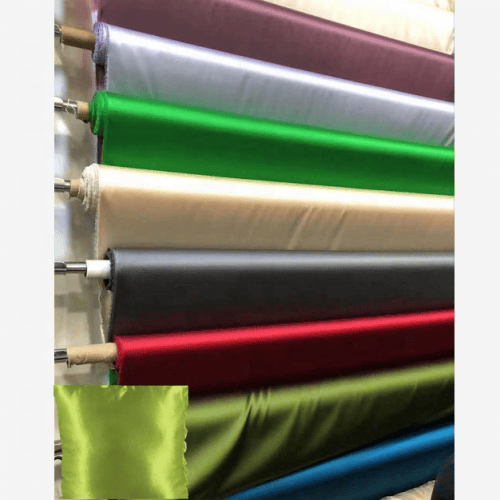
Types of Polyester Satin
Stretch Satin
Stretch satin incorporates spandex or elastane to support recovery and freedom of movement. The listed 96% polyester/4% spandex and 92% polyester/8% spandex constructions are relevant for lingerie, fitted dresses, camisoles, sleepwear and body-contoured fashion.
Crepe and Satin-Chiffon Constructions
Crinkle chiffon and 50D satin chiffon provide lighter weight, surface texture and visual movement. They are suited to overlays, layered dresses, sleeves, blouses and flowing occasionwear.
Imitation-Silk and Imitation-Acetate Satin
These fabrics are designed to reproduce the smooth hand, polished appearance and drape associated with silk or acetate while retaining the durability and commercial advantages of polyester.
Printed and Yarn-Dyed Satin
Digital-print, custom-print and yarn-dyed options support proprietary patterns, seasonal color stories and differentiated collections. The smooth satin face can produce bright visual effects, subject to the selected print process and artwork.
Recycled Polyester Satin
The listed 50D × 75D recycled polyester satin options support apparel developments that specify recycled polyester. Recycled-content claims should be matched to appropriate chain-of-custody and shipment documentation when required by the buyer.
Jacquard, Waterproof and Specialized Satin
The current range also includes stretch jacquard lining, waterproof polyester-spandex satin, upholstery covering and satin intended for retractable automotive blinds and folding curtains.
Modern Applications for Polyester Satin
Mode et tenues de cérémonie
Polyester satin is suitable for evening gowns, cocktail dresses, bridesmaid dresses, bridal garments, cheongsam, slip dresses, bias-cut skirts, statement blouses, draped tops and coordinated occasionwear. Stretch constructions are especially useful where a close fit must coexist with sitting comfort and movement.
Lingerie, Sleepwear and Loungewear
Soft 50D and stretch satin constructions can be developed into camisoles, pajama sets, night suits, robes, lingerie panels, sleep shirts and luxury loungewear. Relevant evaluation points include seam slippage, snagging, stretch recovery, colorfastness and comfort against the skin.
Linings and Interior Garment Components
Imitation-silk, jacquard and stretch satin may be used for jacket linings, coat linings, dress linings, waistband details, pocketing accents and contrast facings. Stretch linings can complement fitted outer fabrics and reduce restriction inside close-cut garments.
Print-Led Fashion Collections
Digital-print and custom-print satin can support placement prints, engineered motifs, scarf-inspired dresses, capsule collections, costume garments, dancewear and limited-edition fashion. Artwork, color profiles and strike-offs should be approved before bulk printing.
Bridal and Event Textiles
Plain-dyed and glossy satin can be used for bridalwear, formal dresses, decorative bows, chair accents, table runners and coordinated event textiles. The required body, opacity and sheen should be selected according to whether the end product is a garment, lining or decorative covering.
Home and Hospitality Interiors
Polyester satin can be developed for curtains, decorative drapery, bedding accents, pillow covers, tablecloths and selected upholstery coverings. End-use testing should reflect abrasion, seam strength, light exposure, cleaning method and any applicable flammability requirements.
Accessories and Craft Products
Suitable applications include hair bows, scrunchies, headbands, sleep masks, bonnet linings, neckties, bow ties, scarves, gift bags, decorative ribbons and fabric flowers. The wide color and print range makes polyester satin useful for coordinated accessory programs.
Automotive and Technical Interior Uses
The listed eight-satin imitation-silk fabric can be considered for automatic retractable car blinds and folding curtain systems. Specialized developments should be assessed for dimensional stability, lightfastness, heat exposure, repeated folding and compatibility with the finished mechanism.
Strategic Polyester Satin Sourcing in Wujiang, Suzhou
Located in the heart of Wujiang District, Suzhou, FabricsTrades operates within one of the world’s most concentrated textile hubs. We are not limited to a single satin construction or one set of looms. Alongside our factory capabilities, we work as a strategic sourcing partner with access to specialized weaving, dyeing, printing, finishing and converting resources throughout the local textile ecosystem.
If a required polyester satin already exists, we can help identify the appropriate construction. If it does not, we can coordinate development around the required composition, yarn specification, stretch ratio, surface effect, color, print and end use. This sourcing model is particularly valuable for buyers consolidating solid, printed, stretch, recycled, lining and specialized satin programs.
For accurate development, provide the target application, composition, width, weight, stretch requirement, color or artwork, finish, testing standard, order quantity and destination market. Final specifications, availability, minimum quantities and lead times should be confirmed during quotation and sampling.
Foire aux questions
Qu'est-ce que le satin de polyester ?
Polyester satin is a synthetic fabric produced by combining polyester yarns with a satin weave. The weave creates longer yarn floats on the face, producing a smooth, glossy surface, while the reverse is generally duller. It is valued for its drape, durability, wrinkle resistance, accessible price and broad color range.
What is the difference between polyester satin and silk satin?
Both fabrics can use a satin weave, but their fiber content differs. Silk satin uses natural silk, while polyester satin uses synthetic polyester. Polyester satin is generally more affordable, easier to maintain, more wrinkle-resistant and easier to scale for bulk production. Silk normally offers a different natural hand, moisture response and luxury profile.
Which polyester satin is best for dresses, lingerie or sleepwear?
Glossy and plain-dyed satin suit many dresses and occasionwear styles. Polyester-spandex satin is more appropriate for fitted dresses, lingerie and garments requiring stretch. Soft 50D satin and imitation-silk constructions are relevant to camisoles, pajamas, robes and loungewear. The final choice should be based on weight, opacity, stretch, drape and required surface shine.
Can you source recycled or custom-printed polyester satin?
Yes. The current listings include recycled 50D × 75D polyester satin, digital-print satin, custom-print spandex satin and printed stretch constructions. Recycled-content documentation, print artwork, color standards and performance requirements should be specified during development.
Can polyester satin be ordered with waterproof or other functional finishes?
The collection includes a waterproof polyester-spandex satin listing. Any functional finish should be defined through measurable requirements and evaluated on the finished material. Where water or stain repellency is requested, the buyer should also specify destination-market PFAS requirements and the required compliance evidence.
Quels documents de conformité les acheteurs doivent-ils demander ?
Requirements depend on the destination market and end product. A practical file may include the final technical data sheet, fiber-composition declaration, restricted-substance or SVHC declaration, lot-linked third-party test reports, finish-chemistry documentation and shipment-specific chain-of-custody evidence for recycled claims. California-bound textile articles may also require an AB 1817 certificate of compliance. Certifications support due diligence but do not automatically prove that every shipment complies with every applicable law.
What information is needed for a polyester satin quotation?
Provide the intended application, composition, yarn specification if known, width, weight, stretch requirement, color or print artwork, finish, testing standard, estimated quantity and delivery destination. A reference swatch or approved quality standard is recommended when handfeel, drape, sheen or color matching is critical.