What Is Swiss Dot Fabric?
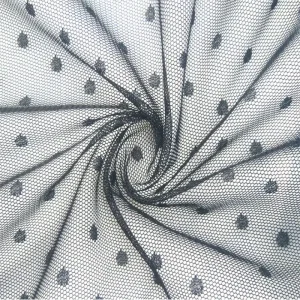
Swiss dot is traditionally a sheer, lightweight plain-weave textile decorated with small dots. Depending on the intended appearance, performance and price point, the dots may be:
- Woven into the base fabric
- Embroidered onto the surface
- Flocked after weaving
- Printed onto the fabric
Woven dots are generally the most durable because the texture is integrated into the construction rather than applied only to the surface.
The dots may match the ground color for a subtle tonal effect or use contrasting colors to create a more visible pattern. Dot size, spacing, density and placement can also be adjusted to suit the design direction.
History of Swiss Dot Fabric
Swiss dot originated in St. Gallen, Switzerland, around 1750, when it was produced on handlooms. Traditional Swiss dot was made from cotton and used swivel-weaving techniques to form its characteristic raised motifs.
Modern manufacturing has expanded the category to include silk, cotton-silk blends and synthetic fibers, while embroidery, printing and flocking offer alternatives to traditional woven-dot production.
Historically, Swiss dot was used for children’s clothing, wedding dresses and curtains. These applications remain important, but the fabric is now also used in contemporary resortwear, occasionwear, lingerie, decorative layering and boutique home textiles.
Types of Swiss Dot Fabric
Cotton Swiss Dot
Cotton Swiss dot is the most common version. Made from 100% cotton, it is lightweight, breathable and soft to the touch. It is well suited to summer dresses, skirts, blouses, tops, baby clothing, blankets, bibs and burp cloths.
Silk Swiss Dot
Made from 100% silk, silk Swiss dot has a delicate texture, subtle sheen and fluid drape. It is commonly selected for evening gowns, formal blouses, scarves and lingerie.
Cotton-Silk Swiss Dot
Cotton-silk Swiss dot combines the breathability and familiar hand of cotton with the smoothness and refined appearance of silk. It is suitable for premium blouses, dresses, bridal separates and lightweight occasionwear.
Synthetic Swiss Dot
Synthetic Swiss dot may be made from polyester, rayon or nylon. These qualities are lightweight, generally easier to care for and often more economical than natural-fiber alternatives. Common applications include casual dresses, blouses, skirts, curtains and table linens.
Plain-Weave Swiss Dot
In a plain-weave Swiss dot construction, dots are arranged in a consistent pattern across the fabric. The regular spacing creates a balanced surface suitable for classic apparel and decorative uses.
Stripe Swiss Dot
Stripe Swiss dot arranges dotted areas in linear bands. This construction adds direction and visual dimension while retaining the light character associated with dotted Swiss textiles.
Gingham Swiss Dot
Gingham Swiss dot combines a checked visual structure with dotted texture arranged in a grid. Its playful appearance works particularly well for casual clothing, childrenswear and decorative home products.
Swiss Dot Fabric Properties
The precise hand, opacity and drape depend on fiber content and construction. Across the category, Swiss dot is valued for the following established characteristics:
- Sheer or semi-sheer appearance
- Lightweight plain-weave construction
- Small dots placed at regular or irregular intervals
- Tonal or contrasting dot effects
- Woven, embroidered, flocked or printed dot techniques
- Soft texture in cotton qualities
- Delicate sheen and drape in silk qualities
- Practical care and competitive pricing in many synthetic qualities
Because lighter Swiss dot constructions may be transparent, garment developers should assess whether the final product requires a lining, underlayer, facing or double-layer construction.
Advantages of Swiss Dot Fabric
- Lightweight
- It has a classy appearance
- Comfortable
- Breathable
Considerations
- Hand washing is the recommended method
- Vulnerable to extreme heat
Care requirements may vary by fiber, dye, dot technique and finish. The approved care label should therefore be based on the final tested fabric rather than the category name alone.
Styling and Product-Development Guidance
- Pair tonal Swiss dot with solid fabrics to emphasize texture without making the design visually busy.
- Coordinate it with stripes, florals or checks using a controlled color palette.
- Layer sheer qualities over camisoles, linings or opaque base fabrics.
- Combine Swiss dot with lace, tulle or chiffon for dimensional occasionwear.
- Use gathers, ruffles, bows and tiers to take advantage of the fabric’s lightweight structure.
- Evaluate dot scale against pattern-piece size; very large dots may become visually irregular on narrow components.
- Test seam slippage, dimensional stability and dot durability before approving bulk production.
- Review transparency under both studio and daylight conditions before confirming lining requirements.
Care and Maintenance
Always follow the care label developed for the specific fiber composition and finish.
- Hand wash the fabric in cold water or use a gentle machine cycle where permitted.
- Use a mild detergent.
- Avoid harsh detergents, bleach and fabric softeners.
- Use professional dry cleaning when specified on the care label.
- Air-dry flat or hang to dry.
- Do not wring the fabric or expose it to excessive tumble-drying heat.
- Iron at a low temperature with a pressing cloth.
- Store folded in a cool, dry and dark location.
- Avoid prolonged contact with perfume, hairspray and aggressive cleaning products.
Custom Swiss Dot Fabric Sourcing in Suzhou
A sourcing request should define the intended fiber content, fabric width, weight range, dot construction, dot size, spacing, color, opacity, handfeel and end use. Reference swatches or clear photographs are especially useful when matching an existing quality.
Our Wujiang location provides access to specialized weaving, embroidery, printing, dyeing and finishing resources across the Suzhou textile cluster. This network allows us to evaluate multiple production routes instead of forcing every inquiry into a single mill’s equipment.
Depending on the project, sourcing support may include:
- Cotton, silk, cotton-silk and synthetic Swiss dot options
- Recycled polyester alternatives
- Tonal or contrasting dots
- Regular or irregular dot placement
- Woven, embroidered, flocked or printed effects
- Color and handfeel development
- Lab-dip and sample coordination
- Bulk production planning
- Quality and documentation alignment for the destination market
Final specifications, minimum order quantities, lead times, test requirements and prices should be confirmed during quotation.
Frequently Asked Questions
What is the difference between Swiss dot and printed polka-dot fabric?
Swiss dot is distinguished by a tactile dotted surface. The dots may be woven, embroidered, flocked or printed, but traditional dotted Swiss is associated with raised dots on a lightweight plain-weave ground. A standard polka-dot print may create only a flat visual motif.
Is Swiss dot fabric always made from cotton?
No. Traditional Swiss dot was made from cotton, but modern versions can also be made from silk, cotton-silk blends, polyester, rayon or nylon. The fiber choice affects handfeel, drape, care, appearance and price.
Is Swiss dot fabric transparent?
Many Swiss dot fabrics are sheer or semi-sheer, especially lightweight cotton, silk and fine synthetic qualities. Buyers should evaluate the selected sample under realistic lighting and decide whether the finished product needs a lining or double layer.
Which dot-production method is the most durable?
Woven dots are generally the most durable because they are integrated into the fabric construction. Embroidered, flocked and printed dots can also perform well, but their durability depends on the technique, materials, finishing process and care conditions.
Can FabricsTrades develop custom Swiss dot fabric?
Yes. FabricsTrades can support custom sourcing and development based on fiber content, dot technique, dot size, spacing, ground color, handfeel and intended application. Feasibility, minimum order quantity, sampling time and bulk lead time are confirmed against the final specification.
What compliance documents should buyers request?
Requirements vary by destination market and end product. Buyers may need verified fiber composition, restricted-substance test reports, chemical declarations, colorfastness and dimensional-stability results, supplier traceability and transaction-level evidence for recycled claims. Testing should be selected according to the final fabric, applied finishes and regulations in the market where the product will be sold.