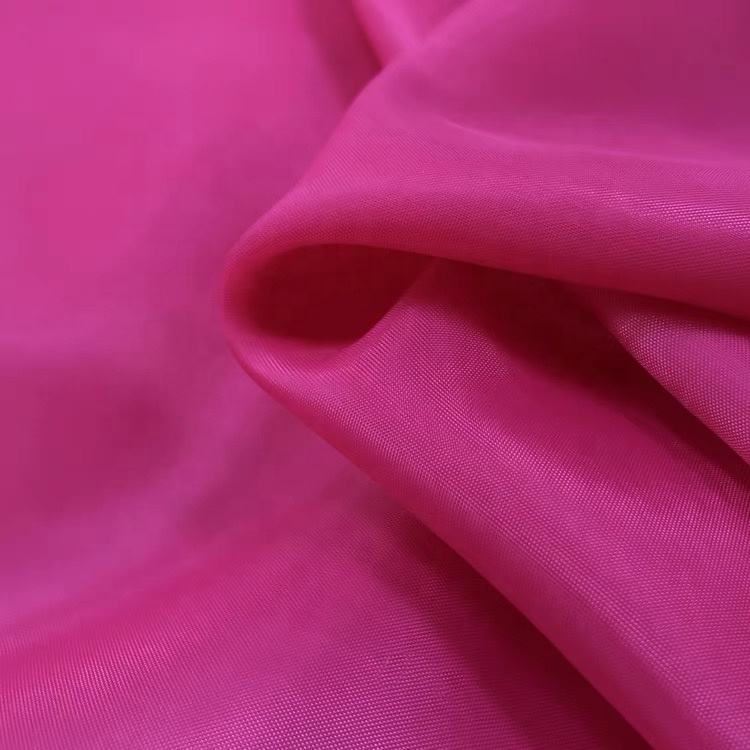
Manteau et Veste

  • Fabriqué à partir de polyester, nylon et cotons recyclés
  • Délai de livraison plus court
  • Des prix intéressants

Manteau et veste sur mesure en vrac au prix de gros des fabricants

Pourquoi nous choisir

  • Factory-Direct Expertise: Specialized in 4-way stretch and performance fabrics.
  • Strategic Sourcing Network: Access to thousands of textile mills across Wujiang, Suzhou.
  • Développement personnalisé : Tailored composition, weight, color, finish, coating, and lamination.
  • Reliable Quality Control: Fabric specifications and production quality are checked before shipment.
  • Recycled Options: Recycled polyester, nylon, and lining fabrics are available.
  • Fast, Competitive Supply: Efficient sampling, flexible sourcing, and wholesale pricing.

Use Cases

Our coat and jacket fabrics are suitable for:
  • Puffer and down jackets
  • Waterproof rain jackets
  • Stretch softshells
  • Windbreakers and packable jackets
  • Trench coats and fashion outerwear
  • Workwear and uniform jackets
  • Skiing, hiking, and cycling apparel
  • Quilted jackets and insulated vests
  • Jacket shells, linings, and reinforced panels

Outerwear Fabric Testing and Development

Testing should be selected according to the construction and end use. A typical development program may assess:
  • Fiber composition and fabric weight
  • Usable width, density, and dimensional stability
  • Tensile, tear, and seam strength
  • Résistance à l'abrasion et au boulochage
  • Stretch percentage and recovery
  • Solidité des couleurs au lavage, au frottement, à la lumière et à la transpiration
  • Air permeability and wind resistance
  • Hydrostatic-pressure resistance and spray rating
  • Moisture-vapor transmission for breathable laminates
  • Coating or lamination adhesion
  • Downproofness for insulated jackets
  • Quilting stability and insulation migration
  • Restricted-substance and PFAS-related requirements
  • Recycled-content chain-of-custody documentation when applicable
Acceptance limits should be agreed before bulk production. The test package must match the exact article, color, finish, membrane, coating, and production lot rather than a visually similar reference fabric.

Entretien et maintenance

Care instructions must be based on the final garment and its complete material system. As a general development principle:
  1. Use lower washing temperatures when appropriate to help protect elastic fibers, coatings, laminations, printed surfaces, and recycled-fiber constructions.
  2. Avoid uncontrolled high heat, which can affect spandex recovery, coating adhesion, surface finish, and dimensional stability.
  3. Use low-temperature ironing only when the fabric specification permits it.
  4. Evaluate detergents and fabric softeners against the selected water-repellent finish or membrane.
  5. Conduct garment-level wash trials before confirming the commercial care label.

Recycled and Lower-Impact Outerwear Options

The listed collection includes recycled polyester taffeta, recycled polyester satin, and 600D RPET Oxford fabric. These materials can help brands develop recycled-content shells, linings, bags, and outerwear components, but recycled composition should be supported by documentation that applies to the relevant material and shipment. Recycled content does not automatically establish chemical compliance, recyclability, or a lower total environmental impact. Buyers should evaluate fiber provenance, finishing chemistry, durability, production efficiency, and the useful life of the completed garment together.

Strategic Fabric Sourcing in Suzhou

Located in the heart of Wujiang District, Suzhou, FabricsTrades operates within one of the world’s most concentrated textile manufacturing hubs. We own a 4-way stretch fabric factory and also work as a strategic sourcing partner for broader woven, coated, laminated, quilted, lining, and recycled-fabric requirements. Our sourcing capability is not limited to the fabrics running on our own looms. Proximity to thousands of specialized weaving, dyeing, printing, coating, laminating, quilting, and finishing facilities allows us to match each project with the appropriate production route. If a suitable fabric already exists, we can help locate and qualify it. If it does not, we can coordinate development around the required composition, weight, hand feel, color, stretch, finish, and end-use performance. This cluster-based model supports faster material searches, coordinated sampling, custom color development, finish selection, and consolidated quality control for multi-fabric outerwear programs.

Foire aux questions

1. Which fabric is best for a lightweight puffer jacket?

High-density nylon or polyester taffeta is commonly considered for lightweight puffer shells and linings. The listed options include 380T quilted nylon taffeta, 400T 20D woven nylon, and 190T–210T polyester or recycled polyester taffeta. The final selection should be based on target weight, downproofness, air permeability, hand feel, and durability.

2. Can FabricsTrades develop waterproof and breathable jacket fabric?

The current collection includes TPU-laminated pongee, waterproof 4-way stretch fabric, coated polyester taffeta, and PU-coated Oxford fabric. Waterproofness and breathability must be defined through measurable requirements such as hydrostatic pressure, moisture-vapor transmission, spray performance, and lamination adhesion. Custom development is subject to technical review and sampling.

3. What is the difference between stretch shell fabric and stretch lining?

A stretch shell is selected to provide exterior durability, mobility, and potentially weather protection. A stretch lining is usually lighter and designed to improve internal comfort and accommodate the movement of the outer layer. Stretch percentage, recovery, abrasion resistance, seam behavior, and compatibility with the complete garment should be evaluated separately.

4. Are recycled coat and jacket fabrics automatically PFAS compliant?

No. Recycled content and PFAS compliance address different issues. Recycled-content claims require suitable chain-of-custody evidence, while PFAS compliance depends on the chemicals, coatings, membranes, auxiliaries, contamination controls, and test results associated with the finished material.

5. What information should I provide when requesting a quotation?

Provide the intended garment, fiber preference, construction, target weight, usable width, color, quantity, stretch requirement, coating or lamination, waterproofness or breathability targets, recycled-content requirement, destination market, testing standard, and desired delivery date. A physical reference swatch or technical data sheet can improve matching accuracy.

6. Can you source fabrics that are not shown on this page?

Yes. In addition to operating a 4-way stretch fabric factory, FabricsTrades works with specialized textile producers throughout the Wujiang and Suzhou manufacturing cluster. We can search for existing constructions or coordinate custom development when the required fabric is not available as a standard article.

Demander un devis

Tell us your target fabric, application, quantity, performance requirements, compliance destination, and delivery schedule. We will review the construction and prepare a quotation as soon as possible.