
Robe

- Fabriqué à partir de polyester, nylon et cotons recyclés
- Délai de livraison plus court
- Des prix intéressants

Robe sur mesure en vrac au prix de gros des fabricants
-
En savoir plus

-
En savoir plus

-
En savoir plus
-
En savoir plus

-
En savoir plus

-
En savoir plus

-
En savoir plus

-
En savoir plus

-
En savoir plus

-
En savoir plus

-
En savoir plus

-
En savoir plus

-
En savoir plus

-
 En savoir plus
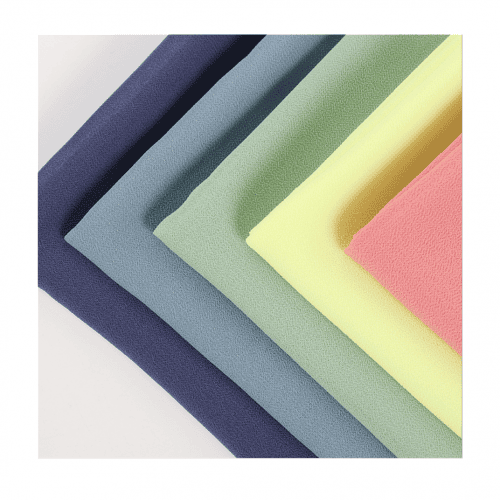
Tissu en mousseline de soie perlé 50D populaire de bonne qualité pour femmes, robe chemise d'été
$45h00
Why Choose FabricsTrades for Dress Fabrics?
Expertise d'usine avec une plus grande capacité d'approvisionnement
We operate our own 4-way stretch fabric factory while working closely with specialized weaving, knitting, dyeing, printing, and finishing mills across Wujiang, Suzhou. This gives you factory-level technical support without limiting your options to a single production line.Access to Suzhou’s Textile Supply Chain
Located in one of the world’s most concentrated textile manufacturing hubs, we can source a broad range of chiffon, crepe, satin, organza, taffeta, twill, jersey, lining, and stretch fabrics. If a suitable fabric already exists, we can help you find it. If it does not, we can help develop it.Solutions Based on Your Garment
We recommend fabrics according to the finished dress—not simply by composition or price. Our team considers drape, stretch direction, recovery, weight, opacity, luster, hand feel, seam performance, care requirements, and target market before proposing a construction.Développement de tissus personnalisés
Send us a fabric swatch, reference garment, Pantone color, photograph, or technical specification. We can assist with construction matching, color development, printing, surface finishing, stretch adjustment, hand-feel modification, and performance optimization.Quality Control from Sample to Shipment
We can coordinate sample approval, bulk-production follow-up, color and hand-feel checks, roll inspection, and shipment documentation. Testing requirements should be confirmed before sampling so the appropriate standards can be incorporated into the production plan.Flexible Support for Different Projects
We support emerging designers, established fashion brands, garment factories, importers, wholesalers, and sourcing offices. Available minimum quantities, lead times, prices, and customization options depend on the selected fabric and production process.Approvisionnement prêt pour la conformité
For regulated markets, we can help buyers define the documentation and testing required for the selected material. This may include fiber-composition records, restricted-substance testing, recycled-content documentation, chemical declarations, and production traceability. Compliance must always be confirmed for the specific fabric, finish, production lot, and destination market.Clear, Practical Communication
You receive recommendations based on actual sourcing feasibility, production requirements, and commercial constraints. Our goal is to identify a fabric that performs correctly in the garment—not just one that looks suitable in a small swatch.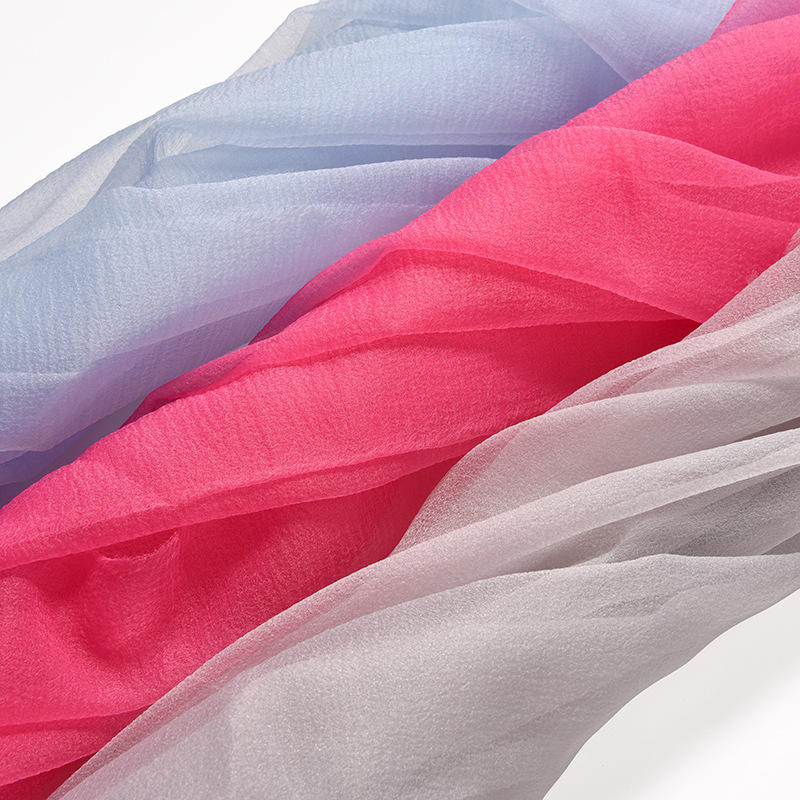

Dress Applications and Technical Use Cases
Bodycon and Contoured Dresses
Polyester-spandex satin, moss crepe, and 4-way stretch woven fabrics can be used for close-fitting silhouettes, asymmetric dresses, ruched dresses, corset-inspired styles, and cutout constructions. Designers should confirm recovery, seam slippage, edge curl, opacity under extension, and resistance to bagging at the seat and elbows.Wrap, Twist-Front, and Draped Dresses
Rayon blends, stretch chiffon, lightweight jersey, and crepe constructions support wrap fronts, twist details, gathers, bias-inspired drape, and fluid skirts. Stable recovery around waist ties and necklines helps reduce distortion during wear.Vêtements de mariée et de cérémonie
Silk satin, silk taffeta, high-density organza, glitter tulle, pearl-diamond chiffon, and structured bubble crepe can be used for bridal gowns, bridesmaid dresses, prom dresses, flower-girl dresses, detachable overskirts, veils, bows, sleeves, and dimensional appliqué grounds.Party and Evening Dresses
Shiny stretch satin, printed stretch satin, crinkle chiffon, and imitation-acetate satin are suited to cocktail dresses, slip dresses, cowl-neck styles, bias-look eveningwear, fitted party dresses, and coordinated occasion separates.Modest Fashion and Layered Dresses
Opaque crepe, SPH polyester twill, lightweight chiffon overlays, and satin linings can support abayas, kaftans, long-sleeved occasion dresses, layered maxi dresses, and modest eveningwear. Buyers should assess opacity, static behavior, lining compatibility, snagging, and color matching between layers.Resort, Vacation, and Summer Dresses
Lightweight chiffon, rayon blends, stretch crepe, and soft polyester constructions can be developed for packable travel dresses, beach cover-ups, tiered maxis, sundresses, and wrinkle-resistant resortwear. Relevant tests may include dimensional stability, colorfastness to perspiration, seam strength, and print durability.Cheongsam and Contemporary Qipao
Thickened imitation-acetate stretch satin can support close-fitting cheongsam and modern qipao designs where a lustrous surface, controlled structure, and limited stretch improve mobility. Development should account for seam appearance, neckline stability, piping compatibility, and stress at the hip and underarm.Adaptive and Easy-Dressing Apparel
Stretch wovens and soft knits can be used in dresses designed with magnetic closures, extended openings, seated-wear pattern blocks, low-force fastenings, and mobility-friendly panels. Recovery, softness, abrasion resistance, and wash durability are particularly important.Dance, Performance, and Costume Dresses
High-elasticity constructions may be used for dance costumes, stage dresses, competition apparel, and performance uniforms. These applications require careful evaluation of multidirectional stretch, recovery, perspiration colorfastness, opacity under extension, embellishment compatibility, and seam resilience.Maternity and Size-Inclusive Dresses
Stretch jersey, rayon-spandex, moss crepe, and elastic woven fabrics can support maternity dresses, nursing-access designs, curve-fit garments, and flexible size systems. The selected material should provide controlled expansion without excessive compression or permanent deformation.Children’s Occasionwear
Glitter tulle, pearl-diamond chiffon, organza, satin, and soft linings can be developed for flower-girl dresses, party dresses, recital costumes, and layered skirts. Buyers should specify requirements for skin contact, shedding, sharp embellishments, flammability, restricted substances, and age-appropriate garment construction.Advantages of Using Stretch Fabrics in Dressmaking
- Confort: Stretch fabrics are designed to move and conform to the body, providing a comfortable and flattering fit. This is especially important for dresses, as traditional fabrics can often be stiff and restrict movement.
- Versatilité: Stretch fabrics are available in a variety of weights, textures, and stretch percentages, making them suitable for a wide range of dress styles. This versatility allows designers to create dresses that range from casual to formal and everything in between.
- Ability to retain their shape: Stretch fabrics can maintain their shape, even after repeated wear and washing. This makes them a durable choice for dressmaking and helps to ensure that the dress will look its best for a long time.
- Facile d'entretien : Stretch fabrics are often machine-washable and quick-drying, making them a convenient choice for everyday wear.
- Flattering fit: Stretch fabrics can conform to the body, providing a smooth and flattering fit. This can help minimize bulges or lumps and create a flattering silhouette.
Common Fabrics Used for Dresses
Jersey
Jersey is a flexible knitted fabric valued for softness, comfort, and fluid drape. Cotton-spandex jersey is frequently used for T-shirt dresses and casual daywear, while polyester or rayon blends may provide smoother drape, improved color retention, or faster drying.Spandex Blends
Spandex is a highly elastic synthetic fiber normally blended with polyester, nylon, rayon, or cotton rather than used alone. It is commonly selected for bodycon dresses, fitted panels, ruched styles, dance costumes, and garments requiring close body conformity.Elastane Blends
Elastane is another name commonly used for the fiber known as spandex. It provides extension and recovery and can help a fabric return toward its original dimensions after movement. Its performance depends on the elastane percentage, yarn construction, heat setting, and finishing conditions.Rayon Blends
Rayon is a manufactured cellulosic fiber known for softness and fluid drape. When blended with spandex or elastane, it can be used for wrap dresses, summer dresses, soft jersey dresses, and silhouettes requiring both movement and a flowing hand.Polyester Stretch Fabrics
Polyester is widely used because of its durability, wrinkle resistance, print compatibility, and relatively easy care. Polyester-spandex woven or knitted constructions can support casual dresses, uniforms, travel apparel, party dresses, and fitted fashion garments.Chiffon and Crinkle Crepe
Polyester chiffon, stretch chiffon, moss crepe, and crinkle crepe provide lightness, surface interest, and fluid movement. Depending on transparency and construction, these fabrics may require a lining. They are frequently used for layered dresses, sleeves, overlays, skirts, and occasionwear.Satin
Polyester, stretch, imitation-silk, and natural silk satins offer a smooth face and varying levels of luster. End uses include slip dresses, eveningwear, lingerie-inspired silhouettes, bridesmaid dresses, cheongsam, blouses, and luxury linings.Organza and Tulle
Organza and tulle are used where transparency, volume, or structural lift is required. Applications include bridal overlays, puff sleeves, sculptural skirts, underskirts, decorative panels, children’s occasion dresses, veils, and embroidered or glittered fashion components.Taffeta and Twill
Silk taffeta provides crisp structure for bridal and formal gowns. Polyester twill and SPH polyester twill offer a more substantial hand for tailored dresses, shirt dresses, uniforms, structured skirts, and coordinated wide-leg pants.Fabric Selection and Development Considerations
For accurate sourcing, include the following information in your inquiry:- Composition de fibres requise
- Construction tissée ou tricotée
- Target fabric weight and usable width
- Two-way or four-way stretch
- Required stretch percentage and recovery
- Surface appearance, luster, and hand feel
- Color, print, or pattern requirements
- Opacity and lining requirements
- Intended garment and target retail market
- Required tests, certifications, and restricted-substance standards
- Order quantity, sampling volume, and delivery schedule
- Packaging, labeling, and traceability requirements