


This make-to-order 4-way stretch apparel fabric combines 90% polyester with 10% spandex for soft, lightweight, durable comfort and multidirectional mobility in women’s autumn collections.
Pour les nouveaux clients, nous effectuons généralement un acompte de 30 % et 70 % avant l'expédition via T/T ; Pour les clients réguliers, nous envisagerions L/C. D'autres conditions de paiement peuvent être négociées.
Modes de paiement pour l'achat d'échantillons :

This is a make-to-order 4-way stretch fabric composed of 90% polyester and 10% spandex. Developed primarily for women’s autumn clothing, it combines multidirectional stretch with a soft, lightweight hand and source-described durability, recovery, and easy-care practicality.
The fabric is suitable for pants, skirts, dresses, shirts, blouses, casual garments, active-inspired styles, and lightweight jackets or coats. Its flexible character can support both close-fitting silhouettes and garments that require comfortable movement.
The source page does not state the exact construction, GSM, usable width, stretch percentage, or quantified recovery performance. Buyers should confirm these specifications against the intended garment and approve a production sample before placing a bulk order.
| Spécification | Informations disponibles |
|---|---|
| Nom du produit | 4-Way Stretch 90% Polyester 10% Spandex Fabric for Women’s Autumn Clothing |
| Catégorie de tissu | Polyester 4-way stretch fabric; polyester apparel fabric |
| Composition | 90% polyester, 10% spandex |
| Construction | Not stated; confirm the weave or knit construction with FabricsTrades |
| Extensible | 4-way, multidirectional stretch |
| Stretch Percentage and Recovery | Confirm with FabricsTrades and verify on the approval sample |
| Weight / GSM | Confirmez avec FabricsTrades |
| Largeur utilisable | Confirmez avec FabricsTrades |
| Appearance and Hand Feel | Soft, comfortable, lightweight, flexible, and available in solid colors |
| Fabric Sides | The product gallery states that the fabric has two sides; confirm the intended face and reverse during sample approval |
| Standard Finish, Coating, or Membrane | Not stated; do not assume a functional finish is included |
| Color Options | Colors according to customer requirements; the gallery shows 49 reference swatches, including autumn-oriented earth, neutral, jewel, and bright tones |
| Dyeing and Printing | Custom dyeing and printing are described as available; confirm the process, artwork, color standard, and performance requirements |
| Type d'approvisionnement | Faire sur commande |
| Principales applications | Women’s pants, skirts, dresses, shirts, blouses, lightweight jackets and coats, casual clothing, and active-inspired garments |
| Quantité minimale de commande | Confirmez avec FabricsTrades |
| Échantillon de référence | Échantillon de référence A4 gratuit disponible |
| Temps de trempage en laboratoire | Normalement 3 à 5 jours |
| Échantillon d'approbation de couleur unie | Normalement 7 à 10 jours |
| Délai de livraison en vrac | The product table states normally 15–25 days after the down payment is ready and the lab dip is confirmed; an existing FAQ separately states 3–20 days for mass production. Confirm the applicable schedule for each order |
| Capacité de production | Plus de 3 millions de mètres par mois |
| OEM / Logo Customization | Disponible selon les exigences de l’acheteur |
| Tarifs | Based on quantity, quality level, requested functions, and other order requirements; higher quantities may qualify for more favorable pricing |
| Large-Order Payment | First-time clients typically pay 30% by T/T as a down payment and 70% before shipment |
| Other Payment Options | L/C at sight is normally accepted; L/C may be considered for repeat clients, and other terms can be negotiated in advance |
| Sample Payment | Confirm the accepted payment method when requesting the sample |
| Méthodes d'expédition | Fret express et maritime |
| Visites d'usine | Les visites d'usines sont les bienvenues ; une prise en charge à l'aéroport ou à la gare peut être organisée |
| Conversion d'unités | 1 mètre = 0,9144 mètre |
The 90% polyester content contributes to the fabric’s source-described durability, long-lasting wear, and practical care characteristics. The 10% spandex content supports stretch in multiple directions, helping garments follow body movement more comfortably than a non-stretch fabric.
The source describes the material as soft, comfortable, and lightweight enough for all-day wear. These characteristics can work well in women’s fashion where mobility, a smooth fit, and reduced restriction are important.
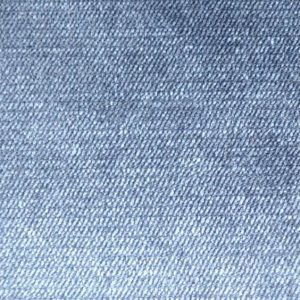
The gallery shows the fabric in multiple solid colors and states that the product has two sides. Because the two surfaces may differ in appearance or texture, the approved sample should clearly identify which side will be used as the garment face. Buyers should also confirm whether both sides are suitable for visible use.
Exact construction, thickness, opacity, drape, surface luster, and quantified stretch recovery are not provided. These characteristics should be assessed from a physical sample rather than inferred from the fiber composition alone.
Four-way stretch can improve comfort at the waist, hips, knees, and seat, making this fabric relevant to slim trousers, pull-on pants, travel pants, casual office styles, and other movement-focused bottoms.
For close-fitting trousers, buyers should confirm stretch percentage, recovery, opacity, pilling resistance, abrasion performance, and dimensional stability. Pocket construction, waistband reinforcement, seam type, and pattern reduction should be developed around the approved fabric rather than a generic stretch allowance.
The source specifically recommends the fabric for skirts and dresses. Its soft, lightweight character and multidirectional stretch can support fitted dresses, stretch sheath silhouettes, casual day dresses, straight skirts, and styles that require comfortable movement.
Opacity and drape are not specified. Light colors, body-conscious silhouettes, and unlined garments should therefore be evaluated for show-through. Depending on the approved weight and surface appearance, a lining or underlayer may be needed.
The source identifies jackets, coats, and autumn clothing as intended applications. The fabric may be suitable for lightweight fashion jackets, flexible overshirts, soft casual outer layers, travel jackets, and transitional-season pieces where freedom of movement matters.
Thermal insulation, wind resistance, water resistance, and waterproof performance are not stated. Buyers developing technical outerwear should communicate any required coating, lamination, repellency, or weather-performance specification before sampling and request the corresponding test data.
Shirts and blouses are included in the product-page tags. Stretch can improve comfort through the shoulders, elbows, and upper body, especially in fitted shirts, shaped blouses, tunic-style tops, and uniform-inspired garments.
Because the GSM and construction are not stated, buyers should first confirm whether the selected quality has the required drape, opacity, breathability, seam appearance, and next-to-skin comfort. Sampling is particularly important for pale colors and close-fitting designs.
The source also recommends the fabric for activewear and casual clothing. Its four-way stretch can support easy movement in casual sets, commuter garments, stretch dresses, warm-up pieces, and low-to-moderate activity styles.
However, moisture-wicking, air permeability, compression, UV protection, and quantified recovery are not stated. The fabric should not be presented as high-performance sportswear without testing the properties required by the intended activity and market.
This fabric is supplied on a make-to-order basis. Customer-specified colors are available, and the gallery shows 49 reference color swatches. Custom dyeing, printing, OEM service, and logo development may be evaluated according to the design, quantity, process, and end-use requirements.
A free A4 reference sample can be provided. A standard lab dip normally takes 3–5 days, while a plain-color approval sample normally takes 7–10 days.
The source contains two different bulk-production lead-time statements:
Buyers should therefore obtain a written lead time for the specific quantity, color count, finish, testing program, and delivery date before confirming the purchase order.
Monthly production capacity is stated as more than 3 million meters. MOQ is not listed and should be confirmed for the selected color, specification, and customization route.
Pricing depends on quantity, quality level, requested functions, and other order requirements. The existing page describes three quantity-based online pricing tiers, with more favorable pricing available at higher quantities. A current quotation is required.
For first-time clients, the usual large-order arrangement is a 30% down payment and 70% before shipment by T/T. L/C at sight is normally accepted, L/C may be considered for repeat clients, and alternative terms can be discussed in advance. Shipping options shown on the source page include express and sea freight.
Located in Wujiang District, Suzhou, FabricsTrades operates within one of the world’s most concentrated textile manufacturing regions and has its own 4-way stretch fabric manufacturing capabilities.
The company’s proximity to specialized weaving, knitting, dyeing, printing, coating, finishing, and garment-support facilities enables its team to assist with sourcing, adaptation, sampling, and product development. If the standard quality does not fully meet a project’s requirements, FabricsTrades can help evaluate alternative constructions, colors, finishes, specifications, or custom-development routes.
Availability and feasibility depend on the intended application, order quantity, performance target, destination market, and required documentation. Buyers are encouraged to communicate these requirements before sampling and quotation.
Factory visits are welcome, and airport or railway-station pickup may be arranged.
For this polyester-spandex fabric, compliance requirements depend on the final garment, dye or print system, any added functional finish, destination market, and date the finished product is placed on sale.
Buyers supplying general-public clothing to the EU should review the Restriction REACH PFHxA de l'UE. The restriction begins applying to general-public clothing, related accessories, and footwear on 10 October 2026. If a program includes water repellency, stain resistance, coating, lamination, printing, or another chemistry-intensive process, communicate the restricted-substance requirement before sampling and confirm the appropriate declarations and testing for the final material.
EU-bound apparel programs should also monitor the ESPR et Passeport Produit Numérique. Product-specific obligations and implementation dates depend on the applicable delegated rules, but buyers can prepare by collecting accurate fiber-composition data, supplier and process traceability, substances-of-concern information, and supporting technical documentation.
The source page does not state that this fabric is certified, PFAS-free, REACH compliant, or supplied with a standard coating or water-repellent finish. No such status should be assumed from the composition alone.
Before bulk production, buyers should confirm the legal and retailer requirements for the destination market. When necessary, contact FabricsTrades to request available test reports, certificates, declarations, technical data, traceability information, or third-party testing support. Document availability may depend on the final specification, finish, production batch, destination, and testing request.
Une immersion en laboratoire prend normalement 3 à 5 jours. Un échantillon d'approbation de couleur unie prend normalement 7 à 10 jours.
Yes. OEM feasibility depends on the buyer’s requirements, and logo customization can be developed for suitable orders. Confirm the artwork, method, placement, quantity, and approval process before ordering.
La capacité de production déclarée est supérieure à 3 millions de mètres par mois.
The existing FAQ states 3–20 days for mass production. The product specification table separately states normally 15–25 days after the down payment is ready and the lab dip is confirmed, depending on the order. Confirm the applicable lead time in the quotation and purchase order.
Yes. Factory visits are welcome, and airport or railway-station pickup may be arranged.
The price depends on quantity, quality level, requested functions, and other order requirements. The existing page describes three quantity-based price tiers, with more favorable pricing at higher quantities. Contact FabricsTrades for a current quotation.
Un mètre équivaut à 0,9144 mètre.
This 4-way stretch fabric is composed of 90% polyester and 10% spandex. Its exact construction, GSM, width, and measured stretch-and-recovery values should be confirmed for the selected quality.
Yes. These are among the applications stated on the source page. For jackets, confirm whether additional body, lining, wind resistance, or water resistance is required; for pants and dresses, confirm opacity, recovery, drape, and seam performance.
A lining is not automatically required, but the decision depends on the selected color, GSM, opacity, garment silhouette, and comfort target. Evaluate a physical sample—especially in pale colors or fitted styles—before approving an unlined garment.
Yes. The fabric can be made in customer-specified colors and is described as suitable for dyeing and printing. Approve the lab dip or print strike-off and confirm colorfastness, artwork, process, MOQ, and lead time before bulk production.
Yes. Buyers can ask FabricsTrades about available test reports, certificates, declarations, technical information, traceability records, and third-party testing support. Availability depends on the final specification, color, finish, production batch, destination market, and required standard.
Pour un devis précis ou un échantillon d’évaluation, veuillez fournir :
Contact FabricsTrades to request a quotation, free A4 reference sample, lab dip, approval sample, available technical documentation, or an evaluation of custom-development options.



Erreur: Formulaire de contact introuvable.