


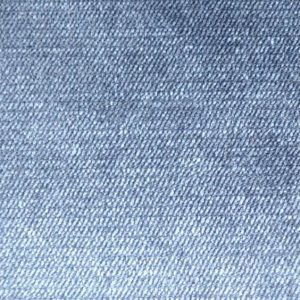
This 100% polyester broken-card fabric is designed for shirt and blouse programs requiring a soft hand and controlled semi-gloss appearance. Its restrained luster supports polished fashion, officewear, and dress-shirt aesthetics without an excessively shiny surface.
Pour les nouveaux clients, nous effectuons généralement un acompte de 30 % et 70 % avant l'expédition via T/T ; Pour les clients réguliers, nous envisagerions L/C. D'autres conditions de paiement peuvent être négociées.
Modes de paiement pour l'achat d'échantillons :

This 100% polyester broken-card fabric combines a soft hand feel with a half-gloss, or semi-gloss, surface. It is primarily intended for shirts and may also be evaluated for blouses, shirt dresses, and related fashion garments.
The restrained luster can give finished garments a cleaner and more polished appearance than a fully matte fabric while avoiding the pronounced shine associated with highly lustrous materials. Because “broken-card fabric” can refer to different yarn and construction combinations in international trade, buyers should confirm the exact weave or knit structure, yarn specification, weight, width, stretch, and finish against the quotation, technical information, and approved sample.
| Spécification | Informations sur les produits disponibles |
|---|---|
| Nom du produit | Feel-Soft Semi-Gloss Broken-Card Fabric, 100% Polyester Fabric for Shirts |
| Fabric designation | Broken-card garment fabric; exact construction should be confirmed |
| Composition | 100% polyester |
| Sensation de la main | Soft |
| Aspect des surfaces | Half glossiness / semi-gloss |
| Demande principale | Chemises |
| Demandes conditionnelles | Blouses, shirt dresses, and related garments, subject to sample approval |
| Yarn count or denier | Confirmez avec FabricsTrades |
| Weave or knit construction | Confirmez avec FabricsTrades |
| Weight / GSM | Confirmez avec FabricsTrades |
| Largeur | Confirmez avec FabricsTrades |
| Densité | Confirmez avec FabricsTrades |
| Étirement et récupération | Confirm with FabricsTrades; do not assume stretch from the product name |
| Color availability | Confirm current colors and custom-color feasibility |
| Finish or treatment | Confirm whether the required finish is standard, optional, or unavailable |
| Care instructions | Establish after testing the final color, construction, and finish |
| MOQ and sample MOQ | Confirm in the project quotation |
| Sample and bulk lead time | Confirm according to the selected specification, color, quantity, and production route |
| Packaging, shipping, and payment | Confirm in the quotation or pro forma invoice |
The confirmed composition is 100% polyester. Polyester is widely used in commercial shirt programs because it can be engineered into many different weights, structures, surface effects, and drape profiles. However, composition alone does not determine breathability, opacity, stretch, wrinkle behavior, dimensional stability, or wash performance. These characteristics depend on the complete construction and finishing route and should be verified for the final specification.
The product is described as having a soft feel. This can be commercially useful for garments worn close to the body, particularly shirts and blouses where surface harshness may affect comfort. Buyers should compare the actual hand feel with their reference garment or approved swatch because softness can vary by color, finishing batch, yarn, density, and post-treatment.
The half-gloss surface provides a moderate level of light reflection. This appearance may help create a polished garment without the strong shine of a high-luster satin. The perceived sheen can change under retail lighting, photography, daylight, and different garment orientations, so color and luster should be approved under the intended viewing conditions.
“Broken-card fabric” is the product’s listed trade designation. The exact technical construction is not stated and should not be assumed from the name alone. Before bulk ordering, request confirmation of the yarn specification, weave or knit structure, density, stretch direction, and finishing process.
Shirts and blouses are the primary recommended applications. The soft hand can support wearer comfort, while the semi-gloss surface can add visual refinement to button-front shirts, relaxed blouses, dress shirts, and fashion tops.
The final silhouette should be selected only after confirming the fabric’s weight and drape. A lighter, more fluid version may suit relaxed blouses and softly gathered designs, while a version with more body may be better for structured collars, cuffs, plackets, or overshirt silhouettes.
Before production, evaluate:
The fabric may be evaluated for shirt dresses, tunics, coordinated tops, or lightweight separates when the approved sample provides the required opacity, drape, and structure.
For dresses, test whether a lining or slip layer is necessary, particularly in pale colors. Buyers should also examine how the semi-gloss surface behaves over larger garment panels, since shade direction and light reflection may be more noticeable than on a conventional shirt.
The polyester composition and polished appearance may make the fabric visually suitable for office, hospitality, promotional, or uniform-inspired shirts. These are conditional applications rather than confirmed performance uses.
Programs involving frequent washing or extended wear should define and test the required:
Do not approve the fabric for a uniform program solely from its composition or appearance.
The semi-gloss effect may complement occasion shirts, evening blouses, stagewear, or fashion garments requiring subtle light reflection. Approve the luster under the lighting used for photography, retail presentation, events, or performance environments.
GSM and width are essential for costing, marker planning, garment balance, and consumption calculations. Request the usable cuttable width rather than relying only on the nominal roll width.
Opacity should be checked in every important color. Pale shades may require a lining, underlayer, pocketing adjustment, or modified garment construction.
The product name does not establish whether the fabric is fluid, crisp, or moderately structured. Test a full garment or representative panel before finalizing collars, cuffs, plackets, gathers, pleats, and silhouettes.
Do not assume the fabric is stretchable. Request the stretch direction, extension percentage, recovery result, and applicable test method if movement or close fit is important.
Use production fabric to evaluate needle size, point type, thread, stitch length, seam allowance, edge finishing, and pressing conditions. A sewing trial can identify needle marks, puckering, seam slippage, fraying, snagging, and feed problems before bulk cutting.
Semi-gloss materials can reflect light differently according to fabric direction. Maintain consistent marker orientation when directional variation is visible. Shade bands, roll sequence, and cut-panel control should also be considered for large orders.
Polyester is thermoplastic, so excessive pressing or finishing temperatures may affect surface appearance or cause glazing. Establish pressing, fusing, washing, drying, and ironing instructions through trials on the final production fabric.
Testing should reflect the garment, destination market, buyer standard, color, and finish. Depending on the program, buyers may need to evaluate composition, weight, width, colorfastness, dimensional stability, seam performance, pilling, abrasion, restricted substances, and other retailer-specific requirements.
Custom colors, alternative weights, widths, constructions, finishes, printing, packaging, or other modifications should not be assumed to be standard features. Send the complete project requirement to FabricsTrades so the team can evaluate feasibility and confirm the appropriate production or sourcing route.
A practical approval process should include:
MOQ, lab-dip timing, sample-development timing, production capacity, bulk lead time, packaging, shipping, payment terms, and quantity-based pricing should be confirmed for the final specification rather than inferred from another product.
FabricsTrades is located in Wujiang District, Suzhou, at the center of a highly concentrated textile manufacturing region. In addition to operating its own four-way stretch fabric factory, the company works with specialized weaving, knitting, dyeing, printing, coating, finishing, and garment-support facilities.
If the standard broken-card fabric does not fully match a project, the team can help evaluate alternative constructions, weights, widths, colors, surface effects, or finishing routes. Feasibility, MOQ, lead time, testing, and commercial terms must be confirmed for each development.
For an accurate recommendation, provide a physical swatch, reference garment, photograph, Pantone color, technical specification, target price, required quantity, destination market, and performance standard.
Buyers supplying polyester shirts or related garments to the EU may need to monitor the developing requirements associated with the ESPR et Passeport Produit Numérique.
Depending on the applicable product rules, buyers may need reliable fiber-composition data, product identification, production-stage traceability, substances-of-concern information, and supporting conformity documents. Requirements will depend on the final garment, destination market, date of sale, and applicable delegated acts.
Le 2024–2026 Global Textile Compliance overview provides context for changing chemical, traceability, labeling, and product-documentation expectations across important markets.
These resources do not prove that this fabric is certified or compliant. Before bulk production, communicate the destination country, garment category, retailer RSL, testing standard, labeling requirement, and document request. If a coating, water-repellent treatment, stain-resistant finish, print, or other chemical treatment is added, evaluate that final specification separately.
Available reports, certificates, declarations, technical data, and traceability records may depend on the selected construction, finish, production facility, batch, and testing request.
It is made from 100% polyester. The exact yarn count, construction, density, weight, and finish should be confirmed with FabricsTrades.
No. The product is described as having half glossiness, meaning a semi-gloss rather than highly reflective appearance. Perceived luster may vary by color, lighting, fabric direction, and finishing batch.
Its primary application is shirts. It may also be evaluated for blouses, shirt dresses, and related garments after confirming the required weight, drape, opacity, stretch, and sewing performance.
Stretch is not confirmed by the available product information. Request the stretch direction, extension percentage, recovery data, and test method if stretch is important to the garment.
The available GSM and width must be confirmed with FabricsTrades. Include the target weight, usable width, and quantity in the quotation request.
A lining may be necessary depending on the selected color, weight, density, garment coverage, and opacity requirement. Evaluate a full-width sample or prototype under realistic lighting before deciding.
Customization feasibility must be confirmed for the individual project. Send the required color, weight, width, construction, finish, quantity, and reference sample so FabricsTrades can assess the available options.
Check hand feel, semi-gloss appearance, color, width, GSM, opacity, drape, stretch, seam quality, needle marking, pressing response, dimensional stability, and care performance relevant to the garment.
MOQ and lead time are not stated in the confirmed product information and should be quoted for the selected specification. Color development, finishing, testing, raw-material availability, and order quantity may affect the schedule.
Buyers should request the required documents before sampling and quotation. Availability may depend on the final construction, finish, production batch, destination market, certification requirement, and testing scope.
For a quotation, sample, or development evaluation, provide:
Contact FabricsTrades to request an available sample, technical information, quotation, color-development evaluation, test report, certificate, declaration, traceability information, or custom-development assessment.



Erreur: Formulaire de contact introuvable.