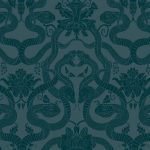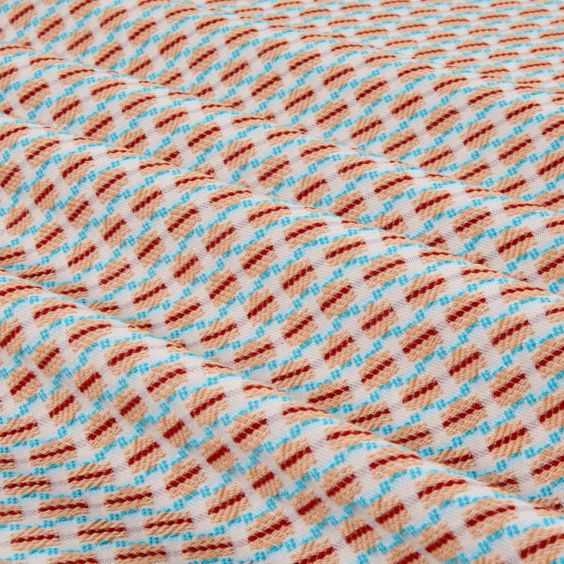
Brocade is a decorative woven fabric in which ornamental motifs are formed as part of the fabric structure. The designs are commonly created with supplementary patterning yarns, producing floral, geometric, pictorial, or metallic effects that may appear raised against the ground fabric.
Although traditional brocade is strongly associated with silk and metallic yarns, modern brocade can be woven from cotton, wool, rayon or viscose, polyester, blends, and specialty decorative yarns. Its performance therefore depends on the complete specification—not simply the word “brocade.”
Les acheteurs peuvent consulter les disponibles brocade fabric options while evaluating the required composition, weight, width, pattern repeat, color, backing, hand feel, and end use.
Brocade Fabric at a Glance
| Attribut | Description typique |
|---|---|
| Nom du tissu | Brocart |
| Fabric category | Decorative woven fabric |
| Pattern formation | Woven into the fabric, commonly using supplementary weft or other compound patterning structures |
| Fibres communes | Silk, cotton, wool, rayon or viscose, polyester, blends, and metallic-effect yarns |
| Surface | Ornamental, often lustrous or textured; the effect varies by construction |
| Extensible | Usually low unless elastane, stretch yarn, or a stretch construction is specified |
| Respirabilité | Depends on fiber, density, weight, backing, and finishing |
| Poids | Available from relatively light apparel qualities to heavy furnishing fabrics |
| Soins | Must be determined from the actual fiber blend, dyes, metallic components, and finish |
| Applications courantes | Formalwear, ceremonial clothing, jackets, costumes, accessories, upholstery, drapes, cushions, and decorative panels |
Thread count alone is not a reliable way to compare brocade. Professional buyers should instead request measurable construction data such as ends and picks, yarn count, fabric weight, usable width, pattern repeat, dimensional stability, and relevant performance results.
Points clés à retenir
- Brocade patterns are woven into the fabric rather than applied by printing.
- Many brocades use supplementary patterning yarns, but the exact weave structure is not identical across every product.
- Silk is historically important, while contemporary brocade also uses cotton, rayon, polyester, wool, blends, and metallic-effect yarns.
- Brocade is generally decorative and dimensionally stable, but its weight, drape, breathability, durability, and care requirements vary considerably.
- Buyers should approve the physical sample, pattern scale, reverse-side construction, color, composition, and test requirements before bulk production.
- Fiber labeling, traceability, chemical specifications, and environmental claims must be evaluated for the destination market and final product.
What Is Brocade Fabric?

Brocade is a class of patterned woven textiles known for elaborate motifs and visual depth. Extra patterning yarns are introduced during weaving so that the design becomes part of the cloth itself.
The decorative yarns may float across selected areas of the face or reverse. In some constructions, unused patterning yarns continue across the back; in others, they are inserted only where the motif requires them. The reverse side can therefore look different from the face and may contain visible floats.
Brocade is sometimes described as “embossed cloth,” reflecting the visual impression of raised ornament. However, embossed fabric is not an exact technical synonym: embossing can also refer to a pattern created by pressure or heat after fabric production.
Is Brocade the Same as Embroidery?
No. Embroidery adds stitches to an existing fabric, while brocade motifs are formed during weaving. A brocade can receive additional embroidery, beads, sequins, printing, or foil, but those treatments are separate from the brocade structure.
Is Brocade Always Made from Silk?
No. Silk brocade remains important for luxury and ceremonial applications, but brocade describes a construction and decorative effect rather than one mandatory fiber.
A product sold as brocade may contain:
- Soie
- Coton
- Laine
- Rayon or viscose
- Polyester
- Nylon
- Metallic or metallic-effect yarn
- Multiple fibers in the ground and decorative portions
The fiber composition should be confirmed through the supplier’s specification and, where required, testing.
A Brief History of Brocade
Brocading has a long history across Asian, Middle Eastern, and European textile traditions. Silk weaving centers in China, India, Iran, Byzantium, and later Italy produced elaborate textiles for courts, religious institutions, ceremonial dress, and wealthy households.
Surviving museum textiles demonstrate considerable structural variation. For example, the Metropolitan Museum of Art documents Chinese silk satin with supplementary-weft and metallic-thread patterning, as well as Iranian compound weaves brocaded with metal-wrapped yarns. These examples show why brocade should be understood as a broad family of decorative woven constructions rather than one standardized fabric.
Before mechanized pattern control, complex fabrics required extensive loom preparation and highly skilled labor. Joseph-Marie Jacquard’s early-19th-century mechanism used programmed control to select warp yarns, making complex woven patterns more repeatable. The Metropolitan Museum of Art’s history of European textile production describes how the Jacquard mechanism accelerated patterned-textile production without eliminating the need for careful design and weaving control.
Brocade Today
Modern mills commonly use electronically controlled jacquard weaving equipment. Digital pattern development allows designs to be scaled, recolored, repeated, and engineered for specific widths or finished products.
Brocade remains common in:
- Ceremonial and traditional clothing
- Eveningwear and occasionwear
- Jackets, skirts, dresses, trousers, and waistcoats
- Theatrical costumes
- Ecclesiastical vestments
- Handbags, shoes, and accessories
- Upholstery, drapery, cushions, and decorative panels
Its suitability for each application depends on the fabric’s weight, abrasion resistance, seam behavior, drape, reverse-side floats, and care requirements.
How Is Brocade Fabric Made?

Brocade production generally follows these stages:
- Design development: The mill converts artwork into a weave plan defining the motif, repeat, yarn placement, colors, and pattern transitions.
- Fiber and yarn selection: The ground and decorative yarns are selected according to the required sheen, strength, hand feel, cost, durability, and care method.
- Yarn preparation and coloration: Yarns are normally dyed or otherwise prepared before weaving when a multicolored woven pattern is required. Solution-dyed, spun-dyed, metallic-effect, and specialty yarns may also be used.
- Warp preparation: Warp yarns are arranged and tensioned on the loom. Warp density and yarn characteristics influence stability, coverage, weight, and appearance.
- Ground and pattern weaving: Structural warp and weft yarns form the ground fabric, while supplementary or compound patterning systems create the decorative motif.
- Continuous or discontinuous patterning: Decorative yarns may travel across the full width or be introduced only in selected areas. The chosen method affects yarn use, reverse-side appearance, cost, and finishing requirements.
- Finishing and inspection: The fabric may be washed, heat-set, calendared, softened, backed, laminated, or otherwise finished. The mill should inspect pattern repeat, color, width, weight, bowing, skew, floats, broken yarns, and surface defects.
It is inaccurate to assume that every brocade consists of exactly three yarn systems. Supplementary-weft brocade is common, but supplementary warp, multiple pattern wefts, and more complex compound structures also exist.
Key Properties of Brocade
Brocade’s properties are not universal because both construction and fiber composition vary.
| Propriété | Practical interpretation |
|---|---|
| Apparence | Ornamental and often lustrous, with motifs formed during weaving |
| Texture | Can be smooth, crisp, raised, ribbed, or heavily textured |
| Draper | Ranges from structured to moderately fluid |
| Poids | Depends on yarn size, density, patterning, backing, and fiber |
| Extensible | Normally limited unless stretch is intentionally engineered |
| Respirabilité | Lower in dense or backed qualities; potentially higher in lighter natural-fiber constructions |
| Durabilité | Can be durable, but long floats and metallic yarns may snag or abrade |
| Fraying | Cut edges may fray and usually require secure seam finishing |
| Reversibility | Usually has a recognizable face and reverse; it should not automatically be described as reversible |
| Soins | Determined by fiber, dye, metallic components, backing, and finish |
Avantages
- Distinctive woven ornament with strong visual depth
- Patterns do not depend on surface printing
- Wide choice of fibers, colors, scales, and motifs
- Suitable for both fashion and interior applications
- Can provide a structured silhouette
- Offers opportunities for custom pattern and color development
Limites
- Usually more expensive than a comparable plain fabric
- Long floats may snag during cutting, sewing, use, or cleaning
- Large repeats can increase cutting waste
- Pattern matching may raise garment or upholstery consumption
- Some qualities are heavy, stiff, or unsuitable for close-fitting garments
- Metallic-effect yarns can complicate pressing, laundering, recycling, and fiber analysis
- Reverse-side floats may require lining or backing
Types of Brocade Fabric

1. Silk Brocade
Silk brocade uses silk in the ground, patterning yarns, or both. It is valued for luster, color depth, and luxury positioning. Buyers should verify whether “silk brocade” means 100% silk or a blend containing silk.
2. Cotton Brocade
Cotton brocade can provide a softer, less lustrous appearance than silk and may be suitable for garments, crafts, and interiors. Its comfort and care behavior depend on density, finishing, dyeing, and whether the cotton is blended with another fiber.
3. Himru or Himroo Brocade
Himru is associated with the textile traditions of India, particularly the Deccan region. It commonly combines silk-like decorative effects with cotton or other yarns. Fiber content should be verified rather than inferred from the name.
A silk-and-cotton composition does not automatically make a fabric stretchy. Meaningful stretch normally requires an elastic fiber, stretch yarn, or suitable construction.
4. Synthetic Brocade
Synthetic brocade commonly uses polyester, rayon, nylon, metallic-effect yarns, or blends. It can offer repeatability, color options, abrasion resistance, or a lower price than some natural-fiber alternatives.
Performance and environmental claims should be assessed product by product. “Synthetic” does not identify the exact polymer, recycled content, dyeing method, or finish.
5. Continuous Brocade
In continuous brocading, supplementary pattern yarns continue across or through areas where they are not visible on the face. This can create floats on the reverse, which may be retained or cut depending on the construction and finishing process.
6. Discontinuous Brocade
Discontinuous brocading introduces decorative yarn only where the motif requires it. This can reduce unused floats but may increase weaving complexity and labor.
7. Zari Brocade
Zari brocade uses gold-, silver-, or metallic-looking decorative yarn. Traditional zari can incorporate precious or base metal around a textile core, while contemporary versions frequently use metallized film or other synthetic components.
The term “zari” does not prove precious-metal content. Buyers should request the yarn specification and avoid making gold or silver claims without supporting evidence.
How Is Brocade Fabric Used?

Vêtements
Brocade is used for dresses, jackets, skirts, trousers, waistcoats, formal suits, occasionwear, ceremonial clothing, and costumes. Structured qualities work well where shape retention is desired, while lighter versions may be suitable for fuller silhouettes.
Garment developers should evaluate:
- Fabric weight and drape
- Pattern direction and repeat
- Placement across seams
- Needle damage and seam slippage
- Fraying at cut edges
- Pressing sensitivity
- Need for lining or interfacing
- Skin comfort
- Finished-garment cleaning method
Interiors
Heavy brocade can be used for drapery, upholstery, cushions, wall panels, headboards, and decorative accents. Upholstery programs should not rely on appearance alone; they may require abrasion, seam, colorfastness, flammability, and dimensional-stability testing appropriate to the destination market and use.
Accessories and Specialist Products
Brocade may also be used for handbags, shoes, boxes, book covers, table runners, ecclesiastical items, and decorative packaging. Lamination or backing can improve stability but changes weight, hand, care, and end-of-life options.
Brocade vs. Jacquard, Damask, and Embroidery
| Material or technique | Distinction principale |
|---|---|
| Brocart | Decorative woven fabric, commonly with supplementary patterning yarns and a distinct face and reverse |
| Jacquard | A pattern-control mechanism and broad category of intricately woven fabrics; brocade can be produced on a jacquard loom |
| Damask | Patterned woven fabric commonly created through contrasting weave effects and often designed to be reversible |
| Embroidery | Decorative stitching added to an already formed fabric |
| Color or pigment applied to the surface rather than forming the design through yarn interlacing | |
| Tapestry | A weft-faced construction in which discontinuous wefts generally form both the image and fabric structure |
Commercial terminology is not always applied consistently. A physical sample and construction analysis provide more reliable identification than a product name alone.
Where Is Brocade Fabric Produced?

Brocade is produced in multiple textile regions. China has substantial jacquard-weaving and synthetic-yarn capacity, while India remains important for silk, zari, Banarasi, Himru, and ceremonial textiles. Italy and other European weaving centers continue to produce luxury fashion and furnishing qualities. Specialized production also exists elsewhere in Asia, the Middle East, and Europe.
The original country of weaving does not by itself predict quality. Buyers should compare mills using the same specification, approved sample, testing plan, inspection method, and commercial terms.
How Much Does Brocade Fabric Cost?
Brocade often costs more than a plain woven fabric made from similar yarns because it can require:
- More complex pattern development
- Additional patterning yarns
- Slower or more demanding weaving
- Metallic or specialty materials
- Large minimum quantities for custom designs
- Extra inspection and mending
- Pattern matching and higher cutting consumption
- Backing, lamination, or specialty finishing
Price can vary substantially according to fiber, yarn count, fabric weight, width, repeat size, number of colors, order quantity, loom efficiency, finishing, testing, and certification requirements. Buyers should compare quotations against an identical technical specification.
Brocade Sourcing and Quality-Control Checklist
Before approving bulk production, confirm:
- Exact fiber composition of the ground and decorative yarns
- Whether metallic yarn contains metal, metallized film, or another construction
- Finished weight and usable width
- Pattern dimensions and repeat
- Face, reverse, and pattern direction
- Color standard and acceptable shade tolerance
- Selvage requirements
- Reverse-side floats and cutting requirements
- Snagging, abrasion, seam, and fraying behavior
- Stabilité dimensionnelle
- Exigences de solidité des couleurs
- Backing, coating, or lamination
- Méthode de soins
- Roll length, defect marking, and packing requirements
- Required certificates, test reports, declarations, and transaction documents
A pre-production sample should be evaluated in the intended garment or product construction. For a broader inspection framework, see this fabric quality inspection guide for procurement.
Sewing and Care Considerations
Brocade should be handled according to its confirmed composition and finish. General production precautions include:
- Test pressing on a cutting before using heat or steam.
- Protect metallic and raised surfaces with a press cloth.
- Keep all cut pieces aligned with the pattern direction.
- Allow extra fabric for matching large motifs.
- Use a suitable sharp needle and test stitch formation.
- Stabilize and finish raw edges promptly.
- Consider lining to protect reverse-side floats.
- Test fusible interlining because heat or adhesive can affect the surface.
- Avoid publishing a washing temperature before the completed product has been assessed.
Some brocades can be gently washed, while others require professional cleaning. A universal dry-clean-only or machine-wash recommendation would be unreliable.
Considérations environnementales
The environmental profile of brocade depends on more than the weave name. Relevant factors include:
- Fiber cultivation or polymer production
- Sericulture or animal-fiber production
- Dyeing and finishing chemistry
- Energy and water use
- Metallic or metallized yarn construction
- Fabric durability and expected product life
- Pattern-related cutting waste
- Backings, coatings, and adhesives
- Recycled-content verification
- Fiber shedding
- Ability to reuse or recycle the finished product
Silk, cotton, wool, rayon, and synthetic fibers each have different impact profiles. No fiber should be described as automatically sustainable without considering its production method, processing, durability, evidence, and end use.
Dense blends and metallic-effect yarns can be difficult to separate at end of life. Buyers pursuing circularity goals should therefore discuss composition, detachable components, backing, traceability, and recycling routes during product development—not after production.
Brocade Fabric Certifications and Claim Verification
There is no single certification that automatically applies to every brocade fabric. Eligibility depends on the fiber, supply chain, product, market, and claim.
Examples include:
- Marque de soie labels for qualifying pure-silk products supplied by authorized users in India
- Woolmark certification for eligible wool yarns, fabrics, apparel, and interior products that meet the applicable program requirements
- Le Global Recycled Standard for qualifying recycled-content supply chains and processing facilities
- Le SUPIMA licensing and traceability program when an eligible cotton product is marketed using the SUPIMA trademark
Certification must be confirmed for the particular product and supply chain. A supplier’s general certificate does not necessarily cover every fabric, color, batch, production site, or transaction.
Mise à jour actuelle de la réglementation et du marché
As of August 11, 2026, brocade buyers should pay particular attention to fiber identification, traceability, product data, restricted-substance specifications, and environmental claims.
Union européenne
Regulation (EU) No 1007/2011 sets rules for textile fiber names and the labeling or marking of fiber composition for covered textile products. Brocade’s decorative yarns, blends, and metallic components can make composition communication more complex, so buyers should confirm how the applicable rules treat each component of the finished product. The official EU textile fiber-labeling regulation should be reviewed for the exact product and market.
The Ecodesign for Sustainable Products Regulation establishes a framework for future product-specific ecodesign and Digital Product Passport requirements. The European Commission’s 2025–2030 working plan prioritizes textiles and apparel, with adoption of a textile delegated act currently planned for the fourth quarter of 2027. That date is indicative and may change.
This does not mean that every brocade fabric already requires a Digital Product Passport. Product-specific requirements, scope, transition periods, and required data will depend on the delegated act and its implementation. Buyers supplying the EU market can review FabricsTrades’ guide to ESPR et passeports produits numériques pour les chaînes d'approvisionnement en tissus chinoises aux côtés du European Commission’s current textile ESPR timeline.
États-Unis
For covered products sold in the United States, the FTC Textile Fiber Rule requires disclosures including generic fiber names, percentages by weight, the manufacturer or responsible marketer, and the country where the product was processed or manufactured. Finished-product requirements should be confirmed using the FTC’s Textile Fiber Rule guidance.
Actions pratiques de l'acheteur
Before sampling or quotation, communicate:
- Destination market and finished-product category
- Complete fiber and decorative-yarn composition
- Intended labeling and care language
- Restricted-substance specification
- Testing methods and acceptance criteria
- Required batch and transaction records
- Environmental or recycled-content claims
- Certificate and declaration requirements
Requirements vary by market, product category, treatment, batch, and date of sale. Buyers should verify current legal, retailer, and contractual requirements before bulk production.
Foire aux questions
Is brocade woven or embroidered?
Brocade is woven. Its principal decorative motifs are created during weaving, although embroidery or other surface decoration can be added afterward.
Is brocade always heavy?
No. Many furnishing and ceremonial brocades are heavy, but lighter apparel qualities are also available. Weight must be confirmed in grams per square meter or another agreed unit.
Is brocade the same as jacquard fabric?
Not exactly. Jacquard refers to a pattern-control method and a broad group of woven patterned fabrics. Brocade is a particular decorative fabric that is commonly made using jacquard equipment.
Does brocade stretch?
Most conventional brocade has limited stretch. Stretch requires an elastic fiber, stretch yarn, mechanical construction, or another intentionally engineered feature.
Can brocade be washed?
Some brocade can be washed, while other qualities require professional cleaning. The correct method depends on the fiber blend, dyes, metallic yarn, backing, finish, and finished-product construction.
Is brocade suitable for upholstery?
Some brocade is suitable for upholstery, but decorative appearance alone does not prove upholstery performance. Buyers should specify the required abrasion, seam, colorfastness, flammability, and cleaning performance.
How can buyers identify good-quality brocade?
Evaluate the approved sample for pattern clarity, yarn consistency, shade, weight, width, bowing, skew, snagging, reverse-side floats, defects, seam behavior, and performance against the end-use specification.
Can brocade be sustainable?
Brocade can be developed with lower-impact or verified materials, but the weave name alone does not establish sustainability. Any claim should be supported by product-specific composition, processing, durability, traceability, and certification evidence.
Selecting Brocade for a New Product
Brocade combines woven structure with decorative patterning, but its commercial name does not provide a complete specification. Successful sourcing begins with the intended application, followed by confirmation of fiber content, weight, width, repeat, hand feel, reverse-side construction, care, testing, and documentation.
FabricsTrades is based in Wujiang District, Suzhou, within a major textile manufacturing and supply-chain cluster. The company can help buyers evaluate brocade sourcing options, alternative constructions, colors, finishes, samples, testing requests, and documentation needs. Availability and support should be confirmed against the final specification and project requirements.