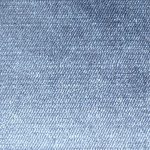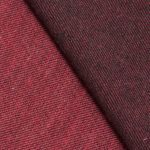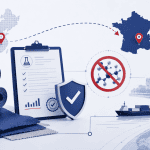
Spandex is a synthetic fiber known for exceptional elasticity and recovery. It can extend several times beyond its original length and return close to its initial shape, which is why mills blend it with cotton, polyester, nylon, rayon, and other fibers to make close-fitting or movement-friendly fabrics.
In North America, the generic fiber name is usually spandex. Elastane is the commonly used equivalent in Europe and many other markets. LYCRA®, by contrast, is a trademark of The LYCRA Company and should only describe products containing genuine branded fiber.
Spandex Fabric at a Glance
- Generic fiber names: Spandex and elastane
- Common branded name: LYCRA® fiber
- Fiber type: Fibre élastomère synthétique
- Polymer family: Segmented polyurethane
- Primary characteristic: Haute élasticité avec récupération élastique
- Typical form: Filament incorporated into a blended woven or knitted fabric
- Common companion fibers: Polyester, nylon, cotton, rayon, and wool
- Typical applications: Leggings, swimwear, underwear, socks, cycling clothing, fitted denim, dancewear, medical textiles, and motion-capture suits
- Rétention de chaleur : Generally low, although thermal comfort depends mainly on the complete fabric construction
- Gestion de l'humidité : Dependent on the blend, knit or weave, finish, and garment design
- Care: Usually cool or warm washing and limited heat, subject to the supplier’s instructions
Spandex is a fiber rather than a single fabric construction. Two fabrics with the same elastane percentage can behave very differently because stretch also depends on yarn arrangement, fabric density, knitting or weaving method, heat setting, finishing, and the characteristics of the accompanying fibers.
What Is Spandex Fabric Made From?
Spandex is a manufactured elastomeric fiber produced from a segmented polyurethane polymer. Its molecular structure contains flexible segments that allow extension and harder segments that help pull the fiber back toward its original dimensions.
This combination produces the two qualities buyers normally want from elastane:
- Extensible: The material can extend substantially under force.
- Recovery: It can retract after the force is removed.
Stretch and recovery are not interchangeable. A fabric may stretch easily but recover poorly, resulting in bagging at the knees, elbows, seat, or waistband. For commercial development, recovery and dimensional stability can be more important than maximum elongation.
Spandex is rarely used alone in ordinary apparel. Mills usually combine a relatively small proportion with another fiber to provide elasticity while retaining the hand feel, appearance, abrasion behavior, moisture characteristics, and cost profile of the main material.

Are Spandex, Elastane, and LYCRA® the Same?
Spandex and elastane are accepted generic names for the same general fiber category. The terminology varies by market:
- Spandex is widely used in the United States and Canada. The word is commonly described as an anagram of “expands.”
- Elastane is widely used in Europe and is recognized internationally as a generic fiber name.
- LYCRA® is a registered trademark, not a generic synonym for every elastane fiber.
The U.S. Federal Trade Commission recognizes “spandex” as a generic manufactured-fiber name and permits “elastane” as the corresponding ISO term. U.S. textile labels generally must disclose applicable generic fiber names and percentages by weight, together with country-of-origin and responsible-company information. Buyers should consult the current FTC textile-labeling guidance for the finished product.
A fabric or garment should not be marketed as LYCRA® merely because it contains generic spandex. Trademark use requires genuine branded fiber and adherence to the brand owner’s conditions.
Key Properties of Spandex Fabric
Exceptional stretch and recovery
Spandex can extend several times beyond its relaxed length, although actual performance depends on the fiber grade and fabric construction. The original article’s “five to eight times” description is best treated as a broad fiber-level range rather than a guaranteed specification for every finished fabric.
Ajustement et liberté de mouvement améliorés
Adding elastane helps garments follow body movement and maintain a close fit. This is valuable in leggings, yoga wear, swimwear, cycling clothing, fitted trousers, underwear, and performance uniforms.
Rétention de forme
A properly engineered spandex blend can help waistbands, cuffs, socks, and fitted garment panels retain their shape. Poor yarn quality, excessive heat, unsuitable finishing, or inadequate recovery can still cause permanent growth.
Élasticité légère
A small elastane percentage can materially change fabric performance without making spandex the dominant fiber. The appropriate content should be selected through sampling and testing rather than assumed from percentage alone.
Limited heat resistance in use
The original article described spandex as highly heat-resistant, but this is misleading for finished-product care. Excessive laundering, drying, ironing, or processing heat can degrade elastic performance. Buyers should confirm heat-setting conditions and provide care instructions appropriate to the complete fabric.
Performance depends on the blend
Spandex does not automatically make a fabric breathable, moisture-wicking, durable, or pill-resistant. Those characteristics depend on the main fiber, construction, surface, dyeing, finishing, and garment design.
For example, a lightweight nylon-spandex knit and a dense polyester-spandex woven may contain similar elastane percentages but provide very different air permeability, drying time, abrasion resistance, and stretch direction.
How Is Spandex Fiber Made?
Most commercial spandex is manufactured by solution dry spinning. Exact chemistry and operating conditions vary by producer, but the general sequence is as follows.
1. Formation de prépolymère
A macroglycol reacts with a diisocyanate under controlled conditions to form a prepolymer. The formulation influences the fiber’s elasticity, strength, processing behavior, and resistance to degradation.
2. Rallonge de chaîne
The prepolymer undergoes a chain-extension reaction, commonly using a diamine. This builds the segmented polymer structure responsible for elastic behavior.
The original article referred to “diamine acid” and “chain extrusion.” The more accurate general terms are diamine chain extender et chain-extension reaction.
3. Préparation de la solution
The polymer is dissolved in a suitable solvent to create a controlled spinning solution. Filtration and viscosity control are important because contamination or inconsistent solution properties can cause filament defects.
4. Spinneret extrusion
The solution is forced through small openings in a spinneret, creating fine continuous streams.
5. Solvent removal and filament formation
Heated gas removes the solvent as the streams pass through the spinning cell. The polymer solidifies into filaments. Solvent-management and recovery systems are important operational and environmental controls.
6. Filament combining and finishing
Individual filaments may be combined into the required yarn size. A finish is applied to support winding, unwinding, knitting, weaving, and downstream processing.
7. Winding and fabric conversion
The elastane yarn is wound onto packages and supplied for processes such as bare-yarn knitting, covered-yarn production, core spinning, weaving, or circular knitting.
In a finished fabric, spandex may appear as:
- Bare elastane plated with another yarn in knitting
- Single-covered or double-covered yarn
- Air-covered yarn
- Core-spun yarn
- Weft-stretch yarn in woven fabric
- Warp-and-weft stretch components in four-way stretch fabric
Buyers who need more detail about converting elastic yarns into finished stretch textiles can review the processus de fabrication de tissu extensible dans quatre directions.

Two-Way Stretch and Four-Way Stretch
The term “two-way stretch” usually describes fabric that stretches primarily along one axis, often across the width. “Four-way stretch” generally means the fabric stretches in both lengthwise and crosswise directions.
These descriptions do not establish a standard performance level. Buyers should specify measurable requirements, including:
- Stretch percentage in each direction
- Recovery after a defined extension
- Residual growth
- Test method and conditioning
- Number of extension cycles
- Poids du tissu et largeur utile
- Changement dimensionnel après lavage
- Required hand feel and compression
For product development, FabricsTrades offers relevant four-way stretch fabric options and more specifically targeted nylon-spandex fabrics.
Common Uses of Spandex Fabric
Sportswear and activewear
Spandex blends are widely used in leggings, yoga clothing, cycling wear, dancewear, fitted training tops, team uniforms, and compression-style garments. The required fabric must balance stretch with recovery, opacity, abrasion resistance, moisture management, and seam performance.
Maillots de bain
Nylon-spandex and polyester-spandex constructions are common in swimwear. Chlorine exposure, ultraviolet light, salt water, sunscreen, heat, and repeated stretching can affect service life, so buyers should request application-specific testing.
Underwear and shapewear
Elastane helps garments fit closely and allows waistbands and support panels to recover after wear. Comfort depends on more than elastic content; fabric modulus, edge construction, seam placement, and garment sizing are also important.
Socks and hosiery
Spandex helps socks remain in position and makes them easier to put on and remove. It may be incorporated into the leg, cuff, or throughout the construction.
Stretch denim and fitted trousers
Cotton-spandex and blended stretch-denim constructions provide mobility while retaining a familiar cotton appearance. Recovery testing is important because insufficient stability may cause knee or seat bagging.
Industrial, costume, and entertainment uses
Highly elastic fabrics are used in fitted costumes, upholstery covers, specialized uniforms, and motion-capture suits. Each application may require different flame, abrasion, colorfastness, dimensional-stability, or surface requirements.
Avantages et limites
Avantages
- High elasticity and recovery
- Improved garment fit
- Greater freedom of movement
- Shape retention in fitted areas
- Useful performance at comparatively low blend percentages
- Compatibility with many woven and knitted constructions
- Broad applicability across apparel and technical products
Limites
- Sensitive to excessive heat
- Can deteriorate with chlorine, ultraviolet exposure, body oils, or harsh chemicals, depending on grade and construction
- May lose recovery after repeated use or unsuitable processing
- Makes some blended textiles harder to recycle
- Is not biodegradable under ordinary environmental conditions
- Can contribute to microfiber release from synthetic or synthetic-blend fabrics
- Usually costs more per unit of fiber than commodity polyester
- Requires careful dyeing, heat setting, finishing, and storage
How Much Does Spandex Fabric Cost?
There is no reliable universal price for spandex fabric. A quotation depends on the complete specification, including:
- Main fiber and elastane content
- Bare, covered, or core-spun yarn system
- Yarn count and elastane denier
- Knitted or woven construction
- Poids et largeur du tissu
- Dyeing or printing method
- Finitions
- Testing and documentation requirements
- Order volume
- Quantité de couleur
- Conditionnement
- Delivery terms
- Energy, solvent, chemical, and raw-material costs at the time of production
Although elastane yarn generally costs more than commodity polyester, it is often used as a minority component. Its effect on finished-fabric cost therefore cannot be calculated accurately from elastane percentage alone.
Considérations environnementales
The environmental impact of spandex should be evaluated across the full textile system rather than attributed to one simple cause.
Fossil-derived chemistry and manufacturing
Conventional elastane uses synthetic chemical feedstocks and requires energy, solvent control, and multiple processing stages. It is inaccurate to imply that laboratory synthesis makes the fiber independent of non-renewable resources.
Durability versus replacement
Elastic recovery can extend a garment’s useful life when it preserves fit and function. Conversely, premature loss of stretch can make a garment unusable before the main fiber is worn out. Suitable specifications and validation testing therefore matter to environmental as well as commercial performance.
Recycling difficulty
Elastane complicates the recycling of blended textiles, especially when recovery processes are designed for a single dominant fiber. Even a modest percentage can influence shredding, thermal processing, dissolution, or fiber-to-fiber recycling.
Microfiber release
Synthetic-blend fabrics may release fibers during manufacture, wear, and washing. Release rates depend on yarn type, fabric structure, surface treatment, garment construction, laundering, and product age. The original article’s unsupported claim that spandex makes up a large portion of U.S. waterway waste has been removed.
Recycled-content claims
Recycled-content elastane products exist, but recycled content does not by itself establish that a product is broadly “sustainable.” Claims should identify the relevant component, percentage, calculation method, chain-of-custody evidence, and certification scope.
A fabric should only be marketed as certified to the Global Recycled Standard or another program when the material, facility, transaction documentation, and claim all fall within the applicable certification scope.
Mise à jour actuelle de la réglementation et du marché
Spandex itself is not automatically associated with PFAS. However, stretch apparel may receive water-, oil-, soil-, or stain-repellent treatments, making finish chemistry an important sourcing question.
Under EU Regulation 2024/2462, restrictions on PFHxA, its salts, and PFHxA-related substances apply to specified consumer clothing, accessories, and footwear from 10 octobre 2026, subject to defined concentration limits and exemptions. The official EUR-Lex PFHxA restriction should be checked against the buyer’s product, material, treatment, and intended market.
This restriction is narrower than the broader universal PFAS restriction proposal still under evaluation. Buyers should not treat the proposal as though every PFAS use is already prohibited throughout the EU. FabricsTrades’ guide to the EU REACH PFHxA restriction and Chinese fabric supply chains provides related sourcing context but is not a substitute for the official legal text or product-specific advice.
The EU Ecodesign for Sustainable Products Regulation also establishes a framework through which product-specific ecodesign and Digital Product Passport requirements may be adopted. A DPP requirement applies when the relevant delegated act makes it applicable to a product group; it should not be described as an immediate universal requirement for every roll of spandex fabric. Buyers preparing EU programs may nevertheless benefit from collecting structured information on fiber content, finishes, suppliers, batches, test reports, and supporting environmental claims. See the FabricsTrades overview of ESPR and Digital Product Passport preparation.
For the U.S. market, textile labeling generally requires the relevant generic fiber names and percentages, country of origin, and manufacturer or marketer identification. Destination requirements vary, so labeling language, restricted-substance specifications, documentation, and testing expectations should be communicated before sampling and quotation.
How to Source Spandex Fabric
A useful request should describe performance rather than providing only a composition such as “polyester with 10% spandex.”
Include these details in the specification
- Intended garment or product
- Target fiber composition
- Knit or weave construction
- Poids du tissu et largeur utile
- Stretch direction
- Required stretch and recovery
- Surface appearance and hand feel
- Opacity requirement
- Compression or modulus expectation
- Exigences de solidité des couleurs
- Dimensional-stability limits
- Pilling and abrasion requirements
- Exposure to chlorine, perspiration, UV, or heat
- Finish chemistry
- Marché de destination
- Required test methods, reports, declarations, and certifications
- Packaging and traceability requirements
Evaluate a production-representative sample
Approve color, hand feel, appearance, stretch, recovery, opacity, and dimensional stability on a sample made with the intended construction and finish. A small hand swatch may not reveal garment-level issues such as seam grin, show-through, waistband rolling, or bagging.
Test the risks that matter to the product
Depending on the application, testing may cover:
- Composition des fibres
- Poids et largeur du tissu
- Étirement et récupération
- Residual growth
- Dimensional change
- Colorfastness to washing, rubbing, perspiration, water, chlorine, and light
- Boulochage
- Abrasion
- Résistance à l'éclatement ou à la traction
- Seam slippage or seam performance
- Spiralité ou biais
- Substances réglementées
- Finish performance
Métiers des Tissus guide d'inspection de la qualité des tissus provides a broader framework for pre-production and shipment checks.
Care Recommendations
Always follow the instructions for the finished fabric or garment. As a general starting point:
- Wash in cool or warm water
- Use a mild detergent
- Avoid chlorine bleach unless specifically permitted
- Minimize high-temperature drying
- Avoid direct high-heat ironing
- Rinse swimwear after chlorine or salt-water exposure
- Do not assume all spandex blends require identical care
Care conditions must account for every component of the product, including the main fiber, dyes, finishes, trims, prints, adhesives, and elastic construction.
Foire aux questions
Is spandex a fabric or a fiber?
Spandex is technically a manufactured elastomeric fiber. “Spandex fabric” normally means a woven or knitted textile containing spandex together with one or more other fibers.
Is elastane the same as spandex?
Yes. Spandex and elastane are generic terms for the same fiber category. The preferred terminology depends on the market and labeling system.
Is LYCRA® the same as generic spandex?
LYCRA® is a trademark used for specific branded fibers. Not every spandex or elastane product contains LYCRA® fiber.
Is spandex breathable?
Spandex alone does not determine breathability. Air permeability and thermal comfort depend primarily on the complete fabric construction, density, thickness, main fibers, finishes, and garment design.
Is spandex moisture-wicking?
Not automatically. Moisture-wicking performance depends on yarn engineering, fabric structure, chemical or mechanical finishes, and the dominant fiber.
Does a higher spandex percentage always mean better stretch?
No. Elastane percentage affects performance, but yarn placement, fabric geometry, denier, modulus, finishing, and recovery are also important. A lower-percentage fabric can sometimes outperform a higher-percentage fabric for a particular application.
Is spandex waterproof?
No. Spandex is not inherently waterproof. A stretch fabric may resist or block water only when its construction, coating, membrane, or finish provides that performance.
Can spandex be recycled?
Some recycled-content elastane products and developing recovery technologies are available, but elastane-containing blends remain challenging for many established textile-recycling processes. Claims should be supported with product-specific evidence.
Que doivent tester les acheteurs avant la production en masse ?
At minimum, buyers should confirm composition, weight, width, stretch, recovery, residual growth, dimensional stability, colorfastness, appearance, and relevant restricted substances. Application-specific risks such as chlorine resistance, opacity, UV exposure, pilling, or abrasion may require additional tests.
Conclusion
Spandex fabric provides exceptional elasticity, close fit, and freedom of movement, but elastane percentage alone does not predict finished-fabric performance. Construction, companion fibers, yarn arrangement, heat setting, finishing, and quality control all affect stretch, recovery, comfort, appearance, and durability.
Before bulk production, buyers should define measurable requirements, approve a representative sample, verify labeling and destination-market obligations, and align test and documentation needs with the supplier. FabricsTrades can support stretch-fabric sourcing, development, customization, sampling, testing coordination, and production follow-up based on the buyer’s intended application.