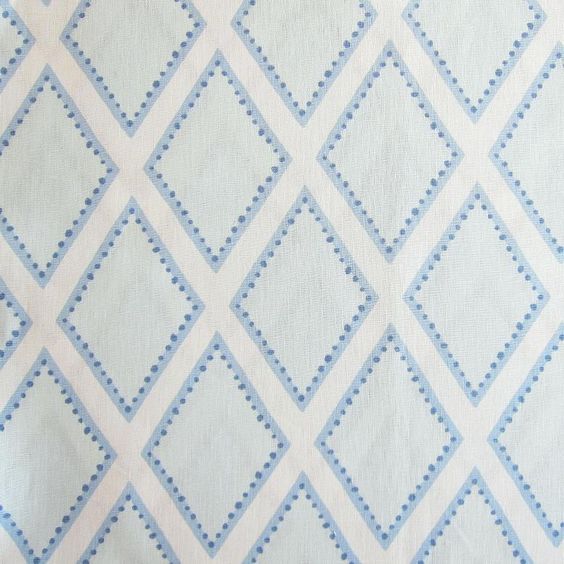
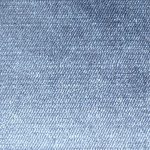
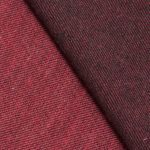
Chambray is a lightweight woven fabric, most commonly made from cotton, using a plain-weave construction. A colored warp yarn—often indigo, blue or another shade—is typically crossed with a white or lighter weft yarn. The result is a fine, softly mottled surface that resembles denim from a distance but is usually lighter, smoother and more breathable.
For buyers, “chambray” describes a construction and appearance rather than a guaranteed fiber, weight or performance level. Fiber composition, yarn count, fabric weight, width, dye method and finishing should therefore be confirmed on the specification sheet and approved sample.
Chambray Fabric at a Glance
| Attribut | Description typique |
| Construction | Woven plain weave: each weft yarn alternates over and under each warp yarn. |
| Common fiber | Cotton; blends and less common linen or silk versions also exist. |
| Apparence | Heathered or cross-color effect, often from colored warp and white or lighter weft. |
| Weight and hand | Usually lightweight to medium-light with a smooth, soft hand; exact GSM varies. |
| Respirabilité | Generally good in lightweight cotton constructions; finishes and density can change it. |
| Extensible | Low in conventional woven chambray unless elastane or mechanical stretch is specified. |
| Utilisations courantes | Shirts, dresses, skirts, shorts, lightweight trousers, linings, accessories and selected home textiles. |
| Soins | Follow the tested care label; cool washing and shade drying often help control color loss and shrinkage. |
The original article listed a 150–500 thread-count range and warm or hot washing. Those figures should not be treated as universal purchasing specifications: thread count is not standardized across every chambray construction, and care depends on fiber, dye, finish and garment build.
What Makes Chambray Different?
Traditional cotton chambray combines simple interlacing with contrasting yarn colors. Because the warp and weft alternate one-for-one, both faces look broadly similar. This balanced structure produces a flatter surface than denim and contributes to chambray’s lighter visual character.
Chambray vs Denim
Chambray and denim can use a colored warp and pale weft, but their weave structures differ. Chambray is normally plain woven. Denim is normally warp-faced twill, often with the warp passing over two or more weft yarns before going under the next. Denim therefore shows diagonal ribs and usually has a darker face and lighter reverse; chambray lacks the pronounced diagonal line and looks more alike on both sides.
| Decision factor | Chambray | Jean |
| Weave | Plain weave | Warp-faced twill |
| Surface | Fine, even, lightly heathered | Visible diagonal twill line |
| Typical weight | Lightweight to medium-light | Medium to heavy, although lightweight denim exists |
| Two-sided appearance | Faces are broadly similar | Face is usually darker than reverse |
| Common product role | Shirts, dresses and warm-weather separates | Jeans, workwear and structured garments |
Chambray, Cambric and Batiste Are Not Automatically the Same
The names chambray, cambric and batiste have overlapping historical associations with fine cloth linked to Cambrai, France, but modern textile trade usage is not perfectly interchangeable. Cambric and batiste commonly refer to fine, closely woven lightweight fabrics, while chambray usually signals the colored-warp/light-weft plain-weave effect. Buyers should purchase against measurable construction and composition rather than relying on a historical synonym.
How Is Chambray Fabric Made?
Most contemporary chambray is made from cotton. The manufacturing route is similar to other woven cotton fabrics, with the final look created through yarn selection, color planning and plain weaving.
Fiber selection and opening. Cotton is harvested, ginned to separate lint from seed, baled, opened and blended. Staple length, cleanliness and blend consistency influence yarn uniformity and finished hand.
Carding and optional combing. Carding aligns and cleans the fibers into sliver. Combing may remove shorter fibers for finer, smoother and more uniform yarn, but combed yarn is not inherent to every chambray.
Drawing, roving and spinning. Slivers are blended and attenuated before spinning into yarn. Ring-spun, compact-spun or other yarn systems can produce different texture, strength and cost profiles.
Warp preparation and dyeing. The warp is commonly dyed blue or another shade, while the weft remains white or lighter. Indigo, reactive and other dye systems create different colorfastness, shade and wash-down behavior.
Plain weaving. Warp and weft interlace alternately in a one-over, one-under pattern. Yarn size, ends and picks per unit area, loom settings and tension determine weight, cover and stability.
Finishing and inspection. The fabric may be singed, desized, washed, softened, sanforized or otherwise finished. The mill should then inspect width, weight, shade, defects and agreed performance before shipment.
For bulk purchasing, a visual reference is not enough. Use documented procédures d'inspection de la qualité des tissus and define the acceptance standard before production.

Key Properties of Chambray
Breathability and comfort
Lightweight cotton chambray is generally breathable and comfortable in warm conditions. Air permeability is affected by weight, yarn size, density and finishes, so “breathable” should be confirmed through construction data or testing when it is a critical requirement.
Douceur et drapé
Chambray can range from crisp shirting to soft, washed fabric. Fiber quality, yarn system, weave density and mechanical or chemical finishing all influence hand feel and drape.
Durabilité
Plain weave provides a stable structure, and cotton chambray can be durable for lightweight apparel. It is generally less rugged than conventional denim at comparable fiber quality because commercial denim is often heavier and uses a robust twill construction.
Gestion de l'humidité
Cotton absorbs moisture, but absorption is not the same as rapid moisture wicking or quick drying. Buyers developing hot-weather, uniform or active products should define the required test method and target rather than assuming performance from the chambray name.
Color and wash-down
Blue chambray can lose or shift color through laundering, abrasion, perspiration or light exposure, depending on the dye and finish. Indigo-dyed styles are often selected partly for their evolving appearance; reactive-dyed styles may be preferred when consistent shade and colorfastness are more important.
Stabilité dimensionnelle et rides
Cotton chambray can shrink and wrinkle. Preshrinking and easy-care finishes may improve performance, but any finish can affect hand, strength, chemical profile and care instructions. Confirm shrinkage after the intended laundering cycle.
How Is Chambray Used?
Chambray has long been used for dress and work clothing. Today it is especially common in shirts and shirt-dresses because it offers a denim-like blue appearance without typical denim weight. It is also used for shorts, skirts, lightweight trousers, casual jackets, children’s garments, fabric-topped footwear and accessories.
Home-textile applications can include bedding, curtains, cushions and light upholstery, but the construction must match the end use. Bedding requires attention to softness, shrinkage and repeated laundering; upholstery requires higher abrasion resistance and seam strength than a typical shirting chambray.

Where Is Chambray Produced?
Chambray is historically associated with Cambrai in France, and its production later spread through Europe and other textile regions. Today it can be sourced from established cotton-spinning, dyeing and weaving clusters in China, India, Pakistan, Türkiye, Europe and elsewhere. No single country should be assumed to be the current largest producer of chambray without a comparable product-level dataset.
Buyers seeking regional supplier research can consult FabricsTrades’ guides to chambray manufacturers and wholesale suppliers in Europe. Supplier lists are starting points; capacity, quality systems, certifications and current trading status still require direct verification.

How Much Does Chambray Cost?
Chambray does not have a reliable universal price. A standard cotton shirting construction may be economical, while long-staple cotton, organic or recycled inputs, yarn dyeing, low minimum quantities, special finishes, testing and third-party certification can increase cost. Silk or linen interpretations occupy different price tiers.
- Fiber content and cotton grade
- Yarn count, spinning method and combing
- Fabric weight, width and construction density
- Dye system, color depth and shade tolerances
- Finishes such as washing, softening, preshrinking or easy care
- Order volume, minimum order quantity and packaging
- Testing, certification, traceability and destination-market documentation
Environmental Considerations and Certification
Chambray’s environmental profile depends primarily on its fiber supply, dyeing, finishing, energy and water management, durability and end-of-life pathway—not on the weave name alone. Cotton is plant based and biodegradable under suitable conditions, but conventional cotton cultivation and wet processing can involve substantial water, chemical and energy inputs. An “organic,” “recycled” or “sustainable” claim should be tied to defined scope and evidence.
Relevant programs may include farm-level organic certification, textile-processing standards, recycled-content chain-of-custody schemes and chemical-safety certifications. Eligibility is not automatic. Buyers should request the certificate, scope, issuing body, validity dates, facility and transaction or material documentation that apply to the actual order.
The USDA National Organic Program certifies agricultural operations and protects use of the USDA organic label; it should not be presented as a blanket certification of every processing step in a finished textile. For textile claims, confirm the specific standard and chain of custody requested by the destination market or customer.
Mise à jour actuelle de la réglementation et du marché
As of August 7, 2026, chambray is not regulated simply because it is chambray. Requirements arise from fiber labeling, product category, destination market, chemical treatments, sustainability claims and the responsibilities of the business placing the final product on the market.
For the European Union, Regulation (EU) 2024/1781—the Ecodesign for Sustainable Products Regulation (ESPR)—creates a framework for product-specific ecodesign and information requirements, including Digital Product Passports where later delegated acts require them. It does not by itself mean that every chambray fabric already needs a DPP. Textile buyers should follow product-specific rulemaking and prepare reliable data on composition, suppliers, processing and supporting evidence. FabricsTrades’ overview of ESPR et passeports produits numériques pour les chaînes d'approvisionnement en tissus chinoises provides additional supply-chain context.
For the United States, the Federal Trade Commission states that most textile products must disclose fiber content, country of origin and the identity of the manufacturer or another responsible business; care instructions are also required for covered apparel under the Care Labeling Rule. “Chambray” is not a substitute for an accurate fiber-content statement. A cotton/polyester or cotton/elastane chambray must be labeled according to its actual composition.
Practical buyer action: communicate the target market, product category, fiber claim, dye and finish, required test methods, labeling language and documentation before sampling and quotation. Requirements can vary by product, treatment, production batch and sale date, so buyers should verify current legal and retailer requirements before bulk production.
How to Specify Chambray for Sourcing
| Specification field | What to define |
| Composition | Exact fiber percentages and tolerance; organic or recycled claim and evidence if requested. |
| Construction | Plain weave; yarn counts or equivalent yarn size; ends and picks; single- or ply-yarn details. |
| Physical | Finished GSM, usable width, roll length, hand feel and drape reference. |
| Couleur | Warp and weft colors, dye class, lab-dip or strike-off approval, shade band and continuity. |
| Performance | Shrinkage, colorfastness, tensile/tear strength, seam performance, pilling and air permeability as relevant. |
| Finition | Wash, softener, preshrink, easy-care or other treatment; restricted-substance requirements. |
| Inspection | Defect standard, point system, sampling plan, roll mapping and acceptance criteria. |
| Documentation | Test reports, composition declaration, origin data, certificate scope and transaction evidence where applicable. |
If a cotton-based construction is appropriate, browse the cotton fabric category as a starting point, then confirm whether a suitable chambray construction is available or requires custom sourcing.
Chambray Care Guidelines
Always base the care label on the tested finished fabric and garment. As a conservative starting point for many cotton chambrays, wash cool with similar colors, use mild detergent, avoid prolonged soaking, dry with moderate heat or in shade, and iron at the temperature appropriate for the fiber blend. Garment structure, trims, finishes and dye system can require different instructions.
Foire aux questions
Le chambray est-il la même chose que le denim ?
No. Chambray is normally plain woven, while denim is normally a warp-faced twill with visible diagonal ribs. Chambray is also usually lighter and looks more similar on both sides.
Is chambray always 100% cotton?
No. Cotton is the most common fiber, but chambray can contain linen, polyester, viscose, elastane or other fibers. Confirm the supplier’s composition declaration and verify labeling requirements for the destination market.
Does chambray stretch?
Traditional woven cotton chambray has limited stretch. Stretch chambray requires elastane, another stretch fiber, a special yarn system or a construction designed for mechanical give.
Le chambray convient-il aux vêtements d'été ?
Lightweight cotton chambray is often suitable for warm-weather shirts, dresses and separates because it can be breathable and relatively light. Dense constructions and heavy finishes may feel warmer.
Does chambray fade?
It can. Fading depends on the dye class, shade depth, finishing, abrasion and laundering. Buyers should specify relevant colorfastness tests and approve a shade standard.
Is chambray sustainable?
Not automatically. Sustainability depends on fiber cultivation or recycling, processing, chemical and water management, durability, logistics and disposal. Claims should be supported by defined evidence and should not rely on the weave name.
Conclusion
Chambray is best understood as a lightweight plain-weave fabric with a characteristic colored-warp and lighter-weft appearance. It offers a denim-like look with a smoother surface and, in many constructions, lower weight and greater warm-weather comfort. Successful sourcing depends on converting that general description into measurable composition, construction, shade, finish, testing and documentation requirements.
Based in Wujiang District, Suzhou, FabricsTrades operates its own four-way stretch fabric factory and also works as a sourcing and product-development partner. For a chambray project, FabricsTrades can help evaluate available constructions, fibers, weights, widths, colors, finishes, sampling and documentation requests; availability and testing support should be confirmed against the final specification.
Sources