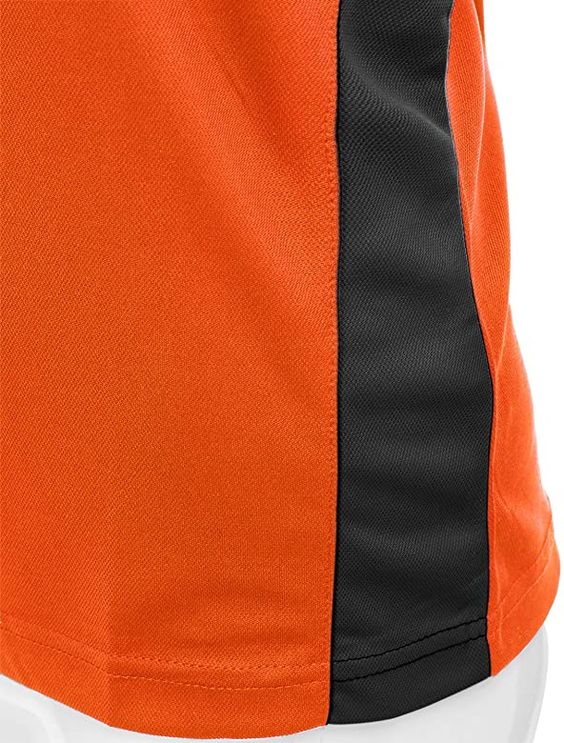
COOLMAX® is not a generic fabric type. It is a trademarked performance-fiber technology owned by The LYCRA Company. The fibers are engineered to move liquid moisture away from the skin, spread it across a larger fabric surface, and support faster evaporation. Mills can spin, knit, or weave these fibers alone or in blends, so two fabrics carrying the same brand family may differ substantially in weight, stretch, hand feel, air permeability, and end use.
For buyers, the practical lesson is simple: the COOLMAX® name identifies a branded fiber technology, not a complete fabric specification. Fiber content, construction, finishing, test results, brand authorization, and destination-market requirements still need to be confirmed for the actual article being sourced.
COOLMAX® at a Glance
| Catégorie | Résumé axé sur l'acheteur |
| What it is | A branded moisture-management fiber technology, commonly polyester-based. |
| How it works | Longitudinal channels help transport and spread moisture for evaporation. |
| Typical constructions | Knits and wovens; 100% branded fiber or blends with cotton, wool, elastane, and other fibers, depending on the program. |
| Key benefits | Moisture transport, quick drying, comfort, and durable fiber-based performance. |
| Utilisations courantes | Activewear, base layers, socks, workwear, denim, intimate apparel, footwear components, and bedding. |
| Main limitations | Not automatically waterproof, odor-proof, thermoregulatory in every climate, or superior in every fabric construction. |
| What buyers should verify | Exact composition, construction, finish, test method and target, colorfastness, dimensional stability, pilling, brand/claim approval, labeling, and restricted-substance documentation. |
What Is COOLMAX® Fiber?
The brand owner describes COOLMAX® technology as a fast-drying, cooling technology that wicks moisture. Its official consumer guidance also clarifies that the technology is a fiber, not a fabric or garment. That distinction matters in specifications and labeling: a garment may contain COOLMAX® polyester, but its legal fiber-composition declaration will generally use the applicable generic fiber name, such as polyester, together with the required percentages.
The current portfolio includes multiple technologies, including EcoMade, ALL SEASON, PRO EcoMade, freshFX®, and CLOAKFX™. Their content and claimed benefits are not interchangeable. A buyer should identify the exact technology and yarn code rather than write only “COOLMAX” on a tech pack.
How Does COOLMAX® Move Moisture?
Standard round filaments offer limited pathways for liquid transport. COOLMAX® fibers use a deliberately shaped cross-section with grooves or channels along the fiber. Capillary action can draw liquid through these channels and away from the skin-side surface. When moisture reaches the outer face and spreads over a wider area, evaporation can occur more efficiently when temperature, humidity, airflow, garment fit, and fabric construction allow it.
This is moisture management, not refrigeration. The fabric does not lower ambient temperature, and performance can be reduced by dense constructions, non-breathable laminations, heavy hydrophobic contamination, or finishes that obstruct the transport pathways. High humidity also slows evaporation. Comfort therefore depends on the full textile system, not the fiber name alone.

Key Properties and Practical Limitations
Moisture wicking and quick drying
Channelled fibers are designed to transport and disperse sweat. Polyester also absorbs relatively little moisture into the fiber compared with many natural fibers, which can support shorter drying times. Finished-fabric performance should nevertheless be tested because yarn selection, knit or weave density, brushing, coatings, and garment design affect the result.
Breathability and thermal comfort
Many lightweight COOLMAX® constructions are breathable, but breathability is a property of the finished fabric structure. COOLMAX® should not be treated as a guaranteed air-permeability value or a guarantee that every wearer will feel cooler. ALL SEASON products may combine moisture management with fibers shaped to provide lightweight warmth, illustrating why the exact sub-brand matters.
Durability and care
Because moisture-management performance is engineered into the fiber geometry rather than applied only as a topical finish, the brand owner describes it as durable through laundering. That does not make the finished fabric indestructible. Abrasion, pilling, color change, stretch recovery, seam performance, and dimensional stability remain construction- and process-dependent.
Odor, UV, water, and flame claims
Generic COOLMAX® should not automatically be described as antimicrobial, odor-resistant, UV-protective, water-repellent, waterproof, or flame-resistant. Those functions require a relevant product variant, construction, finish, test result, or certification. CLOAKFX™ is positioned to mask visible sweat, while freshFX® targets freshness; neither claim should be transferred to an unspecified COOLMAX® fabric.
How Is COOLMAX® Fabric Made?
Polymer preparation. Polyester feedstock is produced and prepared for melt spinning. Recycled-content routes may use recycled PET or textile-waste feedstocks, depending on the specific branded product.
Engineered melt spinning. Molten polymer is extruded through a specially designed spinneret that creates the required non-round, channelled cross-section.
Drawing and texturing. Filaments are drawn to orient the polymer chains and obtain the required strength and dimensions. They may then be textured or combined into yarn packages.
Yarn selection and blending. Mills select the branded yarn alone or blend it with fibers such as cotton, wool, or elastane to balance moisture management, touch, stretch, warmth, and cost.
Knitting or weaving. The yarn is converted into jersey, pique, mesh, denim, woven shirting, socks, or another construction. Structure and density strongly influence final performance.
Dyeing and finishing. Coloration and finishing must be compatible with the fiber and the intended claim. Hydrophilic treatments, softeners, coatings, and laminations should be assessed for their effect on wicking and breathability.
Testing and brand approval. The finished fabric should be evaluated against the buyer’s specification and any applicable COOLMAX® brand or hangtag program requirements before a branded claim is used.

Where Is COOLMAX® Used?
Activewear and base layers: T-shirts, jerseys, leggings, underwear, and next-to-skin layers where sweat transport is important.
Socks and footwear components: Moisture management can improve in-shoe comfort, although shoe construction and ventilation remain decisive.
Denim and casualwear: Blends can add moisture-management performance while preserving a more familiar cotton-rich appearance and hand.
Workwear: Useful for physically demanding conditions, subject to any separate PPE, flame, visibility, or durability requirements.
Bedding: Sheets and mattress textiles may use the technology for moisture management; actual sleeping comfort depends on the whole bedding system and room conditions.
Outdoor apparel: Base layers, shirts, and accessories, often combined with stretch, insulation, or weather-protection layers.

COOLMAX® Compared with Common Alternatives
Compared with ordinary polyester, COOLMAX® adds a branded engineered cross-section and a controlled claims program; ordinary polyester can also be made moisture-wicking through fiber design, yarn engineering, fabric construction, or finishes. Compared with cotton, COOLMAX® polyester generally retains less water within the fiber and may dry faster, while cotton often offers a familiar natural hand and can absorb significant moisture. Blends can combine these attributes. Compared with merino wool, COOLMAX® typically emphasizes fast liquid transport and drying, while merino is often selected for moisture buffering, warmth, and odor-management characteristics. The best option depends on climate, activity, skin contact, care, price, and required test results.
Considérations environnementales
Conventional polyester is fossil-derived and can shed microfibers during manufacture, wear, and laundering. Recycled polyester can reduce demand for virgin feedstock, but recycled content alone does not prove that a product is environmentally preferable across its full life cycle. The current COOLMAX® portfolio includes EcoMade products made with recycled resources, with percentages varying by technology. Buyers should obtain the exact material declaration and any applicable chain-of-custody evidence for the ordered yarn or fabric rather than generalize a portfolio-level claim.
If a recycled claim will appear on a label, product page, or tender document, agree before sampling on the claim wording, calculation basis, evidence owner, and certification scope. FabricsTrades’ recycled fabric sourcing options provide a relevant category for programs where documented recycled content is a core requirement.
Mise à jour actuelle de la réglementation et du marché
For EU consumer textiles, Regulation (EU) No 1007/2011 requires fiber-composition descriptions to use the textile fiber names listed in Annex I. COOLMAX® is a trademark, not a substitute for the generic fiber name and percentage on the required composition label. The brand name may be used as additional information only when it does not confuse the legally required composition description. Buyers should confirm the labeling rules of every destination market.
PFAS rules become relevant when a COOLMAX® fabric or finished garment also uses a durable water-, oil-, or stain-repellent treatment; the base moisture-wicking polyester technology does not by itself establish that PFAS are present. Under EU Regulation 2024/2462, the REACH restriction for PFHxA, its salts, and PFHxA-related substances applies from 10 October 2026 to specified consumer clothing, related accessories, and footwear above stated concentration limits, with scope and exemptions that must be checked for the exact product. Buyers working with treated performance textiles should review the EU REACH PFHxA restriction and its implications for Chinese fabric supply chains and communicate finish chemistry and testing requirements before quotation.
The EU Ecodesign for Sustainable Products Regulation (EU) 2024/1781 is a framework regulation that establishes the Digital Product Passport system; product-specific obligations depend on delegated measures. It should not be described as if every textile already has an immediately applicable DPP requirement. Programs targeting the EU can prepare by keeping structured records for fiber composition, recycled-content evidence, chemical declarations, manufacturing stages, test reports, and batch traceability. FabricsTrades’ guide to ESPR et passeports produits numériques pour les chaînes d'approvisionnement en tissus chinoises provides related planning context.
How Buyers Should Specify and Test COOLMAX® Fabric
Name the exact COOLMAX® technology, yarn reference, composition, and approved claim; do not rely on “Coolmax-like” or “cooling polyester.”
Define construction, width, finished weight, gauge or yarn count, stretch and recovery, color, hand feel, and intended garment application.
Agree on moisture-management tests and acceptance criteria. Depending on the program, methods may address vertical wicking, drying rate, absorbency, or multidirectional liquid transport. State the laboratory, conditioning, specimen preparation, and pass/fail target.
Add end-use tests such as colorfastness, dimensional stability, pilling, abrasion, bursting or tensile strength, seam performance, and stretch recovery.
Confirm all finishes and laminations, including whether a water-, oil-, stain-, odor-, or antimicrobial function is being claimed.
Request batch-level documentation where required: composition, test reports, restricted-substance declarations, recycled-content evidence, and brand-use authorization.
Inspect bulk against the approved standard. The guide d'inspection de la qualité des tissus explains practical controls for shade, width, weight, defects, and shipment approval.
Where stretch is central to the garment, buyers can also review four-way stretch fabric options and specify the branded moisture-management yarn separately from the stretch mechanism.
Conseils d'entretien
Always follow the finished garment’s care label because blends, dyes, prints, elastane, membranes, trims, and finishes may impose stricter limits than the base fiber. As a general starting point, wash cool with a mild detergent, avoid unnecessary high heat, and use low-temperature tumble drying or air drying where the product instructions allow. Fabric softeners can leave deposits that reduce moisture transport, so they are often avoided in performance apparel. Do not promise that every COOLMAX® blend is suitable for dry cleaning or a particular wash temperature without supplier confirmation.
Foire aux questions
Is COOLMAX® a fabric or a fiber?
It is a branded fiber technology. Mills convert the fiber into many different knitted and woven fabrics, often in blends.
Is COOLMAX® the same as polyester?
COOLMAX® technology is commonly polyester-based, but it is not a synonym for all polyester. It uses engineered fibers and is sold under a controlled brand portfolio.
Does COOLMAX® actually cool the body?
It supports evaporative comfort by moving and spreading sweat. It does not refrigerate the wearer, and results depend on humidity, airflow, activity, fit, and the full fabric and garment design.
Is every COOLMAX® product recycled?
No. The current portfolio includes EcoMade and other products with recycled resources, but the percentage and feedstock vary. Verify the exact technology and supporting documentation.
Is COOLMAX® waterproof?
No. Moisture wicking and waterproofing are different functions. Waterproof performance requires an appropriate membrane, coating, construction, seam design, and test specification.
Can COOLMAX® be blended with cotton or elastane?
Yes. Blends are common, but the blend ratio and construction change hand feel, drying, stretch, durability, labeling, and cost.
How can buyers confirm authentic branded material?
Request the exact yarn and technology identification, supply-chain documentation, and evidence that the proposed fabric and claim qualify under the brand owner’s current program. Confirm hangtag and trademark-use requirements before production.
Conclusion: Source the Specification, Not Just the Name
COOLMAX® can be a strong choice for apparel and home-textile programs that need durable fiber-based moisture management. The result, however, depends on the specific branded technology, yarn, blend, fabric construction, finishing, garment design, and test targets. Before sampling, communicate the end use, target market, composition, performance methods, restricted-substance requirements, recycled-content evidence, and brand-claim expectations. FabricsTrades can support fabric sourcing, product development, customization, sampling, testing coordination, and documentation planning for international buyers; final compliance and brand authorization should be confirmed for the specific product and market.
Sources