Organza is a lightweight, transparent plain-weave fabric with a crisp hand and enough stiffness to hold volume, pleats, ruffles, and sculptural silhouettes. Traditional organza is made from highly twisted silk filament yarns, while much of the organza used today is woven from polyester or nylon.
The word “organza” describes a fabric construction and appearance rather than one fiber composition. Two fabrics sold under the same name may therefore behave very differently. A silk organza may offer a refined luster and responsive drape, while a polyester version may provide greater dimensional stability, easier color matching, and a lower price.
For designers and sourcing teams, the important questions are not simply “Is this organza?” but:
- Which fiber does it contain?
- How transparent, crisp, and lustrous is it?
- Will it recover after creasing?
- Does it snag or fray easily?
- Is it suitable for the intended seams, finishes, care process, and destination market?
Organza Fabric at a Glance
| Attribut | Description typique |
|---|---|
| Construction en tissu | Balanced or near-balanced plain weave |
| Fibres communes | Silk, polyester, and nylon |
| Apparence | Transparent to translucent, often with a subtle sheen |
| Main | Crisp, dry, and structured |
| Poids | Generally lightweight, but varies by yarn and finish |
| Respirabilité | Open construction can allow airflow, although performance depends on density, fiber, layers, and finish |
| Extensible | Normally low unless stretch yarn or a specialized construction is used |
| Rétention de chaleur | Generally low when used as a single lightweight layer |
| Applications courantes | Bridalwear, eveningwear, overlays, sleeves, ruffles, costumes, decorative textiles, curtains, and gift packaging |
| Soins typiques | Determined by fiber, dye, embellishment, and finish; supplier instructions should be confirmed |
| Main sourcing risks | Snagging, fraying, seam puckering, slippage, shade variation, skew, inconsistent stiffness, and surface damage |
These are general characteristics rather than guaranteed specifications. Buyers should approve the actual sample and test the final material under its intended manufacturing and care conditions.

What Is Organza Fabric?
Organza is produced by interlacing warp and weft yarns in a plain-weave structure, with each yarn passing alternately over and under the yarns running in the opposite direction. Fine filament yarns and relatively open spacing create its transparent appearance. Yarn twist, density, fiber type, heat setting, and finishing determine its characteristic crispness.
Organza is often confused with chiffon and tulle, but the fabrics are not interchangeable:
- Organza is sheer, crisp, and structured.
- Chiffon is sheer but usually softer, more fluid, and more textured.
- Tulle is an open net construction rather than a balanced plain weave.
- Voile is a lightweight plain weave that is generally softer and more opaque.
- Taffetas is a denser plain-weave fabric with greater opacity and a firmer, smoother body.
Readers comparing structured lightweight fabrics can also review the FabricsTrades guide to taffeta fabric properties and manufacturing.
Propriétés clés de l'organza
Transparence
Organza’s fine yarns and open construction allow light to pass through the fabric. Transparency varies with yarn diameter, weave density, color, finishing, and the number of layers used.
A single layer may be highly transparent, while multiple layers can create depth, color effects, and partial coverage without eliminating the fabric’s light appearance.
Crispness and Shape Retention
The fabric’s crisp hand helps it hold gathers, bows, puffed sleeves, overlays, and sculptural forms. This makes organza useful when a designer wants visible volume without the weight of a heavier cloth.
Crispness is not uniform across all organza. Silk, polyester, and nylon versions may feel different, and finishing treatments can make a fabric softer or stiffer.
Luster
Filament yarns can produce a clean, reflective surface. Silk organza usually has a refined natural luster, while synthetic organza can range from subdued to highly glossy. Color, delustering agents, yarn cross-section, and finishing influence the final appearance.
Low Natural Stretch
Conventional woven organza normally has little mechanical stretch. Any slight give may come from bias movement, yarn behavior, or construction tolerances. A buyer who needs dependable elasticity should specify a stretch version and confirm elongation and recovery rather than assuming standard organza will stretch.
Fraying, Snagging, and Seam Visibility
The same fine yarns and open construction that give organza its appearance also make it vulnerable to damage. Raw edges can fray, sharp objects can pull filaments, and sewing defects remain visible through the transparent cloth.
Seam construction, needle size, thread, stitch density, handling, and pressing conditions should be tested before production. French seams, narrow enclosed seams, or carefully finished edges are often considered for sheer garments, although the correct solution depends on the design.
Creasing and Heat Sensitivity
Crease behavior depends strongly on fiber and finish. Silk organza can retain press marks, while polyester versions may recover differently but can be damaged by excessive heat. A pressing trial should be performed on production fabric before garment assembly.
How Is Organza Fabric Made?
The production route depends on whether the starting fiber is silk, polyester, nylon, or another filament material.
1. Fiber and Filament Production
For traditional silk organza, continuous filaments are reeled from silkworm cocoons and prepared for yarn production. Conventional silk reeling normally uses heat to soften the natural gum that binds filaments in the cocoon.
Polyester organza begins with manufactured polyester filaments, while nylon organza uses polyamide filaments. The polymer, filament cross-section, luster level, and yarn specification can all affect the finished fabric.
2. Yarn Preparation and Twisting
Traditional silk organza uses firm, highly twisted filament yarns. Historically, “organzine” has referred more specifically to a strong silk warp yarn made by combining twisted silk threads; it should not be treated as an exact synonym for every modern organza fabric.
Synthetic organza can be engineered with filament yarns selected for the required transparency, stiffness, strength, and shine.
3. Warping and Plain Weaving
The prepared warp yarns are arranged on the loom and interlaced with weft yarns in a plain weave. Production may use modern industrial looms; organza does not have to be handwoven to be high quality.
Important weaving controls include:
- Warp and weft tension
- Ends and picks per unit length
- Yarn uniformity
- Largeur du tissu
- Skew and bow
- Broken or missing yarns
- Reed marks and stop marks
- Surface contamination
Some sellers use holes per inch or similar visual density descriptions, but there is no universal rule that a higher hole count automatically means better organza. Quality must be judged against the intended specification and application.
4. Dyeing, Heat Setting, and Finishing
Depending on the fiber and product design, organza may be piece-dyed, yarn-dyed, printed, heat-set, softened, stiffened, calendered, embroidered, flocked, coated, or given decorative effects.
Not every organza receives the same chemical or acid treatment. Buyers should request an accurate process description instead of assuming that a historical silk-finishing method applies to all contemporary polyester, nylon, or blended organza.
5. Inspection and Packing
Finished fabric should be inspected for appearance and specification compliance before shipment. Because sheer surfaces reveal faults readily, lighting and inspection conditions should be consistent.
A structured fabric quality inspection procedure can help buyers establish defect classifications, sampling rules, shade controls, and acceptance criteria.
Silk, Polyester, and Nylon Organza Compared
| Factor | Silk organza | Polyester organza | Nylon organza |
|---|---|---|---|
| General character | Crisp with a refined natural appearance | Crisp, stable, widely available, and versatile | Lightweight, resilient, and often smooth or lustrous |
| Price tendency | Usually the highest | Generally more economical | Generally more economical than silk |
| Heat response | Requires careful pressing | Can melt, glaze, or distort under excessive heat | Particularly sensitive to high heat |
| Comportement à l'humidité | Natural protein fiber behavior | Low moisture absorption | Higher moisture regain than polyester but still a manufactured synthetic |
| Biodégradabilité | Silk is biodegradable under suitable conditions | Conventional polyester is not readily biodegradable | Conventional nylon is not readily biodegradable |
| Utilisations courantes | Luxury bridalwear, couture, eveningwear | Fashion, decoration, costumes, packaging, and volume programs | Fashion, costume, decoration, and technical variations |
| Priorité de l'acheteur | Filament quality, shade, hand, provenance, and care | Heat setting, shade consistency, stiffness, recycled-content evidence, and snag resistance | Heat sensitivity, yellowing, strength, and finish consistency |
The final choice should be based on the product specification rather than fiber reputation alone. A well-developed polyester organza may be better suited to a large, color-sensitive program, while silk may be preferred for its hand, natural luster, and luxury positioning.
Buyers seeking synthetic options can review the available polyester organza fabric category.
Types de tissu organza
Commercial terminology varies among suppliers, so every descriptive name should be supported by a physical sample or written specification.
Cristal Organza
Crystal organza typically has a clear, smooth surface and noticeable shimmer. It is widely used for bridalwear, eveningwear, decorative overlays, and event applications.
Mirror or High-Luster Organza
This version has a more reflective appearance produced through yarn selection or finishing. Excessive gloss may look different under retail lighting, photography, and stage lighting, so approval should be made under relevant conditions.
Two-Tone or Shot Organza
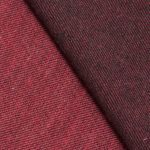
Different-colored warp and weft yarns produce a changeable color effect as the viewing angle shifts. Shade approval should account for lighting direction because the fabric may not appear identical from every angle.
Pearl Organza
Pearl organza is a commercial description generally used for fabric with a soft pearlescent sheen. It is not a standardized fiber category.
Sparkle or Glitter Organza
Decorative metallic yarns, glitter, printing, or surface applications create a sparkling effect. Buyers should check shedding, abrasion, washing behavior, skin-contact suitability, and the composition of decorative components.
Embroidered, Printed, or Flocked Organza
Organza can serve as a transparent base for embroidery, printing, flocking, appliqué, and three-dimensional decoration. These processes may change weight, drape, seam behavior, care requirements, and regulatory documentation needs.
Crushed or Textured Organza
Mechanical or thermal processing creates a deliberately wrinkled or dimensional surface. The buyer should confirm whether the effect is permanent and how it responds to washing, steaming, and pressing.
Common Uses of Organza
Bridalwear and Eveningwear
Organza is widely used in wedding gowns, veils, sleeves, overskirts, trains, bows, ruffles, and structured decorative panels. Multiple layers can create volume while remaining visually light.
Vêtements de mode
Blouses, transparent sleeves, overlays, skirts, collars, and statement details can use organza for contrast against softer or more opaque materials. Designers should consider skin feel and seam placement because a crisp fabric may feel abrasive at exposed edges.
Costumes and Dancewear
The fabric’s ability to hold shape makes it useful in stage costumes, tutus, performance garments, and decorative accessories. Flame-performance requirements may apply to certain venues, product categories, or markets and must be confirmed separately.
Interiors and Events
Organza may be used for sheer curtains, table decoration, chair sashes, artificial flowers, gift bags, display materials, and lampshades. An apparel-grade fabric should not automatically be assumed suitable for furnishings, lighting, or flame-regulated uses.
Packaging and Decorative Products
Small bags, ribbons, bows, and luxury packaging frequently use synthetic organza. Packaging projects should separately confirm dimensions, colorfastness, drawcord safety where relevant, and destination-market packaging requirements.
How to Source and Inspect Organza
A useful sourcing specification should identify more than the fabric name. Buyers should communicate:
- Fiber composition and permitted tolerance
- Finished width and weight
- Color standard and approved lighting conditions
- Cible de transparence ou d'opacité
- Hand and stiffness reference
- Surface luster
- Yarn or decorative-effect requirements
- Dimensional-stability expectations
- Méthode de soins
- End use and skin-contact conditions
- Required restricted-substance testing
- Packaging and roll-length requirements
- Inspection standard and defect tolerance
During sample and bulk review, check for:
- Shade consistency: Compare roll to roll, within the roll, and across the fabric width.
- Transparence: Evaluate the fabric over the intended lining or base color.
- Stiffness and drape: Compare with an approved reference under consistent conditioning.
- Snags and pulled yarns: Inspect under suitable transmitted and reflected light.
- Skew and bow: Confirm that grain distortion will not affect cutting or garment appearance.
- Seam performance: Test puckering, slippage, fraying, needle damage, and visible seam allowances.
- Heat response: Trial pressing, fusing, steaming, pleating, or heat transfer at production settings.
- Solidité des couleurs : Select tests based on end use, color, decoration, and expected care.
- Finish durability: Confirm whether stiffness, glitter, flocking, print, or coating remains acceptable after required care.
- Roll condition: Check tension, creasing, edge damage, splices, labeling, and protective packing.
A signed approval sample should be supported by measurable specifications wherever possible. Descriptions such as “premium,” “soft,” or “high quality” are not substitutes for mutually agreed acceptance criteria.

Care and Storage
There is no single care instruction suitable for every organza product. Fiber composition, dyes, embellishments, seams, interfacing, and finishes all affect safe cleaning.
Les précautions générales comprennent :
- Check the supplier’s care recommendation and test the finished product.
- Use low mechanical action for delicate or embellished constructions.
- Avoid wringing, aggressive rubbing, and sharp objects.
- Use a low-temperature pressing trial with a protective cloth.
- Do not apply high heat to polyester or nylon organza.
- Store clean fabric away from moisture, dust, sunlight, and crushing pressure.
- Cover rolls or garments with a clean, non-snagging protective material.
- Avoid folding or compressing decorative organza for long periods when permanent creases may result.
“Dry clean only” or “hand wash cold” should be assigned only after the complete product has been evaluated; the fabric name alone does not determine the correct care label.
Considérations environnementales et de certification
Organza’s environmental profile depends on its fiber, manufacturing route, dyeing and finishing chemistry, energy source, durability, care, and end-of-life pathway.
Conventional polyester and nylon are derived primarily from fossil resources and are not readily biodegradable. Recycled synthetic fibers may reduce demand for virgin feedstock, but a recycled claim does not by itself demonstrate low total environmental impact.
Silk is a renewable, biodegradable protein fiber, but it also has impacts associated with mulberry cultivation, sericulture, energy, water, processing, and animal-welfare considerations. It should not automatically be described as environmentally sustainable without evidence covering the relevant supply chain and claim.
For recycled polyester or nylon organza, certification can support material traceability when the supplier, transaction documentation, and product scope are valid. The Global Recycled Standard is not limited to products containing “100% recycled material.” Textile Exchange states that GRS can be used as a business-to-business tool for products containing at least 20% recycled content, while consumer-facing GRS labeling generally requires at least 50% recycled content. Certification scope and claim rules must be checked for the specific product and transaction.
Silk programs may use standards or schemes relevant to organic production, content, processing, or regional authenticity, but eligibility must be confirmed with the applicable scheme. A supplier’s general certificate does not automatically certify every fabric it sells.

Mise à jour actuelle de la réglementation et du marché
Organza is sold by construction name, but regulators and buyers usually need the actual fiber composition, country of origin, treatments, and intended product category.
For the United States, the Federal Trade Commission states that most covered textile products must identify fiber content, country of origin, and the manufacturer or another responsible business. Care instructions are also required for covered apparel. An “organza” description therefore does not replace a verified declaration such as silk, polyester, or nylon.
For EU programs, Regulation (EU) 2024/1781 established the Ecodesign for Sustainable Products Regulation framework. Product-specific requirements, including Digital Product Passport obligations, depend on subsequent rules rather than applying automatically to every piece of organza today. Textile apparel is among the priority product groups being developed under this framework. Buyers can use FabricsTrades’ overview of Préparation ESPR et Digital Product Passport pour les chaînes d'approvisionnement en tissus as a planning resource, while confirming the final legal scope and effective dates through official EU materials.
Untreated organza does not inherently require PFAS chemistry. However, organza programs that add water-, oil-, or stain-repellent performance should identify the finish chemistry and review destination-market restrictions. The EU REACH restriction covering PFHxA, its salts, and related substances begins applying to specified consumer-textile uses on dates set by the restriction, including an April 10, 2026 application date for certain apparel, accessories, and footwear categories. Scope, exemptions, analytical thresholds, and the final article—not merely the base fabric—must be reviewed. FabricsTrades’ guide to the EU REACH PFHxA restriction and Chinese fabric supply chains provides additional sourcing context.
Documentation needs vary by market, product category, finish, production batch, and date of sale. Buyers should communicate applicable labeling, chemical-testing, traceability, and claim requirements before sampling and quotation, then verify current legal and retailer requirements before bulk production.
Foire aux questions
Is organza always made from silk?
No. Traditional organza is associated with silk, but modern organza is commonly woven from polyester or nylon. Fiber composition should be confirmed through the specification, labeling, and, where necessary, testing.
Is organza soft or stiff?
Organza is generally crisp and structured rather than soft and fluid. Its stiffness varies with fiber, yarn twist, density, and finishing.
Does organza stretch?
Standard woven organza normally has little stretch. A stretch specification requires suitable yarns or construction and should be confirmed through elongation and recovery testing.
Is organza breathable?
A lightweight, open organza construction can allow airflow, but breathability depends on density, fiber, finish, layering, and the complete garment design. It should not be assigned a guaranteed performance rating without testing.
Is organza suitable for summer clothing?
It can be used for lightweight overlays, sleeves, and decorative details, but stiffness, transparency, skin feel, lining, and garment construction determine comfort.
Which is better: silk or polyester organza?
Neither is universally better. Silk offers a distinctive natural appearance and luxury positioning, while polyester is generally more economical, dimensionally stable, and accessible in larger commercial programs. The right choice depends on design, price, care, testing, and claim requirements.
Can organza be machine washed?
Some polyester products may tolerate controlled machine washing, while silk, embellished, stiffened, or delicate organza may not. Care instructions should be established for the finished product after testing.
Does a high HPI automatically mean better organza?
No. Sellers may use holes per inch as a density description, but fabric quality also depends on yarn uniformity, weave consistency, defects, hand, transparency, seam performance, color, and fitness for the intended application.
Final Sourcing Takeaway
Organza is best understood as a family of crisp, transparent plain-weave fabrics rather than one standardized material. Fiber composition, yarn, density, finish, color, and decoration determine how it looks, sews, wears, and responds to care.
Before placing a bulk order, approve the fabric under the lighting, lining, sewing, pressing, and care conditions that will be used in production. A clear specification, sealed reference sample, appropriate testing plan, and roll-level inspection provide more protection than relying on a trade name or visual impression alone.