OutDry is a proprietary waterproof-breathable technology owned by Columbia Sportswear. It is more accurately described as a membrane construction system than as a standalone fiber or conventional fabric type.
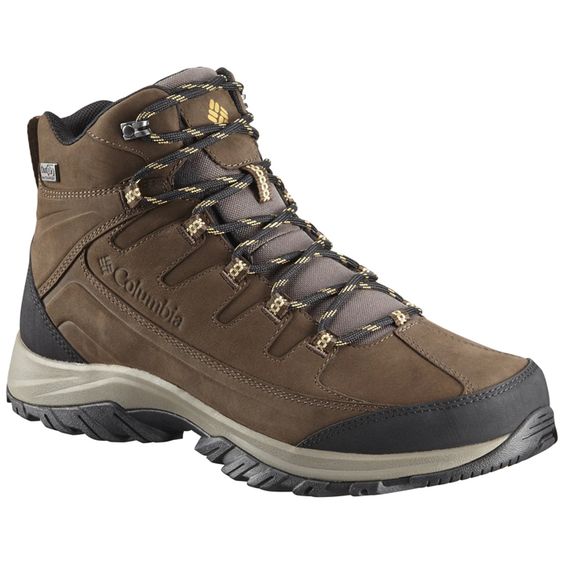
The original OutDry process was developed primarily for footwear and gloves. It bonds a waterproof-breathable membrane directly to the inside of the product’s outermost material. OutDry Extreme, introduced for rainwear in 2016, reverses the conventional arrangement by positioning a durable waterproof-breathable membrane on the outside of the textile.
This external-membrane construction is designed to prevent the face material from absorbing rain, a condition known as “wetting out.” It also removes the need for a conventional durable water-repellent, or DWR, treatment on the exterior of OutDry Extreme garments.
Points clés à retenir
- OutDry is a proprietary Columbia technology, not a generic fabric composition or an openly available commodity textile.
- Original OutDry and OutDry Extreme use different membrane positions and should not be treated as identical constructions.
- Columbia’s current technical explanation identifies the OutDry Extreme exterior membrane as modified polyurethane, not PTFE.
- Exact shell composition, lining, weight, breathability, care instructions, and other specifications vary by product.
- The external membrane helps prevent wet-out and eliminates the need for a conventional exterior DWR on OutDry Extreme garments.
- Buyers developing comparable waterproof products must evaluate the complete laminate, seams, components, chemical declarations, and destination-market requirements—not only the face fabric.
OutDry at a Glance
| Question | Current answer |
|---|---|
| What is OutDry? | A proprietary waterproof-breathable membrane technology and associated construction methods owned by Columbia Sportswear |
| Is it a fiber or generic fabric? | No. OutDry describes a technology system rather than one universal textile composition |
| Who owns it? | Columbia Sportswear acquired the OutDry brand and associated intellectual property in 2010 |
| What is OutDry Extreme? | A membrane-out construction that places the waterproof-breathable membrane on the exterior of the fabric |
| What is the membrane made from? | Columbia currently describes the OutDry Extreme membrane as modified polyurethane; composition may differ across technologies or product generations |
| Does it require exterior DWR? | Columbia states that OutDry Extreme does not require conventional exterior DWR because its exposed membrane is hydrophobic |
| Where is it used? | Rain jackets, shell pants, footwear, gloves, hats, waders, and other outdoor products, depending on the season and product line |
| Is its stretchability fixed? | No. Stretch, hand, weight, and recovery depend on the complete product construction |
| How should it be washed? | Follow the care label for the exact garment; instructions differ among OutDry products |
| Can it be bought as ordinary fabric by the yard? | It is not generally presented as an unrestricted commodity fabric; buyers should confirm licensing and availability directly with the brand or an authorized supply-chain partner |

What Is the Difference Between OutDry and OutDry Extreme?
The name “OutDry” has been applied to related but distinct waterproof constructions.
Original OutDry
Columbia’s 2010 acquisition materials described OutDry as a patented construction method for bonding a waterproof-breathable membrane directly to the inside of the outermost layer of footwear and gloves. This arrangement prevents water from travelling deeply into the product before reaching the waterproof barrier.
The original technology was developed by OutDry Technologies S.r.l. near Milan, Italy. Columbia announced its acquisition of the brand and intellectual property in August 2010 and subsequently incorporated the technology into selected products.
OutDry Extreme
OutDry Extreme, also called ODX, was introduced in 2016. Its waterproof-breathable membrane is laminated to the outside of the textile rather than being protected beneath a conventional face fabric.
In a traditional waterproof laminate, the exterior woven fabric normally needs DWR so that rain beads on the surface. When the DWR loses effectiveness, the face fabric can become saturated. The waterproof membrane may still block liquid water, but the wet face can add weight, feel cold, and reduce effective moisture-vapor transfer.
OutDry Extreme places a hydrophobic membrane at the outer surface, so there is no conventional face fabric above the membrane to wet out. The inner textile can help distribute moisture vapor before it passes through the membrane.
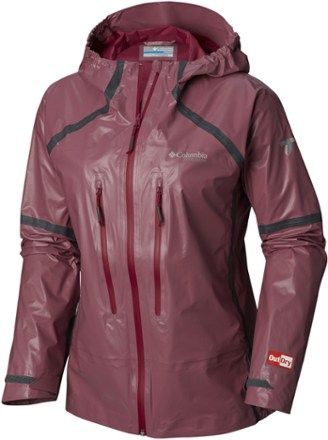
Because the membrane is exposed, OutDry Extreme has a distinctive film-like appearance. Different products may have matte or glossy surfaces, visible exterior seam tape, and different inner fabrics or linings.
How Is OutDry Made?
Columbia does not disclose every chemical formulation or manufacturing parameter. Public information supports a general construction sequence, but it does not justify treating every OutDry product as chemically or structurally identical.
1. Membrane and Supporting Textile Are Selected
For OutDry Extreme, Columbia identifies the exposed membrane as a modified polyurethane material engineered to withstand the abrasion experienced on the outside of outdoor apparel.
The supporting textile varies by product. Current Columbia product listings show examples using nylon shells, polyester shells, mesh linings, and recycled-polyester components. Therefore, “OutDry” by itself does not provide a complete fiber-content specification.
2. The Membrane Is Laminated to the Textile
The membrane is bonded to the selected textile to create a waterproof-breathable composite.
In original footwear and glove applications, the membrane is bonded close to the inside of the outermost material. In OutDry Extreme apparel, it is positioned on the outside. Adhesive chemistry, pressure, temperature, dwell time, and surface preparation must be controlled because they influence peel strength, flexibility, appearance, and durability.
3. Components Are Cut and Assembled
Laminated material is cut into garment, footwear, or accessory components. The finished product may also include linings, reinforcement panels, zippers, pocketing, insulation, elastic components, and trims.
These secondary components can affect overall waterproofness. A waterproof shell material does not automatically make an entire product waterproof.
4. Seams and Openings Are Sealed
Current OutDry Extreme garments commonly use visible exterior seam tape and fully seam-sealed construction. Zippers, hoods, cuffs, pocket openings, and hem adjustments must also be engineered to manage water entry.
Testing should therefore evaluate the assembled product as well as the laminate.
Key Properties of OutDry Extreme
Waterproof-Breathable Construction
The exterior membrane is intended to block liquid rain while allowing water vapor generated by the wearer to move outward. Breathability remains conditional: activity level, temperature, humidity, garment design, ventilation, inner layers, contamination, and test method all affect perceived performance.
A general description such as “highly breathable” should not replace an actual test report. Buyers comparing waterproof materials should request the test method and result for both hydrostatic resistance and water-vapor transmission.
Resistance to Wet-Out
The membrane-out arrangement avoids saturation of a separate exterior face fabric. This can help preserve comfort and reduce the cold, heavy feeling associated with a wetted-out conventional shell.
“Does not wet out” refers to this construction principle. It does not mean that dirt, oil, abrasion, seam damage, or improper care can never affect performance.
No Conventional Exterior DWR
Columbia states that OutDry Extreme does not require DWR on the exterior because the exposed membrane itself is hydrophobic. This distinguishes it from many conventional waterproof laminates with a woven face.
Buyers should still request chemical information for every relevant component. A DWR-free exterior does not, by itself, prove the chemical status of the full garment, its trims, earlier product generations, or a separate supplier’s allegedly comparable material.
Distinctive Appearance and Hand
The exposed membrane can look smoother and more film-like than conventional woven rainwear. Visible seam tape may be used as part of the design.
This appearance is central to the technology, but it may not suit every brand aesthetic. Matte finish, gloss, noise, drape, surface friction, and color should be reviewed on a physical sample.
Product-Specific Stretch and Durability
OutDry does not have one universal stretch, pilling, abrasion, or heat-retention rating. Those properties depend on the membrane formulation, backing textile, lining, seam construction, garment design, and intended end use.
The exterior membrane must withstand abrasion, but buyers should still confirm appropriate test methods and acceptance criteria for backpacks, mountaineering shells, workwear, fishing products, or other demanding uses.
Where Is OutDry Used?
OutDry was initially associated with waterproof footwear and gloves. The technology has since been used in products such as:
- Rain jackets and technical shells
- Waterproof pants and bibs
- Chaussure
- Gloves and hats
- Waders and fishing apparel
- Selected insulated outerwear
- Other weather-protective outdoor equipment
Availability changes by season and market. Current use should be confirmed through Columbia’s product and technology information rather than inferred from older product lists.
Where Is OutDry Produced?
The original OutDry company was based near Milan, Italy, while Columbia Sportswear is headquartered in the United States. Those facts do not establish the country of origin of a current OutDry garment or membrane.
Columbia does not publish a single, permanent production location for all OutDry products. Finished items may be manufactured through different international suppliers, and sourcing can change by style and season.
Importers should rely on the country-of-origin marking, commercial invoice, supplier declaration, and product-specific supply-chain records for the actual order. Statements that most OutDry production occurs in China, Vietnam, or the United States should not be made without current product-level evidence.

How Much Does OutDry Cost?
OutDry is not normally quoted as a standard commodity fabric with one public price per meter. Its cost is incorporated into branded finished products and depends on the product design, laminate, lining, seam sealing, components, manufacturing location, order volume, and distribution model.
For development comparisons, buyers should evaluate total system cost rather than comparing membrane prices alone. Relevant costs include:
- Lamination and seam-sealing processes
- Compatible zippers and trims
- Product testing
- Higher rejection risk for visible membrane defects
- Minimum order quantities
- Licensing or intellectual-property restrictions
- Chemical and traceability documentation
- Warranty and performance-claim requirements
Retail prices are not reliable evidence of the underlying fabric or membrane cost.
OutDry Variants and Technologies Commonly Confused With It
OutDry
The original OutDry name primarily refers to the membrane-bonding technology developed for waterproof footwear and gloves. Its waterproof layer sits close to the outer material to reduce water penetration into the product structure.
OutDry Extreme
OutDry Extreme places the waterproof-breathable membrane on the exterior of apparel and equipment. Its defining characteristics are the membrane-out architecture, wet-out resistance, and lack of conventional exterior DWR.
OutDry Extreme Eco
OutDry Extreme Eco was introduced as a product-specific sustainability development. Columbia stated that the original Eco jacket used a recycled-polyester main fabric made from approximately 21 plastic bottles, recycled components, and an undyed construction that saved approximately 13 gallons, or 51 liters, of water compared with a standard dyed jacket.
Columbia’s original wording was that no PFCs were intentionally used and that trace amounts could be present. These claims should not automatically be assigned to every OutDry product or current production batch.
GORE-TEX
GORE-TEX is a separate brand and technology family. It should not be described as an OutDry subtype. Performance depends on the specific GORE-TEX construction, and universal comparisons based on a single waterproof rating are unreliable.
Omni-Tech
Omni-Tech is another Columbia waterproof-breathable technology, generally using a more conventional protected-membrane construction. It is distinct from OutDry Extreme.
Omni-Heat, Omni-Wick, and Omni-Shield
These are separate Columbia technologies:
- Omni-Heat focuses primarily on thermal management.
- Omni-Wick manages perspiration and drying.
- Omni-Shield provides resistance to liquid absorption and staining.
They can complement weather-protective products but are not types of OutDry.
How Should Buyers Evaluate a Comparable Waterproof Fabric?
OutDry is proprietary, but product developers can use its functional principles when defining requirements for other waterproof-breathable materials. A sourcing request should specify the required outcome rather than asking only for “fabric similar to OutDry.”
Define the Construction
State whether the product requires:
- A conventional two-layer, 2.5-layer, or three-layer laminate
- An external-membrane construction
- A coated textile
- A removable or drop liner
- Stretch or non-stretch performance
- Insulation or a separate lining
Set Performance Requirements
Specify the test method and target for:
- Hydrostatic pressure
- Water-vapor transmission or evaporative resistance
- Lamination peel strength
- Seam waterproofness
- Résistance à l'abrasion
- Flex or crease resistance
- Résistance à la déchirure et à la traction
- Solidité des couleurs
- Stabilité dimensionnelle
- Durabilité au lavage
- Cold-crack resistance where relevant
Test results obtained through different methods should not be compared as if they were interchangeable.
Review the Complete Product
The laminate, seam tape, zippers, thread, pocket construction, hood, cuffs, and openings all influence weather protection. Use pre-production samples and assembled-product testing before approving bulk production.
The FabricsTrades guide to procédures d'inspection de la qualité des tissus provides additional checkpoints for incoming material, appearance, dimensions, and functional performance.
Confirm Chemical and Market Requirements
Ask suppliers to identify:
- Membrane chemistry
- DWR or other surface treatments
- Whether PFAS are intentionally added
- Relevant restricted-substance declarations
- Test reports tied to the exact material, color, and production lot
- SDS and technical data for applicable finishes
- Country-of-origin and traceability documents
- Scope and validity of any certification
A “PFC-free,” “C0,” “fluorine-free,” or “eco” statement is not a substitute for product-specific evidence.
Assess Commercial Availability and Intellectual Property
Do not assume that a factory offering an external-membrane laminate is authorized to sell OutDry. Confirm the brand owner, technology name, licensing status, trademark use, and permitted performance claims before sampling or marketing the finished product.
FabricsTrades does not present its jacket fabric options as OutDry. However, it can help buyers evaluate alternative nylon, polyester, stretch, coating, lamination, weight, finish, and color specifications for jacket-development projects, subject to final technical and sourcing requirements.
Considérations environnementales
Older descriptions of OutDry sometimes assumed that the technology was PTFE-based and then attributed the environmental profile of PTFE production to every OutDry product. Columbia’s current technical explanation instead identifies the OutDry Extreme exterior membrane as modified polyurethane. The older PTFE assumption should therefore not be presented as established fact.
Columbia identifies several potential environmental advantages of the membrane-out design:
- No conventional exterior DWR is needed.
- The membrane surface can often be wiped clean.
- Reduced washing may extend product life.
- Some product generations have used undyed and recycled materials.
- Columbia describes current OutDry Extreme technology as PFAS-free.
These advantages do not make every OutDry product automatically sustainable. Laminated, seam-taped, multi-material products can be difficult to recycle, and their overall impact depends on material inputs, durability, manufacturing, transport, care, and end-of-life options.
Recycled content and chemical claims must be verified for the exact product rather than inferred from the OutDry name.
Mise à jour actuelle de la réglementation et du marché
Waterproof apparel is receiving heightened regulatory attention because PFAS have historically been used in membranes, coatings, and water- or oil-repellent finishes.
As of August 11, 2026, EU Regulation 2024/2462 has added PFHxA, its salts, and PFHxA-related substances to REACH Annex XVII. From October 10, 2026, the restriction applies to general-public clothing, related accessories, and footwear at limits of 25 ppb for the sum of PFHxA and its salts and 1,000 ppb for PFHxA-related substances, measured in homogeneous material. Specific exemptions and transitional provisions apply.
EU-bound programs should review the EU REACH PFHxA restriction affecting fabric supply chains and verify the final legal text through EUR-Lex.
California AB 1817 has prohibited regulated PFAS in most new textile articles sold in the state since January 1, 2025. Outdoor apparel for severe wet conditions has a delayed prohibition date of January 1, 2028, but qualifying products containing regulated PFAS have required a specified disclosure since January 1, 2025. The law also requires manufacturers to provide certificates of compliance.
Brands selling rainwear in California should review the California AB 1817 textile requirements together with the official California statute.
Columbia currently describes OutDry Extreme as PFAS-free. Nevertheless, buyers should confirm that a declaration applies to the exact style, membrane, components, production period, and destination market. A brand-level statement should not be converted into an unsupported compliance guarantee for every historical or current product.
Entretien et maintenance
Care instructions vary among OutDry products. Current Columbia listings commonly specify machine washing and prohibit bleach, ironing, and dry cleaning, while drying instructions can differ by style.
Always follow the sewn-in care label. General precautions include:
- Remove loose dirt before washing.
- Close zippers and fasteners.
- Use only cleaning products permitted by the garment manufacturer.
- Do not iron an exposed membrane unless expressly authorized.
- Inspect seam tape, zippers, and high-abrasion areas regularly.
- Do not add an aftermarket DWR treatment unless the product instructions specifically require it.
A damaged membrane or seam should be assessed through the brand’s repair or warranty process.
Foire aux questions
Is OutDry a fabric?
OutDry is a proprietary waterproof-breathable technology rather than one standardized fabric. The finished laminate may use different nylon, polyester, lining, membrane, and component combinations.
Is OutDry made from PTFE?
Current Columbia information identifies the OutDry Extreme exterior membrane as modified polyurethane. Earlier claims that OutDry was probably PTFE-based were speculative and should not be treated as confirmed composition data.
Is OutDry completely waterproof?
Columbia markets OutDry and OutDry Extreme products as waterproof, and current garments commonly use fully seam-sealed construction. Actual performance still depends on the product design, condition, seams, openings, components, care, and intended use.
Does OutDry Extreme require DWR?
Columbia states that OutDry Extreme does not require conventional exterior DWR because the waterproof membrane is positioned on the outside and is already hydrophobic.
Is OutDry breathable?
OutDry Extreme is designed to allow moisture vapor to move outward while blocking liquid rain. Exact breathability depends on the specific product and test method, so buyers should request measured data rather than relying on a general rating.
Can buyers purchase OutDry fabric by the yard?
OutDry is proprietary and is not generally marketed as unrestricted commodity roll goods. Commercial access, licensing, authorized production, and trademark use should be confirmed directly with Columbia or an authorized partner.
Where is OutDry manufactured?
There is no verified single production country for every OutDry material or product. Use the country-of-origin marking and order-specific supply-chain documentation for the exact item.
Is OutDry PFAS-free?
Columbia describes current OutDry Extreme technology as PFAS-free, while older OutDry Extreme Eco materials used the wording “no PFCs intentionally used” and noted possible trace amounts. Confirm the claim for the exact product, production period, components, and market.
How should OutDry garments be washed?
Follow the product’s care label. Washing and drying requirements can vary, and unsupported heat or chemical treatment may damage the membrane or seam tape.
Conclusion
OutDry is best understood as a proprietary family of waterproof-breathable construction technologies. Original OutDry bonds a membrane close to the outer material in products such as footwear and gloves, while OutDry Extreme places a durable polyurethane membrane on the exterior of rainwear to resist wet-out and remove the need for conventional exterior DWR.
For sourcing and product development, the technology name alone is not a complete specification. Buyers should confirm the laminate structure, fiber content, membrane chemistry, seam system, performance test methods, chemical documentation, licensing status, country of origin, and destination-market requirements.
FabricsTrades, based in Wujiang District, Suzhou, can help evaluate alternative jacket and performance-fabric constructions, weights, widths, fibers, colors, finishes, samples, testing requests, and documentation needs. Availability and suitability should be confirmed against the project’s final specification; FabricsTrades does not claim to manufacture or license OutDry technology.
Sources and Further Reading
- Columbia’s explanation of OutDry Extreme technology
- Columbia’s 2010 announcement of the OutDry acquisition
- Columbia’s OutDry Extreme Eco information
- EU Regulation 2024/2462 on PFHxA and related substances
- California AB 1817 official bill text