
Tissus en nylon

- Fabriqué à partir de polyester, nylon et cotons recyclés
- Délai de livraison plus court
- Des prix intéressants

Custom Made Nylon Fabrics in Bulk at Wholesale Price from Manufacturers


Custom-Made Nylon Fabrics in Bulk at Wholesale Prices
FabricsTrades supplies woven nylon, nylon-spandex stretch fabrics, coated outdoor fabrics, lightweight linings, Taslon, taffeta, Oxford ripstop, and nylon organza for apparel, equipment, accessories, and technical textile programs.
Located in the heart of Wujiang District, Suzhou, we operate at the center of one of the world’s most concentrated textile manufacturing hubs. We are not limited to the capabilities of a single mill. In addition to owning a 4-way stretch fabric factory, we work as a strategic sourcing partner with access to thousands of specialized weaving, dyeing, printing, coating, laminating, and finishing facilities. If a fabric exists, we can find it. If it does not, we can help you develop it.
Règlement sur les tissus 2024-2026 & Mise à jour de conformité
Nylon outerwear, tents, bags, footwear components, and other coated or water-resistant textiles require particular attention because some legacy durable water-repellent treatments may contain PFAS chemistry. Under the EU REACH PFHxA restriction, general-public clothing, related accessories, and footwear become subject to limits of 25 ppb for the sum of PFHxA and its salts and 1,000 ppb for the sum of PFHxA-related substances from October 10, 2026. Other general-public textiles follow from October 10, 2027. Buyers should not treat “C0,” “PFC-free,” or “fluorine-free” marketing language as sufficient legal evidence. Read the detailed Restriction REACH PFHxA de l’UE et chaîne d’approvisionnement en tissus chinois update.
Compliance is specification- and lot-dependent; it cannot be inferred from nylon fiber content or a product title. For EU-, UK-, or US-bound orders, buyers should define the destination market, intended use, restricted-substance list, required test methods, and documentation before bulk production. A responsible evidence package may include finish declarations, SDS or TDS records, material-layer declarations, supply-chain traceability, and ISO/IEC 17025 laboratory reports. See the broader 2024-2026 Global Textile Compliance Guide for market-specific planning.
Where recycled nylon or other recycled inputs are requested, chain-of-custody documentation and claim verification should be agreed during sourcing. Regulatory compliance, recycled-content certification, and performance testing are separate requirements and should be evaluated independently.
Why Choose Us for Nylon Fabrics?
Direct Manufacturing and Strategic Sourcing
We own a 4-way stretch fabric factory and work with specialized nylon weaving, dyeing, coating, laminating, and finishing partners across Wujiang, Suzhou. This gives you broader sourcing capabilities than a single mill can provide.Nylon Fabrics for Diverse Applications
Source lightweight linings, nylon taffeta, ripstop Oxford, matte Taslon, nylon-spandex stretch fabrics, sheer organza, and PU- or TPU-coated constructions for activewear, outdoor apparel, tents, bags, uniforms, and fashion products.Développement de performances personnalisées
We can adjust denier, weave, weight, width, color, stretch, hand feel, coating, and finish to match your application. Custom options include quick-dry, water-resistant, heat-sealable, anti-static, and tear-resistant performance.Quality Verified Against Your Specification
Quality requirements are agreed before production and can include fabric weight, width, colorfastness, tensile strength, tear strength, abrasion resistance, stretch recovery, hydrostatic pressure, and coating adhesion. Testing is arranged according to the product and destination market.Approvisionnement prêt pour la conformité
For regulated markets, we can coordinate chemical declarations, traceability documents, and third-party laboratory testing. PFAS-related requirements for coated or water-resistant nylon fabrics should be defined before sampling and confirmed for the relevant finish, color, and production lot.Efficient Sampling and Bulk Production
Our location inside the Wujiang textile cluster provides fast access to greige fabric, dyeing facilities, coating lines, and finishing specialists. This helps shorten development cycles, resolve technical issues, and move approved samples into bulk production efficiently.One Partner for Standard and Custom Nylon
Whether you need an existing nylon construction or a fabric developed from a reference sample, our team manages sourcing, sampling, production follow-up, quality control, and export coordination. If the fabric exists, we can find it. If it does not, we can help you create it.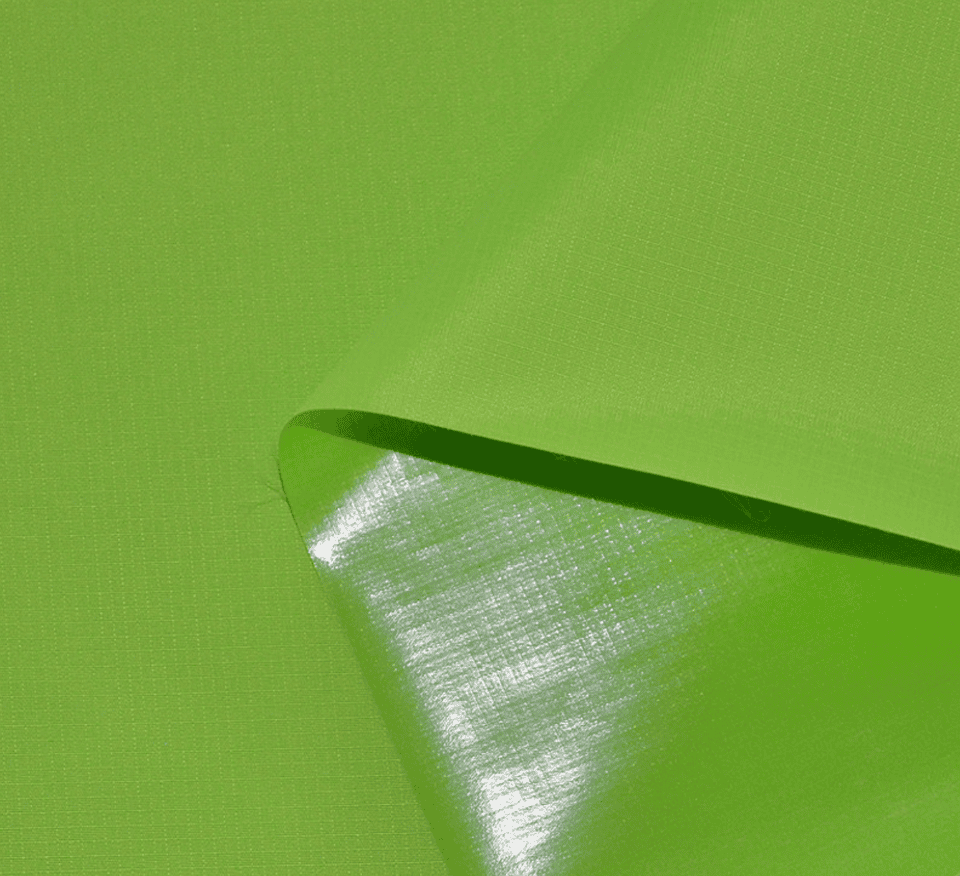

Modern Applications and Technical Use Cases
Performance Apparel
The 40D nylon-spandex and 160D 4-way-stretch fabrics can be developed for hiking trousers, climbing pants, golf apparel, technical commuter clothing, trail-running shells, lightweight field uniforms, cycling overshorts, travel pants, and articulated knee or seat panels. Stretch direction, recovery, dimensional stability, moisture management, and seam performance should be confirmed against the garment pattern and intended activity.Lightweight Insulation Systems
The 400T, 20D, 36 GSM nylon is suited to down jackets, synthetic-insulation garments, packable vests, sleeping-bag shells, quilted liners, and ultralight travel accessories. Development programs can specify requirements such as down-proof performance, air permeability, calendering, cire finishing, antistatic treatment, and surface gloss.Waterproof and Weldable Outdoor Products
PU-coated Oxford, coated Taslon, waterproof taffeta, and heat-sealable TPU-coated 40D ripstop can be evaluated for tent flies, bivy sacks, pack liners, dry-bag components, rain covers, ultralight shelters, inflatable camping accessories, protective equipment covers, and welded storage products. “Waterproof” performance should be defined by measurable requirements such as hydrostatic-head resistance, coating adhesion, seam construction, aging resistance, and laundering durability. A coated fabric alone does not make the completed product waterproof; seams, zippers, closures, and garment architecture also affect performance.Bags, Packs, and Travel Equipment
The 290T ripstop Oxford and 228T Taslon constructions are relevant to daypacks, lightweight luggage, shoe bags, hydration-pack components, trekking-pole sleeves, compression sacks, organizer pouches, camera-bag linings, and outdoor-accessory panels. Buyers may request abrasion, tear, tensile, coating-adhesion, and colorfastness testing according to the intended load and service conditions.Uniforms and Technical Workwear
228T Taslon and 160D stretch woven nylon can support lightweight uniforms, field trousers, mobility-focused workwear, delivery apparel, security uniforms, and weather-resistant teamwear. Useful development options include reinforced zones, mechanical or elastane stretch, quick-dry finishes, low-noise surfaces, matte finishes, and custom color matching.Fashion, Bridal, and Stage Design
The nylon organza, tulle, crystal organza, glitter tulle, and rainbow organza listings support sheer blouses, layered dresses, overskirts, puff sleeves, veils, millinery, fabric flowers, decorative headdresses, theatrical costumes, concert staging, window displays, wedding installations, and translucent sculptural forms. The 25 GSM, 30D nylon organza is especially suitable where low weight, transparency, crisp volume, or layered color effects are required.Nylon Compared with Other Common Fabrics
Nylon vs. Polyester
Both are lightweight, durable synthetic fibers with good abrasion resistance. Nylon is frequently selected where a high strength-to-weight ratio, flexibility, or a smoother hand is required. Polyester is often more economical and generally offers lower moisture absorption. Final performance depends on yarn, weave, weight, coating, and finishing rather than fiber content alone.Nylon vs. Cotton
Cotton is soft, breathable, and comfortable for everyday apparel, but it is generally less abrasion-resistant and less water-resistant than nylon. Nylon is usually better suited to lightweight outdoor shells, bags, and technical products, while cotton is often preferred where natural hand feel and moisture absorption are priorities.Nylon vs. Wool
Wool provides natural insulation and can retain warmth when damp. Nylon offers lower weight, greater abrasion resistance, and easier integration into coated or high-density constructions. Blends and hybrid garment systems can use both materials to balance insulation, durability, and weather protection.Entretien et maintenance
- Wash nylon on a gentle or delicate cycle using a mild detergent.
- Avoid chlorine bleach and fabric softener unless the product-specific care instructions permit them.
- Wash separately or with similar synthetic fabrics to reduce snagging and surface friction.
- Air-dry or tumble-dry at low temperature; excessive heat can damage fibers, coatings, membranes, and elastane.
- Remove items while slightly damp to reduce wrinkling.
- Store in a cool, dry place away from prolonged sunlight and heat.
- Avoid long-term compression of coated fabrics, organza, and structured products.
- Repair small tears with a compatible nylon patch, seam tape, or fabric adhesive selected for the coating and construction.
Qu’est-ce que le tissu en nylon ?
Nylon fabric is woven or knitted from polyamide filament or staple fibers. It is valued for its high strength-to-weight ratio, abrasion resistance, resilience, and adaptability to coating, laminating, dyeing, printing, and stretch-fabric construction. The products in this collection range from sheer 25 GSM organza and lightweight 20D–40D fabrics to 70D taffeta, 160D stretch woven fabric, 228T Taslon, and 290T ripstop Oxford. This breadth allows sourcing teams to select nylon by construction and end-use performance rather than treating it as a single undifferentiated material.Histoire du nylon
Nylon was developed by DuPont during the 1930s as a synthetic alternative to silk. Wallace Carothers and his research team created a material that could be manufactured at scale while delivering greater strength and durability. The first commercial nylon product was a toothbrush with nylon bristles, introduced in 1938. Nylon stockings followed in 1940. During World War II, the fiber was widely used for parachutes, tents, ropes, and other military equipment. It subsequently expanded into apparel, automotive products, aerospace components, electrical applications, outdoor equipment, and industrial textiles.Properties and Characteristics of Nylon Fabrics
- Strength and durability: Nylon fabrics are exceptionally strong and durable. They resist wear and can withstand substantial loads without tearing when the construction and specification are appropriate.
- Abrasion resistance: Nylon performs well in high-friction applications, making it suitable for backpacks, luggage, footwear components, workwear, outdoor clothing, and equipment shells.
- Résistance à l'eau : Nylon is naturally water-resistant. For applications requiring higher hydrostatic resistance or waterproof performance, this collection also includes PU- and TPU-coated constructions.
- Elasticity: Nylon can stretch and recover without permanent deformation. When combined with spandex in 4-way-stretch constructions, it provides greater multidirectional mobility for fitted apparel and articulated garments.
- Low weight: Fine-denier nylon can provide strength at a low fabric weight, which is especially valuable in packable outerwear, down-proof shells, linings, tents, and performance apparel.
- Different nylon types: Nylon 6,6 is known for high strength and stiffness, while nylon 6 is recognized for elasticity and its ability to absorb moisture.
Custom Development and Strategic Sourcing
Our Wujiang location connects buyers with specialized capabilities across spinning, weaving, knitting, dyeing, printing, calendering, coating, laminating, bonding, and finishing. This network supports both direct factory programs and difficult sourcing briefs that require capabilities beyond a single production line. Custom development may include:- Fiber composition and recycled-material options
- Denier, thread count, weight, width, weave, and stretch adjustments
- Custom colors, lab dips, printing, and surface effects
- PU or TPU coating and heat-sealable constructions
- Water-resistant, quick-dry, anti-static, flame-retardant, tear-resistant, or shrink-resistant options where specified
- Matte, bright, sheer, iridescent, glitter, or calendered finishes
- Testing and documentation aligned with the buyer’s destination market
- OEM programs and customized product branding