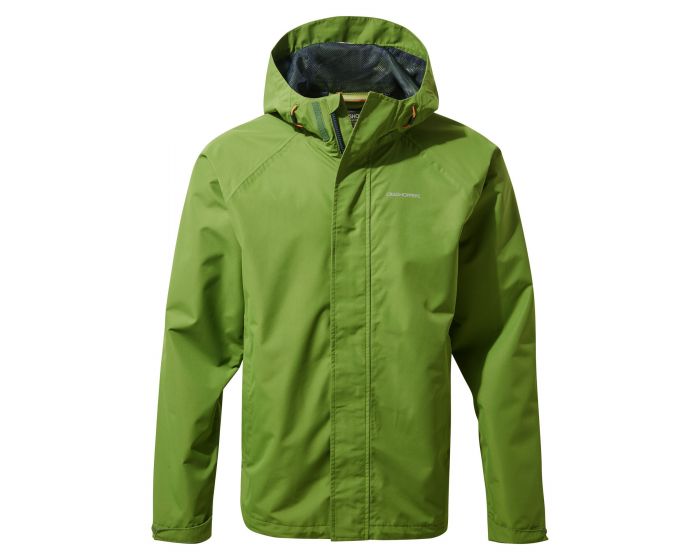
eVent is a brand of waterproof-breathable, windproof, and protective fabric laminates used in outdoor clothing, footwear, accessories, and specialist equipment. The name does not describe one universal fabric composition. Depending on the product family, an eVent laminate may use an expanded polytetrafluoroethylene (ePTFE) membrane or a newer PFAS-free, plant-based membrane combined with selected face fabrics and backers.
For buyers, the important distinction is between the branded membrane technology and the complete fabric laminate. Waterproofness, breathability, weight, durability, stretch, hand feel, and regulatory suitability depend on the exact membrane, face fabric, backer, durable water-repellent treatment, seam construction, and finished-product design.
eVent Fabric at a Glance
- Fabric type: Waterproof-breathable, windproof, or protective laminate
- Membrane materials: Product-dependent; current options include ePTFE and PFAS-free plant-based technologies
- Typical laminate construction: Two, 2.5, three, or four layers, depending on the application
- Common face fabrics: Nylon or polyester, selected according to weight, abrasion resistance, stretch, and end use
- Respirabilité : Generally high, but the result and test method vary by product
- Waterproofness: Product-specific and dependent on both the laminate and finished-product construction
- Extensible: Low to high, depending on the face fabric, membrane, and laminate design
- Rétention de chaleur : Usually low unless the finished product includes insulation
- Typical applications: Rain shells, snow apparel, cycling garments, footwear, gloves, tents, dry bags, workwear, military equipment, and first-responder products
- Care: Follow the garment or equipment manufacturer’s label; periodic washing and DWR maintenance may be required

What Is eVent Fabric?
eVent fabric is best understood as a laminated performance-textile system. A thin functional membrane is bonded to one or more textile layers to help prevent liquid water from entering while allowing water vapor—or, in some constructions, air and moisture vapor—to escape.
The original eVent technology was introduced in 1999 and became known for an air-permeable ePTFE membrane marketed as Direct Venting technology. Unlike an ordinary woven fabric, the membrane contains a microscopic porous structure. These pores are designed to resist liquid-water penetration while supporting moisture transfer from the warm, humid side of a garment to the outside environment.
Today, eVent’s portfolio is broader. It includes traditional waterproof-breathable products as well as newer PFAS-free options such as alpineST, stormST, and windstormST. The company describes stormST and windstormST as plant-based and ePTFE-free technologies for the Spring/Summer 2026 product season.
This means buyers should not use “eVent fabric” and “ePTFE fabric” as exact synonyms. Some eVent products use ePTFE, while others do not.
How Does eVent Fabric Work?
Waterproof-breathable laminates manage two different forms of moisture:
- Liquid water from outside, such as rain or melting snow.
- Water vapor and perspiration from inside, generated by the wearer.
The membrane provides the primary weather barrier, while the face fabric supplies abrasion resistance, color, texture, tear strength, and part of the garment’s overall appearance. A backer or lining can protect the membrane from skin oils, dirt, and mechanical wear.
Breathability is not determined by the membrane alone. It is affected by:
- Temperature and humidity differences across the fabric
- Face and backer construction
- Adhesive coverage
- DWR condition
- Contamination by oils or dirt
- Garment ventilation
- Lining and insulation
- Test method and test conditions
A high laboratory value therefore does not guarantee identical comfort in every finished product or climate.
How Is eVent Fabric Made?
1. The Functional Membrane Is Produced
For traditional ePTFE-based technology, PTFE is expanded to form a thin, microporous membrane. The resulting structure provides the functional barrier responsible for much of the laminate’s waterproof-breathable performance.
Newer eVent technologies use a different membrane platform. The company describes stormST and windstormST as PFAS-free, plant-based, and ePTFE-free. Buyers should request the current product data sheet rather than assuming that all eVent-branded materials have the same chemistry.
2. The Face Fabric and Backer Are Selected
The membrane is combined with textile components suited to the intended application. Nylon and polyester are common face-fabric choices, but yarn type, density, denier, weave, mechanical stretch, and reinforcement construction can vary widely.
A three-layer outdoor shell, for example, normally combines:
- An outer face fabric
- The functional membrane
- An inner backer that protects the membrane
A two-layer construction leaves the membrane exposed on the inside and normally requires a separate lining. A 2.5-layer construction uses a printed or coated protective treatment instead of a full textile backer. Footwear membranes may use different multilayer constructions or bootie systems.
For technical outerwear development, buyers can compare these constructions with other nylon fabric options and communicate the required laminate structure before sampling.
3. The Layers Are Laminated
Heat, pressure, and adhesive technology bond the membrane to the selected textile layers. Adhesive selection and coverage are important because they influence bond strength, breathability, softness, and wash durability.
The lamination process must be controlled carefully. Weak bonding can cause delamination, bubbling, or performance loss, while excessive or poorly distributed adhesive can reduce moisture transfer.
4. A Water-Repellent Finish May Be Applied
Many waterproof shells use a durable water-repellent treatment on the face fabric. DWR helps water bead and roll away rather than saturating the textile surface.
DWR is not the same as the waterproof membrane. A laminate may remain resistant to water penetration even when the face begins to “wet out,” but a saturated face fabric can feel colder, heavier, and less comfortable. It can also reduce apparent breathability.
Current eVent pages describe selected PFAS-free products as using C0 DWR. The finish chemistry and destination-market requirements should nevertheless be confirmed for the exact article and production batch.
5. The Finished Product Is Constructed and Sealed
A waterproof fabric does not automatically create a waterproof jacket, boot, glove, or bag. Sewing needles create holes, so critical seams normally require compatible seam tape or another sealing method.
Finished-product performance also depends on:
- Seam-tape compatibility
- Stitch density
- Zipper construction
- Hood, cuff, and pocket design
- Vent placement
- Pattern engineering
- Lining and insulation
- Production workmanship

Important eVent Fabric Properties
Waterproofness
eVent waterproof laminates are designed to resist rain and snow. However, waterproofness should be evaluated using the exact material code and specified test method.
The former article assigned a single 30,000 mm hydrostatic-head figure to eVent as a whole. That is too broad because eVent offers multiple constructions. Legacy products also carried different published figures. Buyers should request a current technical data sheet showing the test standard, initial result, and any after-wash performance requirement.
Respirabilité
The original Direct Venting platform became known for air permeability and moisture transfer. This can support comfort during high-output activities, but performance varies among laminates.
Breathability results cannot be compared reliably unless the test methods and conditions are comparable. Moisture vapor transmission rate, resistance to evaporative heat loss, and air-permeability tests measure different aspects of performance.
Wind Resistance
Waterproof membrane laminates normally provide strong wind resistance. eVent also offers windproof technologies intended for activities where airflow protection and moisture management matter more than resistance to heavy rain.
Durabilité
Durability depends on the complete construction rather than the brand name alone. A lightweight running-shell laminate and a heavy-duty professional laminate may use very different face fabrics and backers.
Relevant evaluation points include:
- Résistance à l'abrasion
- Résistance à la déchirure et à la traction
- Lamination bond strength
- Hydrostatic pressure before and after washing
- Seam-seal durability
- Resistance to flexing
- DWR performance
- Stabilité dimensionnelle
- Solidité des couleurs
- Pilling and snagging
For bulk procurement, a structured fabric quality-inspection process can help connect the approved sample, technical specification, testing plan, and final inspection.
Stretch and Mobility
Stretch is product-specific. Some eVent constructions use stretch face fabrics for cycling, activewear, or articulated outdoor garments, while robust shell materials may provide limited stretch.
Where mobility is important, buyers should specify whether they need two-way or four-way stretch, the test direction, required recovery, and the acceptable change after lamination. FabricsTrades’ catégorie de tissu extensible dans quatre directions illustrates the type of textile platform that may be considered when developing mobility-focused shell components, although suitability for any membrane program must be technically confirmed.
Where Is eVent Fabric Used?
Vêtements d'extérieur
Les applications courantes incluent :
- Lightweight rain shells
- Mountaineering jackets
- Ski and snowboard apparel
- Waterproof pants and bibs
- Cycling garments
- Fishing and hunting apparel
- Technical workwear
Chaussure
eVent technologies are used in waterproof footwear systems, including hiking shoes, boots, performance footwear, and selected professional products. Footwear constructions may use membrane booties, gasket systems, or multilayer inserts.
Accessories and Equipment
Possible applications include:
- Gants
- Hats and gaiters
- Dry bags
- Packs and protective covers
- Tents and shelters
- Specialist marine equipment
Professional and Protective Products
eVent also supplies technologies for industrial, military, safety, and first-responder applications. These products should not be treated as interchangeable with consumer apparel laminates. Protective-equipment specifications may require additional chemical-resistance, flame, certification, or category-specific testing.

Current eVent Product Families
The eVent portfolio has changed since the original article was published in 2022. Buyers may encounter both current and legacy names in samples, brand materials, and archived technical literature.
Étanche
The company’s core waterproof category includes breathable weather-protection laminates for outerwear and related applications. The exact composition and performance should be confirmed by product code.
alpineST
eVent describes alpineST as a durable, PFAS-free waterproof-breathable laminate for demanding conditions. It uses a fluorine-free membrane, selected face fabrics and backers, and C0 DWR.
stormST
stormST is the current name for the plant-based waterproof technology previously marketed as BIO Waterproof. eVent describes it as PFAS-free and ePTFE-free. The branding transition applies to the Spring/Summer 2026 product season, while earlier BIO-labelled products may remain in retail channels during the transition.
windstormST
windstormST replaces the former BIO Windproof name. It is a PFAS-free, plant-based softshell laminate intended to provide wind protection, breathability, and resistance to light precipitation.
Protective Technologies
eVent offers protective laminates for harsh or specialist conditions. Buyers should evaluate these against the exact risk, end-use standard, and finished-product certification route rather than relying on a general “professional” description.
Legacy DV Names
The earlier article listed DVexpedition, DValpine, DVstorm, DVwind, DVstretch, DVelite, and DVshield. Some of these names remain visible in legacy pages or products, but availability and specifications should be confirmed directly for the intended season and market.
Historic performance figures should not be copied into a purchase specification without a current data sheet. Changes in membrane, face fabric, adhesive, backer, or test method can alter the result.
eVent Fabric Versus GORE-TEX
Both eVent and GORE-TEX are brands of performance laminate technology rather than single commodity fabrics. Certain traditional products from both brands have used ePTFE, but their product portfolios and constructions have evolved.
A useful comparison should consider:
| Evaluation point | Questions for the buyer |
|---|---|
| Membrane chemistry | Is it ePTFE, polyurethane, expanded polyethylene, plant-based, or another technology? |
| Waterproofness | Which hydrostatic-pressure test was used, and what is the after-wash result? |
| Respirabilité | Which test method and conditions support the published value? |
| Perméabilité à l'air | Is measurable airflow part of the intended comfort mechanism? |
| Construction | Is the material two-layer, 2.5-layer, three-layer, or another system? |
| Durabilité | What face fabric, backer, adhesive, and care cycle were tested? |
| PFAS status | Does the supplier’s declaration cover the membrane, DWR, components, and relevant thresholds? |
| Finished product | Are seams, zippers, pattern design, and ventilation suitable for the intended exposure? |
| Commercial terms | What are the approved converter, MOQ, lead time, color options, and testing obligations? |
It is not accurate to state that every eVent fabric is more breathable or waterproof than every GORE-TEX fabric. Comparisons must use specific constructions tested under equivalent methods.
How Much Does eVent Fabric Cost?
eVent laminates are specialist branded materials and generally cost more than ordinary coated woven fabrics. There is no reliable universal price because quotations depend on:
- Product family and membrane technology
- Face and backer materials
- Poids et largeur du tissu
- Laminate structure
- DWR and other finishes
- Color and minimum order quantity
- Tests et documentation
- Licensing or approved-supply arrangements
- Marché de destination
- Order timing and logistics
A lower price per meter may not produce a lower finished-product cost if the material requires special seam tape, longer processing time, higher wastage, or additional testing. Buyers should compare total program cost rather than fabric price alone.
Entretien et maintenance
Always follow the care label supplied by the finished-product manufacturer. General care principles for waterproof-breathable garments include:
- Close zippers and hook-and-loop fasteners.
- Remove loose dirt before washing.
- Use the specified wash temperature and detergent type.
- Avoid fabric softener unless expressly permitted.
- Rinse thoroughly so detergent residue does not remain.
- Dry according to the care label.
- Restore or reapply DWR when water stops beading on the face fabric.
Regular cleaning can remove body oils, dirt, and residues that interfere with moisture transfer or contaminate the membrane. The required care frequency depends on use conditions rather than a fixed calendar.
The former claim that an initial DWR treatment remains effective for up to five years has been removed. DWR durability varies with finish chemistry, abrasion, laundering, heat treatment, contamination, and use intensity.
Considérations environnementales
Traditional ePTFE is a fluoropolymer and is highly persistent. Its environmental assessment should consider the full manufacturing and product lifecycle, including raw materials, processing aids, emissions, DWR chemistry, durability, maintenance, and end-of-life options.
The former article described PTFE broadly as a human toxin and implied that normal contact with a finished eVent product presents the same hazard as heated PTFE fumes. That comparison is misleading. Polymer-fume fever is associated with inhalation of fumes produced when PTFE is overheated; it does not, by itself, establish an equivalent exposure from ordinary use of a finished laminate.
It is more accurate to distinguish:
- Hazards associated with manufacturing or thermal decomposition
- Persistence of fluorinated materials in the environment
- Possible PFAS content or processing aids
- Chemistry used in the membrane and DWR
- Exposure during normal product use
- Product durability and replacement frequency
- Available collection or recycling routes
PFAS-free does not automatically mean that a product has no environmental impact. Buyers should request support for any recycled, bio-based, lower-carbon, recyclable, or PFAS-free claim and confirm precisely which components the claim covers.
Mise à jour actuelle de la réglementation et du marché
PFAS requirements are now a central sourcing issue for waterproof outerwear, footwear, accessories, and treated textiles.
Under Règlement de la Commission (UE) 2024/2462, the European Union’s PFHxA restriction applies from October 10, 2026 to clothing, related accessories, and footwear for the general public at the regulation’s stated concentration thresholds. Other consumer textiles covered by the restriction have a later application date of October 10, 2027. The regulation contains defined exclusions and transition provisions, so product category and placement-on-the-market dates must be checked carefully.
This targeted PFHxA restriction is separate from the broader EU universal PFAS restriction proposal. The broader proposal has continued through the REACH scientific evaluation process; buyers should not describe it as a blanket ban already applying to all textiles. FabricsTrades’ overview of the EU universal PFAS restriction and the China fabric supply chain provides related supply-chain context, while the EU PFHxA restriction guide addresses the adopted targeted restriction.
For procurement, a statement that a laminate is “PFAS-free” should not be accepted without defining its scope. Buyers may need information about:
- Membrane chemistry
- Face and backer fabrics
- DWR and other finishes
- Adhesives
- Seam tape
- Zippers, printed components, and trims
- Test method and detection limits
- Batch or article-number coverage
- Destination market and date of sale
- Supplier declarations and supporting reports
Different jurisdictions and retailers may use different PFAS definitions, thresholds, exemptions, and documentation rules. Communicate applicable requirements before sampling and quotation, and verify the current legal and retailer requirements before bulk production.
What Buyers Should Specify Before Sampling
A useful development brief should include:
- Intended garment, footwear, or equipment application
- Destination countries
- Consumer or professional-use classification
- Two-, 2.5-, three-, or four-layer construction
- Preferred face-fabric fiber, denier, weight, and texture
- Waterproofness test and minimum result
- Breathability test and minimum result
- Air-permeability requirement, if applicable
- Wind-resistance requirement
- Étirement et récupération
- Abrasion and tear requirements
- Wash-durability target
- DWR chemistry
- PFAS definition and documentation expectations
- Seam-tape compatibility
- Color, width, MOQ, and forecast volume
- Required certificates, declarations, and laboratory reports
Physical sampling remains essential because two laminates with similar headline test figures can differ significantly in stiffness, noise, drape, surface appearance, and comfort.
Foire aux questions
Is all eVent fabric made from ePTFE?
No. Traditional eVent Direct Venting products use ePTFE, but the current portfolio also includes PFAS-free, plant-based, ePTFE-free technologies such as stormST and windstormST. Confirm the composition of the exact product code.
Is eVent fabric completely waterproof?
Selected eVent laminates are designed as waterproof materials, but a finished product is waterproof only when its seams, zippers, openings, and construction are also suitable. Performance should be verified using the relevant test method.
Is eVent more breathable than GORE-TEX?
There is no universal answer. Both brands offer multiple constructions, and published values may use different test methods. Compare exact product data under equivalent conditions.
Does eVent fabric need DWR?
Many eVent outerwear laminates use a DWR-treated face fabric. DWR helps prevent surface wet-out but is distinct from the waterproof membrane. Follow the finished-product manufacturer’s maintenance instructions.
Is eVent fabric PFAS-free?
Some current eVent products are marketed as PFAS-free, including alpineST, stormST, and windstormST. Buyers should not extend that claim to every eVent product. Request documentation covering the exact membrane, laminate, finish, and product code.
Can ordinary fabric factories purchase and laminate an eVent membrane?
Branded membrane supply, lamination, quality control, and trademark use may be restricted to approved commercial arrangements. Buyers should confirm authorization, traceability, minimum order quantities, and branding rules with the relevant supplier or eVent representative.
Que doivent tester les acheteurs avant la production en masse ?
Testing should match the end use and may include hydrostatic pressure, breathability, air permeability, lamination bond strength, abrasion, tear strength, stretch, dimensional stability, laundering, DWR performance, seam sealing, and restricted substances.
Conclusion
eVent is no longer accurately described as one ePTFE fabric with one fixed performance specification. It is a family of waterproof-breathable, windproof, and protective laminate technologies that includes both traditional ePTFE platforms and newer PFAS-free, plant-based membranes.
The right material should be selected by product code, laminate construction, verified test method, end-use conditions, care requirements, destination-market rules, and finished-product design. Before ordering, buyers should obtain current technical data, confirm membrane and finish chemistry, approve a physical sample, test the complete construction, and align documentation requirements with the intended market.
Bien que le tissu eVent soit plus respirant que le GORE-TEX, son absence de couche protectrice en polyuréthane signifie qu'il est plus capricieux que les tissus imperméables à base de PU. Pour rester efficace, il est nécessaire de laver fréquemment les tissus eVent et de les traiter régulièrement avec un spray déperlant durable (DWR). Ces facteurs négatifs empêchent le tissu eVent d'être clairement supérieur au GORE-TEX.