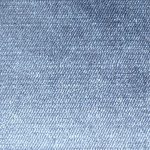
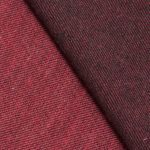
Jersey is a weft-knitted fabric made by interlooping yarn rather than crossing warp and weft yarns as in a woven fabric. The looped structure gives jersey useful extensibility, drape and comfort, but its exact performance depends on the fibre blend, yarn, stitch density, weight, finishing and garment construction.
The term describes a construction, not a fibre. Jersey can be made from cotton, wool, viscose or modal, polyester, nylon, blends, and combinations containing elastane. That is why two fabrics both sold as “jersey” can differ substantially in stretch, recovery, breathability, moisture behaviour, warmth, pilling, shrinkage and price.
For buyers, “jersey” is therefore only the beginning of a specification. A purchase order or development brief should also state the fibre percentages, knit structure, finished weight, usable width, colour, finish, stretch and recovery targets, shrinkage limits, appearance requirements, test methods and end use.
Key takeaways
- Jersey is a knitted construction, not a fibre name.
- Single jersey is usually lighter and has different face and back appearances; interlock is generally more stable, substantial and similar-looking on both sides.
- Stretch comes partly from the knitted loops and can be increased with elastane, but stretch percentage and recovery must be tested on the actual finished fabric.
- Absorbency, drying rate, warmth, pilling and care are driven by the complete material specification, not by the word “jersey” alone.
- Buyers should approve finished-fabric weight, width, shrinkage, spirality, colourfastness, pilling, stretch and recovery before bulk production.
- Destination-market labelling, chemical restrictions and traceability requirements should be communicated before sampling and quotation.
Jersey fabric at a glance
| Specification point | Réponse pratique |
| Nom du tissu | Jersey; often called jersey knit |
| Construction | Weft knit; single jersey is the most familiar form, while interlock and patterned variants are also sold within the jersey family |
| Common fibres | Cotton, wool, viscose or modal, polyester, nylon, elastane blends and other fibre combinations |
| Extensible | Usually extends more readily than a comparable woven fabric; direction, percentage and recovery vary by construction and blend |
| Respirabilité et absorption | Fibre-, weight- and finish-dependent; cotton and regenerated-cellulose versions generally behave differently from polyester or nylon versions |
| Chaleur | Ranges from light base-layer fabrics to heavier double knits; there is no universal heat-retention rating |
| Boulochage | Depends on fibre, yarn, surface, abrasion, finishing and use |
| Soins | Must be set from the finished fabric or garment test results; there is no single wash temperature for all jersey |
| Utilisations courantes | T-shirts, underwear, tops, dresses, sleepwear, base layers, activewear, childrenswear, fitted sheets and pillowcases |
| Historical association | Named for Jersey in the Channel Islands and historically associated with wool knitwear |
Qu'est-ce que le tissu jersey ?

Jersey is commonly produced as a weft knit, meaning loops are formed across the width in courses. The vertical columns of loops are called wales. In plain single jersey, the technical face normally shows V-shaped knit stitches, while the technical back shows curved sinker loops. An institutional overview of basic weft-knit structures identifies plain single jersey, rib, interlock and purl as distinct foundational structures.
This loop geometry explains several familiar behaviours. Jersey can extend because the loops change shape under tension; it usually drapes and conforms more readily than a stable woven fabric; and a cut edge of single jersey may curl. The same structure can also be vulnerable to runs or laddering when a loop is damaged. These are tendencies rather than guaranteed specifications.
Fibre choice then changes how the fabric feels and performs:
- Cotton jersey is widely used for T-shirts, underwear, casualwear and bedding. It can feel soft and absorb moisture, but shrinkage, spirality and colourfastness need control.
- Wool jersey can provide warmth, moisture buffering and resilience. Care requirements and dimensional stability depend on the wool, yarn and finishing system.
- Viscose or modal jersey often has fluid drape and a soft hand. Wet dimensional stability, skew and recovery should be evaluated for the intended garment.
- Polyester or nylon jersey can offer strength, quick drying and consistent dimensions, depending on yarn and finish. Comfort and moisture transport should be confirmed rather than inferred from fibre name alone.
- Elastane-blend jersey can provide higher stretch and improved recovery. Heat exposure, dyeing, finishing and repeated laundering can affect performance.
A concise history of jersey fabric
Jersey takes its name from the island of Jersey in the Channel Islands, where knitted wool garments became associated with local maritime and clothing traditions. The historical fabric was primarily wool, unlike today’s broad range of cotton, regenerated-cellulose and synthetic jerseys.
Jersey moved beyond underwear, workwear and sportswear as designers used its drape and ease in modern clothing. The Metropolitan Museum of Art notes that Gabrielle “Coco” Chanel used jersey extensively when it was still an unusual choice for women’s fashion and more commonly associated with men’s underwear. Its flexibility suited the simpler, practical silhouettes that became central to her work.
Today, jersey is a global commercial fabric rather than a material tied to one fibre or one producing region. Circular knitting, flat knitting, yarn development, dyeing and finishing capabilities are distributed across many textile supply chains.
Comment est fabriqué le tissu jersey ?

Industrial jersey production typically follows six stages. The sequence can change according to fibre, colouration method, machinery and performance requirements.
- Fibre and yarn selection. The mill or buyer selects fibre composition, yarn count, yarn construction, twist, filament type, lustre and any elastane component. These choices influence hand feel, coverage, strength, pilling and cost.
- Knitting. Yarn is fed to a circular or flat knitting machine. A single set of needles can make plain single jersey, while double-knit structures such as interlock use a different needle arrangement. Machine gauge, stitch length, yarn tension and feeder settings affect weight, density and appearance.
- Relaxation and preparation. Freshly knitted fabric contains residual tension. It may be relaxed and then scoured or otherwise prepared to remove processing residues and create a consistent base for dyeing and finishing.
- Colouration. Depending on the programme, yarn can be dyed before knitting, or greige fabric can be piece-dyed or printed after knitting. Fibre blends may require multiple dye classes or carefully controlled one-bath or two-bath processes.
- Finishing and stabilization. The fabric may be compacted, heat-set, brushed, sueded, softened or treated for a specified function. Finishing must match the fibre blend and end use. A treatment should not be assumed merely because it is common in the market.
- Inspection and testing. The supplier checks shade, width, weight, surface defects and roll quality. Buyer-specific testing can cover dimensional change, spirality, pilling, colourfastness, stretch and recovery, bursting strength or other performance requirements.
Knitted fabric should be evaluated after the agreed finishing and conditioning process. Greige weight or width does not necessarily predict the final delivered values.
Key properties of jersey fabric
Étirement et récupération
Jersey normally has structural stretch because its loops can deform. Single jersey often stretches more across the width than along the length. Adding elastane can increase stretch and help the fabric return toward its original dimensions, but recovery depends on elastane percentage, yarn system, knit construction, heat history and finishing.
Do not use “four-way stretch” as a substitute for test data. A buyer should state the test direction, extension target, load or method, recovery interval and permitted growth.
Drape and hand feel
Many jersey fabrics drape well because knitted loops move relative to one another. Fine yarns, lower weights and regenerated-cellulose fibres can create a particularly fluid fabric, while dense interlock or heavier wool jersey can feel more substantial. Softeners, brushing and compacting also change hand feel.
Breathability, absorbency and drying
Jersey is not automatically highly breathable or moisture-wicking. Air permeability is affected by stitch density, thickness, porosity and finishing. Moisture absorption depends strongly on fibre type, while moisture wicking requires capillary transport through a suitable yarn and fabric structure. A polyester jersey can dry quickly without absorbing much moisture; a cotton jersey can absorb more water but dry more slowly. Functional claims should be supported by an agreed test.
Warmth and insulation
Light single jersey is often used for warm-weather tops or base layers, while wool jersey, interlock and other heavier knits can retain more warmth. Fibre, fabric thickness, trapped air and garment layering matter more than the construction name by itself.
Curling, spirality and dimensional change
Plain single jersey has an unbalanced structure, so its cut edges tend to curl. Yarn torque, machine settings, wet processing and finishing can also contribute to skew or spirality. Cotton and viscose jerseys may shrink if relaxation and compaction are insufficient. Buyers should approve these characteristics after laundering or other relevant conditioning.
Pilling and surface durability
Pilling is not a fixed property of jersey. It is influenced by fibre strength and length, yarn construction, knit density, brushing or sueding, abrasion and laundering. Synthetic fibres can hold pills on the surface because the fibres are strong, while soft or hairy yarns may generate fuzz more readily. Test the finished fabric in the relevant colour and finish.
Avantages et limites
Common advantages
- Comfortable extension and body conformity.
- Good drape for tops, dresses and close-to-body garments.
- Wide choice of fibres, weights, colours, prints and finishes.
- Efficient production on high-output circular knitting machines.
- Suitable for both everyday basics and performance-oriented blends.
- Cut-and-sew versatility across apparel and selected home-textile products.
Common limitations
- Single-jersey edges can curl during cutting and sewing.
- Some constructions can run or ladder if a loop breaks.
- Shrinkage, skew and spirality require control, especially in relaxed cotton or regenerated-cellulose fabrics.
- Stretch without adequate recovery can lead to bagging at elbows, knees or necklines.
- Lightweight fabrics may show grin-through, edge rolling or sewing distortion.
- Pilling and snagging depend on the complete material and finish specification.
Jersey fabric types
| Taper | Construction and appearance | Typical behaviour | Buyer considerations |
| Single jersey | One set of needles; V-shaped face and looped back | Usually lighter, extensible and drapable; edges can curl | Specify finished weight instead of assuming single jersey is below a fixed gsm threshold; check spirality, shrinkage and opacity |
| Interlock | Double-knit structure formed by intermeshed rib arrangements; face stitches are visible on both sides | Usually thicker, smoother on both sides and more stable than single jersey | Check weight, stretch, recovery and needle-line defects; do not describe it as two finished fabric sheets glued or sewn together |
| Jacquard jersey | Pattern is created through controlled stitch selection rather than only surface printing | Can produce geometric, textured or complex knitted motifs | Pattern scale, floats, weight variation, snagging and machine capability should be confirmed |
| Clocqué jersey | Raised or puckered surface effect created by structure, differential yarn behaviour or finishing | Textured and visually dimensional | Confirm the method, repeat, wash stability and whether the surface changes under heat or tension |
| Stretch jersey | Jersey made with elastane or another elastic yarn system, or engineered for higher extension | Greater extension and potentially better recovery | State fibre percentages, stretch directions, test method, recovery and heat-setting requirements |
| Slub jersey | Jersey knitted with deliberately irregular slub yarn | Uneven, casual texture with visible thick-and-thin effects | Approve a physical standard because slub distribution and shade appearance vary; the fabric is knitted, not woven |
“Double jersey” is a broad market term and should not automatically be treated as a synonym for interlock. Rib, interlock, ponte and other double-knit structures have different needle arrangements and performance. The technical specification should name the actual structure.
Jersey compared with related knits
| Construction | Surface and structure | Relative stability | Utilisations courantes |
| Single jersey | Different technical face and back; cut edges tend to curl | Lower than interlock in many comparable specifications | T-shirts, underwear, lightweight dresses, tops and sleepwear |
| Rib knit | Alternating face and back wales, often with visible vertical ribs | Good widthwise extensibility and recovery when balanced | Neckbands, cuffs, fitted tops and trims |
| Interlock | Double knit with face stitches visible on both sides | Generally more stable and substantial than single jersey | Premium T-shirts, babywear, dresses, polos and structured knit garments |
| French terry | Smooth technical face with loops or floats on the back | Weight and stability vary; generally bulkier than T-shirt jersey | Sweatshirts, shorts, joggers and casualwear |
The right choice depends on silhouette, opacity, stretch, recovery, thermal comfort, sewing method, target price and care requirements. There is no universally “best” knit.
Comment est utilisé le tissu jersey ?

Jersey is widely used for T-shirts, underwear, camisoles, polo shirts, dresses, skirts, blouses, leggings, sleepwear, childrenswear and lightweight base layers. Stretch jerseys are also used in activewear, although performance depends on the fibre blend, moisture-management design, stretch, recovery and colourfastness.
Jersey also appears in fitted sheets, pillowcases and lightweight blankets. Bedding specifications should address dimensional change, pilling, colourfastness, fabric weight and mattress fit rather than relying on softness alone.
Not every jersey is suitable for every application. A fine viscose jersey designed for a draped dress may be unsuitable for a close-fitting sports garment, while a dense polyester-elastane jersey may not deliver the hand feel expected for a cotton T-shirt.
Où est produit le tissu jersey ?

Jersey originated historically in the Channel Islands, but modern production is global. It is made wherever suppliers have suitable yarn, circular or flat knitting machinery, dyeing and finishing capacity, testing support, and cut-and-sew supply chains.
It is misleading to name a single “largest jersey producer” without defining the fibre, HS classification, production stage and year. Trade databases commonly classify knitted fabrics by fibre and construction rather than by the broad retail word “jersey,” and fibre production geography is not the same as finished-fabric production geography.
For sourcing, buyers should compare suppliers on the required machine gauge, fibre and yarn access, dyeing and finishing capability, shade control, minimum order, sampling speed, testing, traceability, documentation and repeat-order consistency.
Combien coûte le tissu jersey ?
There is no fixed jersey price. The main cost drivers are:
- Fibre type, quality and blend percentage.
- Yarn count, filament type, spinning system and elastane content.
- Knit structure, machine gauge, stitch density, weight and usable width.
- Dye class, colour depth, print method and shade requirements.
- Compacting, heat setting, brushing, sueding or functional finishing.
- Testing, certification, traceability and documentation.
- Order quantity, colour quantity, packing, logistics and market conditions.
Commodity polyester or cotton jersey can be cost-effective, but broad statements that one fibre is always cheaper than another are unreliable. Specialty wool, branded cotton, fine regenerated-cellulose yarns, recycled inputs, solution-dyed yarns or certified supply chains can carry premiums. Compare quotations using the same finished specification, Incoterm, currency, testing scope and quantity.
Considérations environnementales
Jersey’s environmental profile cannot be determined from the knit structure alone. The important variables include raw-material production, recycled or virgin content, energy and water use, chemistry, dyeing and finishing, durability, garment care, shedding, production waste, transport and end-of-life options.
Natural fibres are not impact-free, and synthetic fibres are not identical in impact. Cotton can involve irrigation, land use and agricultural inputs; wool is connected to animal husbandry, land management and processing; regenerated cellulosic fibres depend on forestry inputs, chemical recovery and mill controls; and synthetic fibres depend on polymer feedstock, energy and shedding behaviour. A claim such as “sustainable,” “eco-friendly” or “biodegradable” needs a defined scope and supporting evidence.
For lower-impact sourcing, buyers can consider durability, a fit-for-purpose weight, preferred or recycled materials where verified, efficient dyeing and finishing, restricted-substance management, packaging, repairability, traceability and the likelihood that the finished garment will remain in use. Recycled content alone does not prove that the entire product is sustainable.
Certifications and claims that may apply
Jersey itself is not covered by one universal certification. Eligibility depends on the fibre, processing chain, facility scope and finished product.
Textile Exchange supply-chain standards can support third-party verification and chain of custody for defined recycled, organic or responsible-material claims. Certification scope and transaction documentation should be checked.
GOTS applies to textiles made with organic fibres under its processing and certification requirements. A raw fibre claim alone does not make a finished jersey product GOTS certified.
Woolmark product specifications cover qualifying wool yarns, fabrics and products that meet the relevant specification and testing requirements.
The SUPIMA trademark is controlled through a licensed supply chain. Buyers using the name should confirm current SUPIMA licensing and traceability requirements.
ISO publishes standards and test methods, but “ISO certified jersey” is not a meaningful standalone product claim. State the exact management-system certification, product standard or test method, its scope, the certificate holder and the supporting document.
How to specify and inspect jersey fabric
A clear jersey specification should cover:
- End use and target market.
- Exact generic fibre names and percentages.
- Knit structure and machine gauge where relevant.
- Finished weight with tolerance and agreed conditioning method.
- Usable width, tubular or open-width delivery, and tolerance.
- Colour standard, light source, shade continuity and metamerism expectations.
- Stretch direction, extension, recovery and growth limits.
- Dimensional change and spirality after the agreed care cycle.
- Pilling, colourfastness, bursting strength and any application-specific performance.
- Finish, restricted-substance requirements and whether fluorinated chemistry is prohibited.
- Roll length, defect system, packaging, labelling and documentation.
Approve a representative sample or lab dip before bulk production, then compare bulk fabric against the approved standard. FabricsTrades’ guide d'inspection de la qualité des tissus provides a broader procurement framework for checking weight, width, appearance and performance.
For stretch-led programmes, buyers can review the catégorie de tissu extensible as an initial sourcing route and confirm whether the required jersey construction, fibre blend, weight and finish are available. A category page should not be treated as confirmation that every specification can be produced.
Care and processing considerations
Set care instructions from the tested finished product, not from the word “jersey.” Cotton, wool, viscose, polyester and elastane blends react differently to water, agitation, heat, detergent, drying and ironing.
During garment development:
- Allow fabric to relax before cutting according to the approved production method.
- Confirm shrinkage and spirality before finalizing patterns and markers.
- Use needles, thread, seam type and differential feed suited to the weight and extensibility.
- Stabilize shoulders, necklines or openings where the design requires it.
- Evaluate seam stretch, puckering, grin-through and recovery on production-equivalent fabric.
- Re-test when colour, fibre source, weight or finish changes materially.
Mise à jour actuelle de la réglementation et du marché
Jersey sold as fabric, apparel or household textiles can be affected by fibre-labelling, chemical and product-information rules in the destination market. The construction name does not replace the required generic fibre composition.
In the European Union, the European Commission explains that Règlement (UE) n° 1007/2011 requires fibre-composition labelling or marking for textile products within scope. The rule covers products containing at least 80% textile fibres by weight, but it does not itself regulate size, country-of-origin or care labelling. In the United States, the FTC Textile Fiber Rule requires covered textiles to disclose generic fibre names and percentages, the manufacturer or marketer identity, and the country where the product was processed or manufactured. Buyers should verify the complete requirements for the actual product and sales channel.
Finishes need separate attention. Under Commission Regulation (EU) 2024/2462, the EU REACH restriction for PFHxA, its salts and PFHxA-related substances begins applying on October 10, 2026 to specified general-public clothing, related accessories and footwear at the concentrations and subject to the exemptions stated in the law. Other general-public textiles within the restriction apply from October 10, 2027. The exact scope and thresholds should be checked in the official PFHxA restriction text. Jersey programmes using water-, oil- or stain-repellent finishes should identify the chemistry, intended product and EU placing-on-the-market date. FabricsTrades’ overview of the EU REACH PFHxA restriction and China textile supply chains can be used as related sourcing context, not as legal advice or proof of product compliance.
Traceability requirements are also developing. Textile apparel is a priority product group in the EU’s ESPR Working Plan 2025-2030, but the European Commission states that textile-specific ecodesign and Digital Product Passport requirements will be defined through a future delegated act. The DPP registry and supporting technical infrastructure do not by themselves mean that every jersey garment already has a product-specific DPP obligation. Buyers preparing EU apparel programmes can nevertheless organize fibre composition, material origin, supplier, processing, chemical, durability and certification data now. FabricsTrades’ guide to ESPR et passeports produits numériques pour les chaînes d'approvisionnement en tissus chinoises offers additional supply-chain planning context.
Requirements vary by jurisdiction, product category, finish, production batch and date of sale. Communicate applicable testing, declarations, labelling and documentation before sampling and quotation, and verify current legal and retailer requirements before bulk production.
Foire aux questions
Is jersey a fabric or a fibre?
Jersey is a knitted fabric construction, not a fibre. It can be made from cotton, wool, viscose, modal, polyester, nylon or blends, including elastane blends.
Is jersey always stretchy?
Jersey usually has some structural stretch because of its knitted loops, but the amount and recovery are not universal. Fibre blend, stitch density, weight, direction and elastane content all matter, so buyers should use tested values.
What is the difference between single jersey and interlock?
Single jersey is made with one set of needles and has different technical face and back appearances; it is often lighter and its edges tend to curl. Interlock is a double-knit structure that is generally smoother on both sides, thicker and more stable, although the exact behaviour depends on the specification.
Is cotton jersey breathable?
Cotton jersey can be comfortable and absorbent, but breathability depends on weight, stitch density, porosity and finishing. “Cotton jersey” alone does not establish a measured air-permeability or moisture-management result.
Does jersey fabric pill?
Some jersey fabrics pill, but pilling depends on fibre, yarn, surface, abrasion, laundering and finishing. The safest approach is to test the finished fabric in the intended colour and finish using the buyer’s agreed method.
Does jersey fabric shrink?
Jersey can shrink or change shape if knitting tension is released during washing or if the fabric is not adequately stabilized. Cotton and regenerated-cellulose jerseys often require careful relaxation and compaction; confirm dimensional change and spirality on the finished fabric.
Is jersey suitable for activewear?
Jersey can be suitable for activewear when the blend, stretch, recovery, moisture behaviour, colourfastness and durability match the application. Many sports garments use synthetic or elastane-blend jerseys, but performance must be specified and tested.
What should a buyer request before ordering jersey fabric?
A buyer should request a full composition and construction specification, finished weight and width, colour standard, stretch and recovery data, shrinkage and spirality results, relevant colourfastness and pilling tests, finish information, sample approval and destination-market documentation.
Choosing jersey for your next programme
Jersey is versatile because the same basic knit family can be engineered from many fibres, weights and finishes. That versatility also makes precise specification essential. Select the construction and blend from the required garment performance, then confirm the finished fabric through sampling, testing and bulk inspection.
FabricsTrades is based in Wujiang District, Suzhou, and operates its own four-way stretch fabric factory while also working with textile manufacturing and finishing resources for sourcing and product development. FabricsTrades can help evaluate alternative constructions, fibres, weights, widths, colours and finishes; support availability depends on the final specification and project requirements. Buyers can discuss samples, lab dips, testing coordination and documentation needs before placing a bulk order.
Sources and further reading
- Basic weft-knit structures, INFLIBNET.
- Gabrielle “Coco” Chanel and the House of Chanel, The Metropolitan Museum of Art.
- EU Textile Labelling Regulation overview, European Commission.
- U.S. Textile Fiber Rule, Federal Trade Commission.
- Textile apparel under the ESPR, European Commission.
- Supply-chain certification, Textile Exchange.
- Woolmark product specifications, The Woolmark Company.