Chiffon Fabric Types Available
Plain Polyester Chiffon
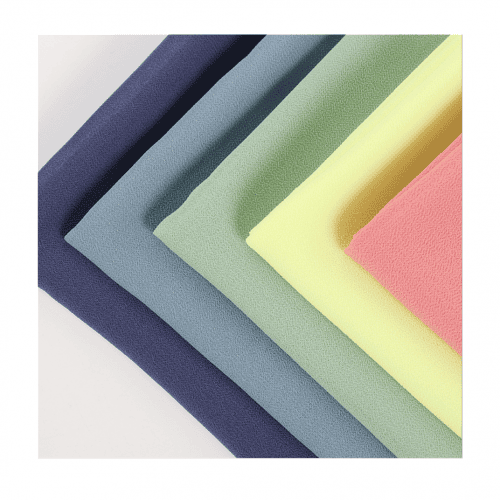
Plain polyester chiffon provides a clean, lightweight surface and fluid drape. The 75D plain dyed constructions in this collection are suitable for blouses, dresses, skirts, overlays, sleeves, veils, and lightweight linings. Solid dyeing also makes this construction useful when a collection requires precise shade coordination across several garment components.
Moss-Crepe Chiffon
Moss-crepe chiffon has a more pronounced granular texture than conventional plain chiffon. Available listings include 100% polyester qualities, imitation-silk constructions, high-elastic versions, and a 92% polyester/8% spandex four-way-stretch option. The textured face reduces the flat synthetic appearance sometimes associated with standard filament fabrics and adds visual depth to dresses, shirts, modestwear, and separates.
Crinkle Chiffon
Crinkle chiffon introduces permanent or semi-permanent surface irregularity through yarn selection, weaving, or finishing. Current options include 30D, 50D, and 75D constructions, satin crinkle chiffon, lurex glitter chiffon, metallic crinkle chiffon, and 190T 30D silk-look chiffon. The texture supports relaxed silhouettes, layered garments, scarves, occasionwear, and styles designed to retain visual interest without heavy embellishment.
Stretch Chiffon
Stretch chiffon improves freedom of movement and can reduce stress around fitted bodices, sleeves, waist seams, and bias-cut panels. The collection includes 100D stretch chiffon, 100D spandex chiffon, digital-print satin spandex chiffon, high-drape stretch chiffon, CEY elastic crepe chiffon, and four-way-stretch moss crepe containing 92% polyester and 8% spandex.
Stretch performance must be selected according to the intended pattern. Mechanical elasticity, CEY-based give, and elastane-powered four-way stretch do not behave identically in cutting, sewing, recovery, or garment fit. Buyers should confirm stretch percentage, recovery, usable width, dimensional stability, and heat sensitivity during sampling.
Pearl and Satin Chiffon
Pearl chiffon has a soft luster or pearlescent visual effect, while satin chiffon combines chiffon-like lightness with a smoother, more reflective surface. Available constructions include 50D pearl chiffon, 75D pearl chiffon at 100 GSM, 50D satin chiffon, and digital-print satin spandex chiffon. These qualities are particularly effective for sarees, blouses, fluid dresses, wide-leg pants, soft occasionwear, and coordinated bridal pieces.
Jacquard, Striped, and Seersucker Chiffon
Jacquard chiffon integrates woven patterning rather than relying only on surface printing. Striped crepe chiffon provides linear visual structure, while high-density seersucker bubble-crepe organza creates a more sculptural surface. These constructions are suitable for statement sleeves, dress panels, kurtas, scarves, weddingwear, fashion overlays, and decorative garments requiring texture without heavy fabric weight.
Printed, Gradient, Glitter, and Metallic Chiffon
Specialty chiffon options include woven printed polyester chiffon, digital-print satin stretch chiffon, double-color gradient chiffon, 30D lurex glitter chiffon, 75D metallic silk glitter crinkle chiffon, 100D glitter metallic silk-look chiffon, and pearl-diamond glitter fabric. These fabrics support print-led collections, stage costumes, celebration garments, children’s occasionwear, bridal accessories, promotional capsules, resortwear, and fashion pieces designed for movement under directional light.
Chiffon Properties and Sourcing Considerations
Lightweight, Sheer Construction
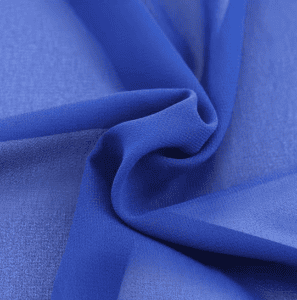
Chiffon is valued for low visual mass and a translucent effect. The degree of sheerness depends on yarn denier, weave density, color, surface texture, and finishing. A 30D construction will generally produce a different coverage level from a 75D or 100D quality, so approval should be based on a physical sample rather than the word “chiffon” alone.
Fluid Drape
The fabric’s drape makes it suitable for gathered, flared, layered, pleated, bias-cut, and waterfall silhouettes. Pearl, satin, stretch, moss-crepe, and crinkle constructions each create a different balance between fluidity, surface friction, and body.
Surface and Handfeel
Plain chiffon can feel smooth and crisp, while moss-crepe and conventional crepe versions have a more granular hand. Satin constructions are smoother and more lustrous. Crinkle, bubble, jacquard, lurex, and pearl effects create additional tactile or visual character.
Color and Print Compatibility
Polyester chiffon can be piece-dyed or digitally printed for solid, tonal, gradient, placement, and all-over designs. Shade approval should account for the fabric’s transparency and the color of any lining beneath it. Printed stretch chiffon should also be checked for grin-through, image distortion, and recovery after extension.
Cutting and Sewing Behavior
Fine chiffon can shift during spreading and cutting. Production teams commonly use controlled ply heights, sharp cutting tools, fine-gauge needles, lightweight thread, and seam constructions appropriate to transparent fabric. French seams, narrow overlock seams, rolled hems, baby hems, and carefully stabilized bias areas are frequently used.
For stretch qualities, trial seams should be tested under extension. Needle damage, seam grin, puckering, skipped stitches, and excessive differential feed can affect the finished appearance.
Modern Applications and Use Cases
Women’s Fashion
- Fluid maxi, midi, slip, wrap, tiered, and bias-cut dresses
- Sheer sleeves, balloon sleeves, cape sleeves, and gathered yokes
- Blouses with pussy-bow collars, ruffles, pintucks, or soft pleating
- Layered skirts, asymmetric hems, godets, flounces, and overskirts
- Wide-leg trousers and coordinated sets using more substantial 100 GSM pearl chiffon
- Sheer shirting, resort cover-ups, tunics, and lightweight summer layers
- Stretch chiffon bodices and fitted sleeves requiring greater mobility
Bridal and Occasionwear
- Bridal overskirts, veils, cape veils, mantles, trains, and detachable sleeves
- Bridesmaid dresses and softly draped occasion gowns
- Wedding-dress overlays using jacquard, pearl, glitter, gradient, or bubble effects
- Ruffled tiers, scarf panels, pleated inserts, and floating drapery
- Flower-girl and children’s celebration dresses using pearl-diamond or glitter effects
- Sarees, dupattas, lehengas, kurtas, abayas, kaftans, and modest occasionwear
Lingerie, Loungewear, and Sleepwear
- Lightweight nightgowns, robes, camisole overlays, and decorative panels
- 75D chiffon-crepe pajama components
- Sheer yokes, sleeves, trims, and layered inserts
- Coordinated lingerie accessories where softness and transparency are required
Scarves and Accessories
- 30D and 50D fashion scarves
- Hijabs, headscarves, neckerchiefs, and printed wraps
- Hair bows, scrunchies, soft belts, rosettes, and fabric flowers
- Occasion shawls, stoles, garment sashes, and decorative ties
Performance, Dance, and Entertainment
- Dance skirts, lyrical costumes, ballet overlays, and rhythmic-gymnastics panels
- Stage capes, moving drapes, performance sleeves, and lightweight costume layers
- Stretch chiffon inserts for garments requiring expressive movement
- Metallic, lurex, gradient, and glitter fabrics for lighting-responsive costumes
- Editorial styling, visual merchandising, photographic sets, and event installations
Interior and Event Applications
- Wedding arches, ceiling swags, backdrop layers, table runners, and chair drapes
- Lightweight window treatments and decorative sheer panels
- Retail displays, exhibition styling, seasonal installations, and suspended fabric features
- Gradient and metallic drapery for hospitality, performance, and branded event environments
Application suitability depends on the selected construction. Fine apparel chiffon should not automatically be treated as equivalent to fabric engineered for load-bearing decoration, permanent interiors, flame-regulated venues, or outdoor exposure.
Strategic Chiffon Sourcing from Wujiang, Suzhou
FabricsTrades is located in the Wujiang District of Suzhou, at the center of one of the world’s most concentrated textile manufacturing hubs. Our own manufacturing expertise is rooted in four-way-stretch fabric, but our sourcing capacity extends across the region’s specialized weaving, dyeing, printing, crinkling, embossing, coating, and finishing facilities.
We are not limited to the constructions running on one factory’s looms. We operate as a strategic sourcing partner: if a chiffon fabric already exists, we can help locate the appropriate production route; if it does not, we can help develop it through yarn selection, weave engineering, dyeing, printing, finishing, and performance validation.
This regional access is particularly valuable for collections that require several related qualities—for example, a plain 75D chiffon, a stretch lining, a printed satin chiffon, and a coordinating pearl or metallic fabric—while maintaining practical shade, handfeel, cost, and delivery targets.
For efficient sampling and quotation, buyers should provide:
- Intended application and target market
- Required fiber composition
- Preferred denier, GSM, and usable width
- Stretch direction and target stretch percentage
- Reference swatch, garment, Pantone color, or print artwork
- Required transparency, drape, handfeel, and luster
- Dyeing, printing, crinkle, pearl, glitter, or metallic requirements
- Order quantity and delivery schedule
- Testing, certification, labeling, and restricted-substance requirements
- Packaging, roll length, inspection, and shipment documentation needs
Chiffon Quality-Control Checklist
Before bulk approval, confirm the parameters that matter to the finished product:
- Fiber composition and, where applicable, elastane percentage
- Yarn denier, fabric density, GSM, and usable width
- Shade continuity between lab dip, sample yardage, and bulk lots
- Sheerness and appearance over the intended lining or skin-tone base
- Drape, handfeel, luster, crinkle definition, and surface uniformity
- Stretch percentage and recovery for elastic qualities
- Dimensional stability after the intended care process
- Colorfastness to washing, rubbing, perspiration, light, and water as required
- Print sharpness, penetration, registration, and stretch distortion
- Seam slippage, snagging, yarn pull, pilling, and tensile or tear performance where relevant
- Metallic, lurex, glitter, pearl, or jacquard-effect consistency
- Roll inspection, defect mapping, packing method, and lot traceability
- Chemical compliance and test reports matched to the destination market and final use
Sustainability and Responsible Sourcing
Chiffon’s environmental profile depends on its fiber, processing route, product life, and end-of-life pathway. Polyester constructions can provide durability and color consistency, while recycled-polyester options may reduce demand for virgin feedstock when supported by credible chain-of-custody documentation.
Buyers should verify recycled claims at shipment level rather than relying only on a supplier’s general certificate. Where certified recycled material is specified, request documentation appropriate to the transaction and ensure that fiber claims, invoices, packing lists, and finished-fabric identification remain aligned.
Other practical development considerations include:
- Selecting the lowest-impact construction that still meets garment performance
- Reducing unnecessary chemical finishes
- Optimizing dyeing and printing to minimize reprocessing
- Confirming wastewater and chemical-management controls
- Designing garments for durability, repair, reuse, and material recovery
- Consolidating approved colors and constructions to reduce surplus inventory
- Recording fiber, process, and supplier data for future product-passport requirements
Frequently Asked Questions
What is the difference between 30D, 50D, 75D, and 100D chiffon?
The denier identifies yarn linear density, not the complete fabric specification. Lower-denier yarns are generally associated with finer and lighter constructions, while higher-denier yarns can support greater opacity, body, or durability. Weave density, yarn twist, finishing, and GSM also influence the final result, so buyers should compare physical samples and technical data rather than selecting by denier alone.
Is polyester chiffon suitable for dresses and bridalwear?
Yes. The collection includes plain, crepe, pearl, satin, jacquard, gradient, glitter, stretch, and crinkle polyester chiffons intended for dresses, bridal overlays, veils, mantles, skirts, blouses, sarees, and other occasionwear. The correct quality depends on the required transparency, drape, surface effect, garment structure, and care method.
Can you source custom chiffon that is not shown in the product listings?
Yes. FabricsTrades can use the Wujiang–Shengze textile network to locate or develop related chiffon constructions. Custom development can address composition, yarn denier, GSM, width, color, print, stretch, crinkle, luster, pearl, metallic, jacquard, or handfeel requirements. Development remains subject to technical feasibility, minimum quantities, testing needs, and mill scheduling.
Which chiffon is best for garments that need stretch?
Available options include 92% polyester/8% spandex four-way-stretch moss-crepe chiffon, 100D spandex chiffon, 100D stretch chiffon, satin spandex chiffon, CEY high-elastic crepe chiffon, and other high-elastic constructions. Selection should be based on stretch direction, extension, recovery, drape, opacity, seam performance, and heat sensitivity.
Can chiffon be customized with colors or prints?
Yes. Current listings include custom-color, solid-dyed, woven printed, digital-print, striped, gradient, metallic, glitter, pearl, and jacquard options. For accurate development, provide a Pantone reference, physical swatch, or production-ready artwork, together with the intended base fabric and end use.
How should buyers verify chiffon compliance?
Start by identifying the destination market and finished-product category. Then specify applicable chemical, labeling, fiber-content, flammability, children’s-product, recycled-content, and traceability requirements before sampling. Compliance should be supported by documentation and current testing linked to the relevant fabric or production lot; supplier declarations alone may not be sufficient.
What information is needed for a wholesale chiffon quotation?
Provide the product name or reference image, composition, denier or GSM, width, color or print requirement, finish, stretch requirement, intended application, estimated quantity, destination country, testing requirements, and required delivery date. These details allow the sourcing team to match the request to an existing listing or identify the most practical custom-development route.