Table of Contents
ToggleWhat Is Lyocell Fabric? Properties, How It Is Made, Uses and Sourcing Guide
Lyocell is a manufactured, regenerated cellulosic fiber made by dissolving purified cellulose—usually wood pulp—and spinning the solution into filaments. It is known for a smooth hand, good moisture uptake, useful wet and dry strength, and versatility in apparel, home textiles, hygiene products and technical applications. Lyocell is the generic fiber name; TENCEL™ is a Lenzing trademark used for qualifying branded lyocell fibers, so the terms should not automatically be treated as interchangeable.
For buyers, the practical question is not simply whether a fabric contains lyocell. Fabric performance also depends on fiber grade, staple or filament form, blend ratio, yarn construction, knit or weave, weight, dyeing, finishing and garment design. A specification, physical sample and relevant test results are therefore more useful than the fiber name alone.
Lyocell fabric at a glance
| Attribute | Buyer-oriented summary |
| Fiber family | Regenerated cellulosic / manufactured fiber |
| Main feedstock | Dissolving-grade cellulose, commonly from wood pulp; sourcing varies by producer |
| Common solvent route | Direct dissolution, commonly using N-methylmorpholine N-oxide (NMMO), followed by solution spinning |
| Typical feel | Smooth, soft and fluid; the actual hand depends on fabric construction and finishing |
| Moisture behavior | Generally high moisture uptake; verify drying and comfort performance in the finished construction |
| Strength | Known for useful wet and dry tenacity; exact performance is grade- and construction-specific |
| Stretch | Lyocell itself is not an elastomer; stretch normally comes from knit structure or blending with elastane or other stretch fibers |
| Pilling/fibrillation | Can fibrillate or develop surface change under wet abrasion unless fiber choice and finishing control it |
| Common uses | Shirts, dresses, denim, underwear, active/loungewear blends, bedding, towels, wipes and selected technical products |
| Care | Follow the finished product label; cool or gentle washing is often used, but dye, finish and construction determine the correct instruction |
Is lyocell natural or synthetic?
Lyocell sits between the everyday categories “natural” and “synthetic.” Its cellulose originates in a natural feedstock, but the fiber does not exist in spinnable form in the tree: it is manufactured by dissolving cellulose and regenerating it as a fiber. “Regenerated cellulosic fiber” is therefore the most accurate description. Calling it fully natural, purely organic or plastic-free without qualification can mislead buyers because those claims address different questions—fiber chemistry, feedstock cultivation, processing inputs and final-product components.
In the United States, the FTC permits “lyocell” as a generic fiber name for the defined subclass of rayon. In the EU, Regulation (EU) No 1007/2011 governs permitted fiber names and composition labeling. Buyers should keep generic fiber identification separate from trademarks, sustainability certifications and chain-of-custody claims.
Lyocell vs. TENCEL™, rayon, viscose and modal
| Term | What it means | Procurement implication |
| Lyocell | A generic regenerated cellulosic fiber produced by a direct-solvent route meeting the applicable definition. | Request the producer, grade, blend percentage and traceability documents. |
| TENCEL™ Lyocell | A trademarked Lenzing product family, not the generic name for every lyocell fiber. | Trademark use and claimed attributes should be supported by the brand owner’s rules and transaction documents. |
| Rayon | A broad U.S. generic category that includes several regenerated cellulosic fibers; terminology differs by market. | Use the destination market’s legally permitted fiber name on labels. |
| Viscose | A regenerated cellulose fiber made through a derivatization route distinct from the common lyocell process. | Do not assume lyocell and viscose have identical processing impacts or performance. |
| Modal | A defined regenerated cellulosic fiber noted for high wet modulus and commonly used for soft apparel and blends. | Compare fabric-level tests rather than selecting by fiber family alone. |
For more context on related regenerated fibers, see FabricsTrades’ viscose fabric guide and modal fabric guide.
How is lyocell made?
Commercial details vary by producer, but the standard direct-solvent route can be explained in seven stages:
Cellulose preparation. Wood or another cellulose source is converted into dissolving-grade pulp and supplied in sheets or bales.
Slurry formation. Pulp is combined with water and an organic solvent, commonly NMMO.
Dissolution. Water is removed under controlled conditions so the cellulose dissolves into a homogeneous spinning solution, often called dope.
Filtration and spinning. The solution is filtered and extruded through spinneret holes to form continuous streams.
Regeneration. The streams enter a coagulation bath, where cellulose precipitates as solid filaments.
Washing and solvent recovery. Fibers are washed while solvent and process water are recovered and returned to the system where the plant design allows.
Finishing. Filaments may be finished, dried and kept continuous or cut into staple fiber; subsequent spinning, knitting, weaving, dyeing and finishing create the final fabric.
The often-cited closed-loop benefit applies to a specific production system, not automatically to every lyocell mill or finished fabric. Lenzing states that its TENCEL™ Lyocell process recovers more than 99.8% of the solvent. That manufacturer-specific figure should not be generalized to all suppliers without evidence.
Key properties and what they mean in a specification
Soft hand and drape
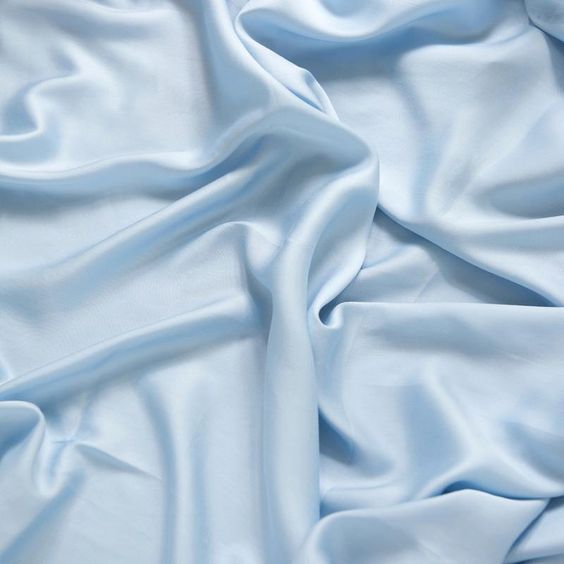
Lyocell can produce smooth, fluid fabrics suitable for next-to-skin apparel, dresses, shirts and bedding. Staple length, yarn twist, fabric density, brushing, sanding and enzyme treatment can change the hand substantially, so approve a physical standard rather than relying on “soft” as a purchase description.
Moisture uptake and comfort
The fiber is hygroscopic and can absorb moisture into its structure. This can support perceived comfort, but it does not guarantee fast drying, air permeability or cooling. Those outcomes depend on weight, thickness, knit or weave, surface area, finishes and garment ventilation.
Wet and dry strength
Lyocell’s useful strength profile supports apparel, denim, wipes and selected technical products. Buyers should still specify relevant tensile, tear, bursting or seam tests for the actual fabric and end use.
Dimensional stability and wrinkles
Shrinkage and wrinkling depend on fabric construction and wet processing. A supplier should report test method, conditioning, wash cycle and number of cycles. Avoid assuming every lyocell fabric is automatically shrink-resistant or easy care.
Fibrillation and pilling
Under wet mechanical action, small fibrils can split from the fiber surface. Controlled fibrillation can create a peach-like aesthetic; uncontrolled fibrillation can look frosted or worn. Fiber grade, enzymatic treatment, resin finishing, dyeing and laundering all matter. Pilling should be tested on the final construction rather than assigned a universal rating.
Stretch and recovery
Lyocell is not inherently highly elastic. A woven lyocell may have limited mechanical stretch, while a knit or lyocell/elastane blend can stretch considerably. State stretch percentage, recovery method and test direction when stretch is a purchasing requirement.
Common applications
- Apparel: shirts, dresses, trousers, denim, underwear, loungewear and blended activewear.
- Home textiles: sheets, duvet covers, pillowcases, towels and decorative fabrics.
- Nonwovens and hygiene: wipes and absorbent products, subject to product-specific safety and disposal requirements.
- Technical uses: selected filtration media, specialty papers, conveyor components and medical or industrial products where the exact grade and validation support the application.
A historical reference to medical dressings or conveyor belts should not be interpreted as suitability for a regulated or safety-critical application. Those programs require application-specific qualification, performance evidence and, where relevant, biocompatibility or regulatory review.
Advantages and limitations
| Potential advantage | Important limitation or qualification |
| Soft, smooth hand | Can vary widely after dyeing and finishing. |
| Good moisture uptake | Does not by itself prove quick drying or superior thermal comfort. |
| Useful wet strength | Fabric construction remains decisive for tear, burst and seam performance. |
| Versatile blending | Blends complicate recycling, labeling, dyeing and end-of-life claims. |
| Closed-loop production is possible | Recovery rates and impacts are facility- and producer-specific. |
| Cellulosic feedstock | Wood source, forestry practices, pulp processing, energy and chemicals still matter. |
| Biodegradation may occur in certain conditions | Do not claim universal biodegradability or compostability without product-specific evidence and conditions. |
Environmental profile: what can and cannot be claimed
Lyocell can offer process advantages over conventional viscose when cellulose is directly dissolved and the solvent is efficiently recovered. However, a responsible assessment must consider forestry and pulp sourcing, land use, plant energy, chemical management, wastewater, fiber yield, dyeing and finishing, transport, product durability and end-of-life conditions. A fiber name alone is not proof that a finished fabric is sustainable.
For marketing or procurement claims, request evidence tied to the exact producer, facility, fiber grade and production period. Examples may include certified or controlled wood sourcing, chain-of-custody records, chemical-management documentation, facility environmental data, life-cycle assessment boundaries and transaction certificates where a certification scheme applies. “Organic lyocell” is not a default consequence of cellulose origin or solvent spinning; any organic, certified, recycled or preferred-material claim needs a recognized scope and valid supporting documentation.
Where is lyocell produced and what does it cost?
Lyocell technology was developed commercially in the United States and the United Kingdom, and production later expanded internationally. Today, fibers and fabrics may move through several countries: pulp production, fiber spinning, yarn spinning, weaving or knitting, dyeing, finishing and garment making can occur in different locations. Avoid static claims that one country is always the largest producer unless a dated, credible dataset supports the statement.
Price depends on producer and grade, staple or filament form, certification or traceability requirements, blend, yarn count, construction, weight, dye method, finish, test package, order volume and market conditions. Cotton is not universally cheaper, and the difference is not necessarily negligible. Buyers should compare like-for-like quotations and total specification risk rather than rely on a generic fiber-price ranking.
How to source lyocell fabric
Define the end use, destination market and product category before requesting a quote.
State generic fiber composition and any permitted trademark separately.
Specify knit or weave, weight, usable width, color, finish, hand standard and tolerances.
Request fiber-producer and supply-chain evidence for sustainability, trademark, recycled or wood-sourcing claims.
Agree on testing: composition, mass, width, dimensional change, colorfastness, pilling/fibrillation and strength as relevant.
Confirm restricted-substance, labeling, packaging and documentation requirements before sampling.
Approve a sealed sample or measurable standard before bulk production, then inspect production lots against it.
For a broader procurement workflow, use the fabric quality inspection guide. Buyers exploring cellulosic options can also review the rayon fabric category; confirm the exact fiber content because a category page may include more than one regenerated-cellulose construction.
Current Regulatory and Market Update
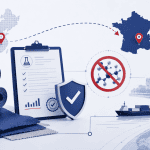
As of August 6, 2026, lyocell does not receive a universal compliance exemption because it is wood-derived or made by a closed-loop process. Finished textiles must meet the rules that apply to the destination, product category, fiber composition, chemical treatments, claims and date placed on the market.
For the EU, Regulation (EU) No 1007/2011 requires covered textile products to use permitted fiber names and provide composition information through the supply chain. The European Commission states that the regime covers products containing at least 80% by weight of textile fibers and that composition information is mandatory at all stages of industrial processing and commercial distribution. Buyers should verify labeling language, tolerances, non-textile animal-origin parts and local presentation requirements for the finished product.
The Ecodesign for Sustainable Products Regulation, Regulation (EU) 2024/1781, establishes a framework for product-specific ecodesign and Digital Product Passport requirements. Textiles—particularly garments and footwear—are prioritized in the 2025–2030 working plan, but detailed textile requirements depend on future delegated acts; the framework should not be presented as if every lyocell fabric already needs a DPP. Buyers can review FabricsTrades’ overview of ESPR and Digital Product Passport implications for Chinese fabric supply chains while checking the latest European Commission measures directly.
A practical preparation step is to organize consistent data now: supplier identity, generic fiber composition, fiber producer and country information where available, batch and transaction references, chemical-treatment declarations, test reports, certification scope and evidence for environmental claims. Exact requirements may vary by destination, product, treatment, batch and date of sale.
If a lyocell fabric receives water-, oil- or stain-repellent finishing, determine whether fluorinated chemistry is present and which restrictions apply. The regulatory relevance comes from the finish and substances—not from lyocell itself. Programs supplying Europe or certain U.S. states may need to examine EU REACH PFAS developments affecting textile supply chains and destination-specific rules before bulk production. Internal articles are useful orientation, not legal advice or proof of compliance.
Care guidance
Always follow the finished product’s care label. As a conservative starting point, many lyocell fabrics are washed cool on a gentle cycle with mild detergent, kept away from chlorine bleach unless specifically permitted, and dried with low heat or air drying. Dark dyes, structured garments, specialty finishes and lyocell blends may require different care. Sampling and laundering tests should establish the final instruction.
Frequently asked questions
Is lyocell the same as TENCEL™?
No. Lyocell is a generic fiber name. TENCEL™ is a trademark used by Lenzing for qualifying branded fibers. A fabric can be lyocell without being TENCEL™, and trademark claims require appropriate supply-chain support.
Is lyocell a type of rayon?
In U.S. labeling terminology, the FTC recognizes lyocell as a defined subclass of rayon and permits “lyocell” as the generic name. International terminology and label rules should be checked for the destination market.
Is lyocell sustainable?
It can have environmental advantages when wood is responsibly sourced and solvent, energy, water, emissions and wastewater are well managed. The generic fiber name alone is not enough to substantiate a broad sustainability claim for a finished product.
Does lyocell stretch?
The fiber is not elastomeric. Stretch usually comes from the knit or weave structure or from a blend with elastane or another stretch component.
Does lyocell shrink or pill?
It can shrink, fibrillate or pill depending on construction, finishing and laundering. Request test results for the exact fabric and approve care instructions after wash trials.
Is lyocell biodegradable?
Cellulosic fibers may biodegrade under certain conditions, but rates and outcomes depend on dyes, finishes, blends, product construction and the disposal environment. Avoid unconditional biodegradability or compostability claims without product-specific testing and a clearly stated standard and environment.
Conclusion
Lyocell is a versatile regenerated cellulosic fiber, not a single finished-fabric specification. Its smooth hand, moisture uptake and strength can support many products, while fibrillation, shrinkage, finishing chemistry, traceability and claim substantiation require careful control. For sourcing, define measurable fabric requirements, request evidence for fiber and environmental claims, test the finished construction and communicate destination-market documentation needs before sampling and quotation. FabricsTrades can support fabric sourcing, product development, customization, sampling, testing coordination and documentation discussions; final legal, labeling and performance decisions remain product- and market-specific.