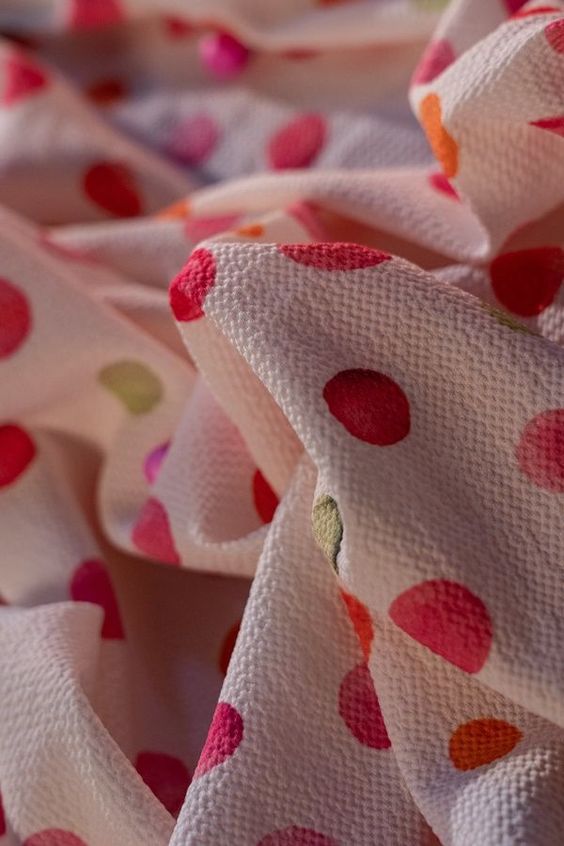
Lycra is the trademarked name of a highly elastic synthetic fiber belonging to the spandex or elastane family. It can be stretched substantially and then recover toward its original dimensions, which is why it is widely used in activewear, swimwear, underwear, stretch denim, fitted fashion, hosiery, and medical compression products.
Strictly speaking, Lycra is a fiber brand rather than a generic fabric construction. Materials sold informally as “Lycra fabric” are normally knitted or woven fabrics containing elastane blended with cotton, polyester, nylon, rayon, or another principal fiber.
The exact performance of such a fabric depends on more than the Lycra or elastane percentage. Buyers must also consider the base fiber, yarn configuration, knitting or weaving structure, fabric weight, stretch direction, finishing process, and heat-setting conditions.
Lycra Fabric at a Glance
| Attribute | Typical description |
|---|---|
| Fiber category | Synthetic elastomeric fiber |
| Generic names | Spandex in the United States; elastane in the EU and many other markets |
| Brand relationship | LYCRA® is a trademarked spandex/elastane fiber brand |
| Chemical family | Segmented polyurethane-based elastomer |
| Main property | High stretch with elastic recovery |
| Breathability | Determined mainly by the blend and fabric construction |
| Moisture management | Depends on the principal fiber, structure, and applied finish |
| Heat retention | Usually low in lightweight fabrics, but construction-dependent |
| Pilling tendency | Depends on the blend, yarn, surface, and abrasion exposure |
| First commercial development | United States; the original fiber was invented in 1958 |
| Common blends | Nylon-elastane, polyester-elastane, cotton-elastane, and rayon-elastane |
| Common applications | Activewear, leggings, swimwear, underwear, hosiery, stretch denim, fitted garments, and compression products |
| General care | Follow the finished garment’s label; moderate temperatures usually help preserve elasticity |
What Is Lycra Fabric?
LYCRA® is the brand name of the original spandex—or elastane—fiber invented in 1958 by DuPont chemist Joseph Shivers. According to The LYCRA Company’s history of the fiber, the original development was called “Fiber K” and was designed as a lighter, more durable alternative to conventional elastic thread.
Today, the LYCRA brand belongs to The LYCRA Company. The term should therefore not be used as the generic name for every stretch fiber. The three common terms have related but distinct uses:
- Lycra: A trademarked brand of spandex or elastane fiber.
- Spandex: The generic name commonly used in the United States and Canada.
- Elastane: The generic name used in the European Union and many other markets.
A supplier may offer a nylon-spandex or polyester-elastane fabric without using branded LYCRA fiber. Buyers who specifically require LYCRA-branded content should state that requirement in the specification and request suitable supply-chain documentation.
Is Lycra a Fiber or a Fabric?
Lycra is a fiber, not a weave, knit, or complete fabric type.
In commercial language, “Lycra fabric” usually means a fabric containing some elastane. The elastane can be combined with other yarns in several ways:
- Bare elastane filament may be fed into a knitted construction.
- Elastane can be covered with another fiber.
- It can be incorporated into core-spun yarn.
- It can be inserted into the warp, weft, course, or wale direction.
- It can provide two-way or four-way stretch, depending on the construction.
This distinction matters because two fabrics with the same stated fiber composition can behave very differently. A jersey, warp knit, woven stretch fabric, and compression knit may contain similar elastane percentages but deliver different extension, recovery, opacity, dimensional stability, and hand feel.

What Are the Main Properties of Lycra Fabric?
High stretch and recovery
The defining property of elastane is its ability to extend and recover. The LYCRA Company states that its original fiber could stretch to approximately five times its original length before returning toward its initial shape.
That figure describes the branded fiber, not necessarily a finished fabric. Fabric stretch is constrained by its construction and companion fibers, so buyers should specify and test the finished material rather than infer performance from the elastane percentage alone.
Improved fit and freedom of movement
Elastane helps garments conform to the body and accommodate movement. It is particularly useful in leggings, cycling apparel, dancewear, swimwear, intimate apparel, and fitted trousers.
The appropriate amount depends on the product. A casual stretch shirt and a high-compression garment do not need the same extension, recovery, or holding power.
Shape retention
A properly engineered elastane blend can help knees, elbows, waistbands, and other high-movement areas return toward their intended shape after wear. Poor recovery can cause bagging, growth, distortion, or an inconsistent garment fit.
Recovery depends on yarn quality, fabric construction, finishing, heat exposure, and garment design. Elastane content alone does not guarantee shape retention.
Lightweight elasticity
Elastane can add substantial extensibility without the bulk associated with traditional rubber-based elastic systems. Because it is usually used as a minority component, the principal fiber still determines much of the fabric’s weight, texture, and comfort.
Breathability and moisture management depend on the blend
Lycra should not automatically be described as breathable or moisture-wicking. A lightweight, open polyester-elastane knit may manage heat and moisture effectively, while a dense coated stretch fabric may not.
The result depends on:
- Base-fiber moisture behavior
- Fabric weight and thickness
- Knit or weave density
- Air permeability
- Surface treatments
- Garment fit
- Drying conditions
Buyers should request appropriate tests when breathability, moisture transport, or quick drying is a product requirement.
Sensitivity to excessive heat and harsh chemicals
Repeated exposure to excessive heat can reduce elastic performance. Chlorine, aggressive bleaching agents, certain oils, prolonged ultraviolet exposure, and unsuitable finishing conditions may also affect some elastane-containing fabrics.
Actual resistance varies by fiber grade and product design. Swimwear, industrial garments, and high-temperature processing programs should therefore use application-specific specifications.
Advantages and Limitations
| Advantages | Limitations |
|---|---|
| High stretch and useful elastic recovery | Performance may deteriorate under excessive heat or unsuitable chemical exposure |
| Supports close fit and movement | Can complicate dyeing, heat setting, cutting, sewing, and dimensional control |
| Can improve shape retention | Elastane percentage alone does not predict finished-fabric performance |
| Works with cotton, polyester, nylon, rayon, and other fibers | Blended construction can make fiber-to-fiber recycling more difficult |
| Suitable for lightweight and supportive garments | Synthetic origin and processing create environmental impacts |
| Available in knitted and woven constructions | Cost may be higher than comparable fabrics without elastane |
How Is Lycra or Spandex Fiber Made?
Elastane is a manufactured synthetic fiber. Industrial production requires controlled polymer chemistry, solvent management, spinning equipment, and finishing systems.
Although manufacturing routes can vary, solution dry spinning is the principal process associated with conventional spandex production.
1. Prepolymer formation
A macroglycol reacts with a diisocyanate under controlled conditions to create a prepolymer. The chemistry is designed to produce alternating flexible and rigid molecular segments, which contribute to the fiber’s extensibility and recovery.
2. Chain extension
The prepolymer undergoes a chain-extension reaction. This increases molecular length and produces the elastomeric polymer used for spinning.
3. Solution preparation
The polymer is dissolved in a suitable solvent to create a controlled spinning solution. Filtration and viscosity control are important because contamination or inconsistent solution properties may lead to broken filaments or uneven yarn.
4. Dry spinning
The solution is extruded through spinneret openings into a heated spinning chamber. The solvent evaporates or is removed, leaving solid elastane filaments.
5. Filament formation
Individual filaments are combined into the required yarn configuration. Yarn count and filament arrangement are selected according to the intended end use.
6. Finishing and winding
A finishing agent may be applied to support handling and downstream processing. The yarn is then wound onto packages for knitting, weaving, covering, or further yarn production.
7. Fabric formation and finishing
Elastane yarn is combined with a principal fiber to make fabric. The greige material may then undergo scouring, dyeing, heat setting, printing, brushing, coating, or other finishing processes.
Heat-setting control is especially important because it affects usable width, shrinkage, stretch, recovery, skew, and finished-fabric stability.
For a closer look at construction and factory operations, see the FabricsTrades guide to the four-way stretch fabric manufacturing process.

Common Lycra and Elastane Blends
Nylon-spandex
Nylon-spandex fabrics are commonly selected for leggings, swimwear, dancewear, underwear, and fitted activewear. Nylon can contribute a smooth hand and abrasion resistance, while elastane provides stretch and recovery.
Buyers can review available nylon-spandex fabric options when developing products that require close fit and multidirectional movement.
Polyester-spandex
Polyester-spandex fabrics are widely used for sportswear, uniforms, leggings, jackets, and performance garments. Polyester can offer durability, quick drying, color retention, and compatibility with functional finishes.
Dyeing and heat setting must be controlled to avoid shade, migration, shrinkage, or recovery problems.
Cotton-spandex
Cotton-spandex combines the familiar hand and absorbency of cotton with added extensibility. It is used in T-shirts, casual trousers, underwear, dresses, stretch shirting, and denim.
Cotton content does not eliminate the need to protect the elastane component during washing, drying, and finishing.
Rayon- or viscose-spandex
These blends are often selected for soft, drapey dresses, tops, loungewear, and lightweight jersey. Dimensional stability should be checked carefully because regenerated-cellulose fibers can respond differently to wet processing and laundering.
Two-Way Stretch vs. Four-Way Stretch
These terms describe the behavior of the finished fabric, not a specific fiber percentage.
- Two-way stretch: The fabric stretches primarily in one direction, commonly across the width.
- Four-way stretch: The fabric stretches in both major directions—lengthwise and crosswise.
The terms are sometimes used inconsistently in commercial discussions. A buyer should define the required test direction, extension percentage, recovery, and test method rather than relying solely on the words “two-way” or “four-way.”
Fabrics intended for leggings, fitted sportswear, swimwear, and mobility-intensive garments can be explored in the four-way stretch fabric category.
How Is Lycra Fabric Used?
Activewear and sportswear
Elastane allows garments to move with the wearer and recover after extension. Common products include leggings, cycling shorts, training tops, dancewear, base layers, and compression apparel.
Swimwear
Swimwear uses elastic blends to support close fit and mobility. Programs should consider chlorine exposure, ultraviolet light, sunscreen, seawater, and repeated wet-dry cycles.
Underwear and intimate apparel
Bras, underwear, shapewear, waistbands, and hosiery use elastane to provide fit and support. Skin contact, seam performance, wash durability, and recovery are important evaluation points.
Stretch denim and casualwear
Small amounts of elastane can improve the comfort of jeans, fitted trousers, jackets, skirts, and shirts. Excessive growth or poor recovery can still occur if the yarn, fabric construction, or finishing process is not well controlled.
Medical and support products
Elastane is used in certain compression garments, bandages, and support products. Medical performance should never be inferred from fiber content alone: compression level, pressure profile, product classification, test methods, and destination-market requirements require specialist confirmation.
Costumes and technical applications
Dance costumes, performance garments, motion-capture suits, elastic tapes, and selected industrial textiles may also use elastane. Each application requires its own durability and exposure assessment.
Where Is Lycra Fabric Produced?
The original branded fiber was developed in the United States. Today, spandex and elastane yarns and fabrics are produced across major textile-manufacturing regions, particularly in Asia, as well as in other global locations.
The location of fiber manufacture may differ from the locations where the yarn is covered, the fabric is knitted or woven, the material is dyed, and the garment is assembled. Buyers should therefore distinguish among:
- Fiber origin
- Yarn-processing country
- Greige-fabric production country
- Dyeing and finishing location
- Garment-manufacturing location
- Legally applicable country of origin
A supplier’s country alone does not establish product quality. Batch control, specification clarity, test results, process management, traceability, and communication are more useful procurement indicators.

How Much Does Lycra Fabric Cost?
There is no single market price for Lycra fabric. Cost depends on:
- Whether branded LYCRA fiber or generic elastane is specified
- Elastane content and yarn type
- Principal fiber
- Fabric construction
- Weight and width
- Dyeing or printing process
- Finishes
- Color quantity
- Testing and documentation
- Minimum order quantity
- Packaging and delivery terms
A higher elastane percentage can increase material and processing costs, but percentage alone is not a reliable indication of quality. The buyer should compare offers against an identical technical specification and confirmed usable width.
How to Specify and Source Lycra Fabric
A useful request for quotation should include more than “Lycra fabric.”
Define the composition accurately
State the required principal fiber, elastane percentage or permitted range, and whether branded LYCRA fiber is mandatory. Do not use “Lycra” as a substitute for a complete fiber-content specification.
Define stretch numerically
Specify:
- Test direction
- Extension percentage
- Required recovery
- Load or force
- Hold time
- Number of cycles
- Test method
- Acceptance tolerance
Confirm construction and physical details
Record the required:
- Knit or weave type
- Yarn specification
- Finished weight
- Finished usable width
- Color
- Hand feel
- Opacity
- Surface appearance
- Shrinkage limit
- Skew or spirality tolerance
Communicate the end use
A supplier cannot optimize the fabric without knowing whether it is intended for swimwear, leggings, casual trousers, medical support, children’s clothing, or another application. End use affects construction, testing, finishing, and compliance considerations.
Approve a physical sample
Evaluate the fabric after the relevant conditioning, washing, stretching, sewing, and wearing simulations. A small swatch may show color and hand but may not reveal garment-level growth or recovery.
Inspect bulk production
Bulk inspection should compare the delivered fabric with the approved standard. Relevant checks may include width, weight, shade continuity, roll length, defects, stretch, recovery, shrinkage, colorfastness, and packaging.
The FabricsTrades fabric quality inspection guide explains how buyers can structure inspection before accepting bulk fabric.
Recommended Testing for Elastane-Containing Fabric
The test plan should be based on the destination market and final product. Depending on the application, buyers may consider:
- Fiber-content analysis
- Fabric weight and width
- Stretch and recovery
- Dimensional stability after laundering
- Spirality or skew
- Bursting or tensile strength
- Seam performance
- Pilling and abrasion resistance
- Colorfastness to washing, rubbing, perspiration, light, chlorine, or seawater
- Air permeability
- Moisture-management performance
- Restricted-substance testing
- Appearance after repeated laundering
The laboratory method, conditioning procedure, specimen direction, and pass/fail criteria should be stated in advance. Results obtained under different methods may not be directly comparable.
Care and Sewing Considerations
Always follow the finished product’s care label, since the principal fiber, dyes, prints, trims, and finishes may impose different requirements.
General precautions for many elastane blends include:
- Avoid unnecessarily high washing and drying temperatures.
- Use chlorine bleach only when the product specification allows it.
- Avoid placing a very hot iron directly on stretch areas.
- Do not over-dry garments.
- Use needles and seams suitable for the fabric’s construction and stretch.
- Test thread, stitch type, seam elasticity, and differential feed before production.
For printed, coated, laminated, chlorine-resistant, or compression fabrics, application-specific instructions should take precedence over general guidance.
Environmental Considerations
Conventional elastane is synthetic and commonly associated with fossil-derived feedstocks. Its manufacturing process also involves energy, chemical inputs, and solvent control.
Additional issues include:
- Elastane does not readily biodegrade under ordinary disposal conditions.
- Small elastane percentages can complicate separation and recycling of blended textiles.
- Cutting waste and rejected production add to material loss.
- Stretch garments may release synthetic microfibers during use and laundering.
- Unverified “eco-friendly” language can overstate a product’s environmental performance.
Recycled-content, mass-balance, bio-derived, or lower-impact elastane options may be available, but each claim should be supported by product-specific evidence. A certificate held by a company does not automatically certify every fabric, batch, component, or environmental statement.
Current Regulatory and Market Update
Fiber terminology and product documentation deserve particular attention when Lycra or other elastane is used.
For products sold in the European Union, Regulation (EU) No 1007/2011 lists elastane as the applicable fiber name and defines it as a segmented polyurethane elastofiber containing at least 85% segmented polyurethane by mass and capable of substantial recovery after being stretched to three times its original length. The regulation also establishes rules for presenting fiber composition to consumers. Buyers should review the current EU textile-fiber labeling regulation for the exact product scope and language requirements.
In the United States, the Federal Trade Commission’s Textile Fiber Rule generally requires covered textiles to disclose generic fiber names and percentages by weight, the manufacturer or marketer identity, and the country where the product was processed or manufactured. “Spandex” is the customary U.S. generic term; a trademark can accompany the appropriate generic fiber disclosure but should not replace it.
The EU Ecodesign for Sustainable Products Regulation entered into force in July 2024 and establishes a framework under which product-specific ecodesign and Digital Product Passport requirements can be adopted. It does not mean that every elastane fabric already carries an immediately applicable textile passport requirement. Nevertheless, buyers serving the EU market should begin organizing material composition, supplier, facility, chemical, recycled-content, and traceability data. See FabricsTrades’ overview of ESPR and Digital Product Passport preparation for fabric supply chains for sourcing context.
Elastane itself should not be assumed to contain PFAS. However, a stretch fabric may receive water-, oil-, or stain-repellent treatments that introduce separate chemical-compliance questions. Programs using such finishes should review relevant destination-market restrictions, communicate restricted-substance requirements before sampling, and verify the finished material rather than relying only on a fiber declaration.
Documentation and testing needs vary according to the destination market, product category, treatment, production batch, and date of sale. Buyers should confirm current legal, customer, and retailer requirements before bulk production.
Frequently Asked Questions
Is Lycra the same as spandex?
LYCRA is a trademarked brand of spandex or elastane fiber. “Spandex” is the common U.S. generic term, while “elastane” is widely used in Europe and other markets. Not all spandex is LYCRA-branded fiber.
Is Lycra a type of polyester?
No. Elastane and polyester are different manufactured-fiber categories. They are frequently blended, but each contributes different properties.
Is Lycra breathable?
The fiber name alone does not determine breathability. Air permeability and wearer comfort depend mainly on fabric structure, weight, density, principal fiber, finish, and garment fit.
Does more Lycra always mean better stretch fabric?
No. More elastane may increase stretch or holding power, but fabric architecture, yarn configuration, recovery, heat setting, and end-use design are equally important. Excessive elastane can also create processing or comfort problems.
Is Lycra waterproof?
No. Elastane is not inherently waterproof. A fabric requires an appropriate construction, coating, membrane, or finish to provide water resistance or waterproof performance.
Can Lycra fabric shrink?
Yes. A finished elastane blend can shrink or distort depending on its other fibers, construction, heat setting, washing, and drying conditions. Dimensional-stability testing is recommended before bulk approval.
Is Lycra fabric sustainable?
It should not be described as sustainable solely because it improves durability, contains recycled material, or uses less fiber than another construction. Environmental claims require defined boundaries and supporting evidence covering the specific fiber, fabric, process, or finished product.
What information should a buyer send to a supplier?
At minimum, provide the composition, construction, weight, usable width, stretch direction, extension, recovery, shrinkage, color, finish, end use, quantity, test standards, target market, documentation requirements, and whether branded fiber is mandatory.
Conclusion
Lycra is a branded spandex or elastane fiber valued for high stretch and recovery. In finished fabrics, however, performance depends on the complete material system: the principal fiber, elastane yarn, construction, weight, finishing, heat setting, garment design, and care conditions.
Buyers should define measurable stretch and recovery requirements, approve a representative sample, test according to the end use, and confirm fiber labeling and destination-market documentation before production. FabricsTrades can support stretch-fabric sourcing, sampling, customization, bulk production coordination, testing communication, and inspection based on a buyer-approved specification.