Denim is a durable woven fabric defined mainly by its construction, not simply by a blue color. Classic blue denim uses indigo-dyed warp yarns and usually undyed filling yarns in a warp-faced twill, producing a blue face, a lighter back, and a visible diagonal line. Cotton remains the traditional fiber, but modern denim may also contain elastane, polyester, lyocell, hemp, or recycled fibers to change stretch, weight, hand feel, drying, durability, or cost.
For buyers, the name “denim” is only a starting point. Fiber percentages, fabric weight, yarn type, weave, stretch and recovery, shade, shrinkage, skew, colorfastness, wash standard, and chemical finish must all be specified before sampling or bulk production.
Key Takeaways
- Classic denim is generally a cotton-rich, warp-faced twill with dyed warp yarns and lighter filling yarns.
- A common construction is 3/1 twill, but 2/1, broken twill, left-hand twill, right-hand twill, and other variations are also used.
- Denim is not automatically highly breathable, moisture-wicking, shrink-resistant, or stretchy. Those properties depend on weight, density, fiber blend, yarn, finish, and garment design.
- Indigo denim is usually yarn-dyed before weaving. Rope dyeing and slasher or sheet dyeing are common industrial routes.
- Raw, rigid, stretch, selvedge, pre-shrunk, washed, colored, and recycled-blend denims serve different products and price points.
- Buyers should approve both the base fabric and the post-wash garment appearance because garment finishing can change shade, dimensions, strength, and hand feel.
- Destination-market rules can affect fiber labeling, care information, restricted substances, PFAS-treated finishes, and future traceability data.

What Is Denim Fabric?
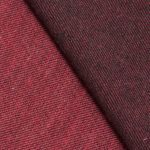
Denim is a woven twill fabric in which the warp yarns dominate the face. In traditional indigo denim, the warp is blue and the filling yarn is natural or lightly colored. The twill interlacing exposes more warp on the face, while the undyed filling remains more visible on the reverse.
The familiar fading behavior comes partly from indigo’s concentration near the outer layers of the yarn. As the surface wears, lighter material becomes visible. Cotton Incorporated’s technical denim guidance explains the standard 3/1 construction and the rope, sheet, and other dyeing routes used for indigo warp yarns in its denim construction guide.

| Attribute | Buyer-focused description |
|---|---|
| Basic construction | Woven, warp-faced twill; 3/1 is common, but it is not the only construction |
| Traditional fiber | Cotton; modern products may use blends |
| Typical coloration | Indigo-dyed warp with undyed or lighter filling; colored and piece-dyed versions also exist |
| Face and back | Darker, warp-dominant face and lighter reverse in classic blue denim |
| Stretch | Low in rigid cotton denim; higher when stretch yarns or elastane-containing blends are used |
| Breathability and warmth | Variable; affected by weight, cover factor, fiber blend, finish, and garment construction |
| Common uses | Jeans, jackets, shirts, skirts, dresses, workwear, bags, footwear components, upholstery, and home textiles |
| Main buyer controls | Fiber content, weight, width, weave, shade, stretch/recovery, shrinkage, skew, colorfastness, strength, finish, and wash standard |
A Brief History of Denim and Jeans
The terms “denim” and “jeans” are commonly linked to Nimes in France and Genoa in Italy, but the historical fabrics associated with those names were not necessarily identical to modern indigo cotton denim. It is safer to treat that story as an origin of terminology rather than proof that today’s construction was invented in one place.
The modern workwear story is clearer. Jacob Davis developed rivet-reinforced trousers, and he and Levi Strauss received U.S. Patent No. 139,121 on May 20, 1873. The Smithsonian’s National Museum of American History documents the partnership and the early use of riveted duck and denim clothing in its record for Levi Strauss & Co. work trousers.
Denim later moved beyond mining and workwear into mass-market jeans, fashion, uniforms, accessories, and interiors. Its continuing appeal comes from the combination of strength, familiar texture, and an appearance that changes with wear and finishing.
How Is Denim Fabric Made?

Denim production links fiber selection, spinning, warp preparation, dyeing, weaving, fabric finishing, and often garment washing. The exact route depends on the target construction and appearance.
1. Fiber and yarn selection
Cotton is opened, cleaned, carded or combed as specified, and spun into yarn. Mills select yarn count, spinning system, twist, uniformity, and strength for the target fabric. Stretch denim may use a core-spun or other stretch-yarn construction; blended denim can introduce polyester, regenerated cellulosic fibers, or recycled content.
The yarn decision affects surface character, strength, hairiness, unevenness, stretch, and the way the fabric fades. Buyers should not approve fiber percentages without also approving yarn and fabric performance.
2. Warp preparation and indigo dyeing
Most classic blue denim is yarn-dyed. Warp yarns are prepared in rope form for rope dyeing or in sheet form for slasher or sheet dyeing. Indigo must be reduced to a soluble form so it can enter the yarn surface, then oxidized in air to return to its blue, insoluble form. Repeated dip-and-oxidation cycles build the shade.
The filling yarn is commonly left undyed, although black, colored, overdye, sulfur-bottom, sulfur-top, and other shade programs are possible. Dye concentration, number of dips, oxidation, yarn tension, rinsing, and lot control all influence shade consistency and later wash-down.
3. Sizing and weaving
Warp yarns are sized to withstand weaving stresses, then woven on shuttle or shuttleless looms. A 3/1 right-hand twill is common, while left-hand and broken twills alter the visual line and hand. Selvedge denim is associated with a finished woven edge produced on narrower looms, but the edge itself does not guarantee a particular fiber quality, weight, or durability.
4. Fabric finishing
After weaving, the mill may singe, desize, skew-correct, pre-shrink, soften, mercerize, coat, or apply another mechanical or chemical finish. Sanforized denim has undergone a controlled compressive-shrinkage process; “sanforized” should not be used as a synonym for washing, softness, or lower durability.
5. Garment making and wash development
Cut-and-sew is often followed by garment finishing. Rinse, enzyme, stone, bleach, resin, ozone, laser, hand abrasion, tint, and overdye processes can produce very different looks from the same base cloth. These treatments can also change dimensions, strength, stretch recovery, shade, backstaining, and hand feel.
“Acid wash” is a trade name, not a literal description of a strong-acid bath. Cotton Incorporated describes it as a color-discharge effect commonly made with sodium hypochlorite or potassium permanganate, followed by neutralization and other finishing steps in its technical guide to denim finishing.
Denim Properties and What They Mean for Buyers
Durability
Twill construction can provide good serviceability, but durability is not guaranteed by the word “denim.” Fabric weight, yarn strength, weave density, fiber blend, finishing severity, seam design, and garment wash all matter. Heavy abrasion or aggressive color discharge can reduce residual strength.
Fading and color transfer
Indigo denim is valued because it develops wear patterns. That same behavior creates risk of dry or wet crocking, wash-down, shade variation, and staining of light materials. The acceptable level depends on product positioning: a raw-denim program may deliberately accept more change than a uniform or upholstery program.
Comfort, breathability, and moisture behavior
Cotton can absorb moisture, but denim should not automatically be described as “highly moisture-wicking.” Wicking is a measurable liquid-transport behavior influenced by yarn, construction, capillary pathways, and finishes. Lightweight, open denim can feel more breathable than dense heavyweight denim; polyester-rich, coated, or resin-finished versions may behave differently.
Stretch and recovery
Rigid denim has limited mechanical give. Stretch denim uses stretch yarns or fibers to increase extension, but extension alone is not enough. Poor recovery can cause knee, seat, or waistband growth. Buyers should specify test load, extension, growth, recovery, conditioning, and number of cycles.
Shrinkage and skew
Cotton denim can change dimensions during wet processing and home laundering. Twill fabrics can also torque or twist if skew is not controlled. Approval should cover both fabric dimensional change and garment leg twist after the agreed wash and dry sequence.
Pilling and surface change
Traditional dense cotton denim is not usually selected for a highly pilled appearance, but pilling is still possible. Fiber blend, yarn hairiness, abrasion, brushing, laundering, and finishing determine the result; “not prone to pilling” should not be treated as a universal specification.
Buyers comparing denim with other cotton-rich constructions can review FabricsTrades’ cotton fabric sourcing options, then confirm whether a specific construction, finish, and order quantity are available before sampling.
Common Types of Denim
| Type | What it means | Main sourcing implication |
| Raw or dry denim | Indigo denim sold without a garment wash or strong wash-down treatment | Expect initial crocking, wear-dependent fading, and possible dimensional change; approve care instructions |
| Rigid denim | Denim without an intentional stretch-yarn system | Confirm mechanical give, shrinkage, and garment comfort rather than assuming zero movement |
| Sanforized or pre-shrunk denim | Fabric processed to control residual shrinkage | Verify shrinkage to the buyer’s agreed method; the term alone is not an acceptance result |
| Stretch denim | Denim containing stretch yarns or a stretch fiber such as elastane | Approve extension, growth, recovery, heat history, and post-wash performance |
| Selvedge denim | Denim with a finished woven edge, commonly made on narrower looms | Confirm width, usable width, edge design, yield, loom route, and price; selvedge is not a quality grade by itself |
| Washed or distressed denim | Fabric or garments altered by rinse, enzyme, stone, bleach, laser, abrasion, tint, or related processes | Approve a wash standard, shade range, placement tolerance, strength loss, and wastewater/chemical controls |
| Acid-wash-effect denim | Mottled color-discharge look; despite the name, the classic process does not require a strong acid | Confirm discharge chemistry, neutralization, worker controls, appearance range, and restricted substances |
| Colored, black, or piece-dyed denim | Denim constructions using non-indigo colors or dye routes | Set colorfastness, shade continuity, and lab-dip or bulk-lot controls appropriate to the dye system |
| Blended or recycled-content denim | Cotton combined with polyester, lyocell, hemp, recycled cotton, or other fibers | Verify fiber percentages, labeling names, traceability evidence, strength, care, and end-of-life tradeoffs |
“Crushed denim” and “poly denim” may appear as commercial descriptions, but neither term provides a complete technical specification. A buyer should define the required surface effect or exact fiber composition instead of relying on the trade name.
How Is Denim Used?

Apparel and workwear
Jeans remain the best-known application, followed by jackets, overshirts, shirts, skirts, dresses, vests, uniforms, aprons, and selected workwear. Product design should match fabric weight, stretch, recovery, seam type, wash, and comfort requirements to the end use.
Accessories and footwear
Denim can be used in bags, hats, belts, footwear uppers or panels, and fashion accessories. Abrasion, seam slippage, color transfer, reinforcement, lamination, and component compatibility may matter more than apparel drape.
Home and interiors
Curtains, cushions, blankets, duvets, and upholstery can use denim or denim-look twills. Interior programs may require different flammability, lightfastness, abrasion, backing, cleaning, and color-transfer criteria from garments.
Where Is Denim Fabric Produced?

The denim supply chain is global. Commercial capability exists across China, India, Pakistan, Bangladesh, Turkey, Vietnam, Mexico, Japan, Italy, the United States, and other producing regions. A country may be strong in cotton growing, spinning, indigo dyeing, weaving, garment making, or finishing without leading every stage.
Cotton-production statistics should not be used as a ranking of denim-fabric output. Denim-specific rankings vary by definition and are not consistently reported in a single authoritative public dataset. Buyers should compare individual mills by equipment, construction range, shade control, finishing partners, quality systems, chemical management, traceability, lead time, and shipment history.
How Much Does Denim Fabric Cost?
There is no reliable universal price per yard or meter. Quotations change with the cotton and yarn market, currency, energy, chemistry, order volume, and specification. The largest cost drivers commonly include:
- fiber type, origin, staple quality, and verified organic or recycled claims;
- yarn count, spinning system, and stretch-yarn design;
- fabric weight, width, density, loom route, and selvedge construction;
- indigo depth, sulfur topping or bottoming, overdye, and shade tolerance;
- pre-shrinkage, coating, resin, softening, functional finish, and garment wash;
- testing, inspection, certification, traceability, and documentation;
- minimum order quantity, sampling, packaging, freight, duty, and delivery terms.
A meaningful comparison requires equivalent specifications and Incoterms. A lower fabric price can be offset by poor cutting yield, unstable shade, shrinkage, excess defects, weak recovery, rework, or claims that cannot be documented.
Environmental Considerations and Certification Claims
Denim’s environmental profile cannot be reduced to “cotton is natural” or “recycled is sustainable.” Relevant impacts can occur at several stages:
- cotton or other fiber production;
- spinning and yarn preparation;
- indigo reduction, dyeing, rinsing, sizing, and wastewater treatment;
- weaving energy and waste;
- pre-shrinkage and chemical finishing;
- garment washing, abrasion, bleaching, discharge, drying, and sludge management;
- consumer laundering, repair, reuse, and end-of-life handling.
Practical buyer questions include whether the mill meters water and energy, controls dye baths and rinse efficiency, treats wastewater, manages restricted substances, records chemical inputs, prevents uncontrolled discharge, tracks fiber claims, and measures quality losses after wash development. Newer laser, ozone, enzyme, low-liquor, or water-reuse systems may reduce particular impacts, but no process should be called sustainable without defining the comparison, boundaries, evidence, and tradeoffs.
Certification language also needs precision:
- SUPIMA is a trademark and authenticated supply-chain program for American-grown Pima cotton. It is not an organic-farming certification.
- The Global Organic Textile Standard covers certified organic fibers and processing through a certified supply chain. A farm certificate alone does not establish that a finished denim product may carry a GOTS label.
- Textile Exchange’s RCS and GRS programs address recycled-material verification and chain of custody; GRS also adds processing-related requirements. Scope and transaction documentation still need to match the order.
- Cradle to Cradle Certified is a voluntary product certification framework. It applies to assessed products, not automatically to every product made by a participating company or industry.
Buyers should verify the certification body, standard version, scope certificate, covered facility and process, product listing where applicable, transaction documentation, claim wording, and validity dates. A logo or supplier statement is not enough on its own.
Denim Sourcing and Quality-Control Checklist
Build a complete specification
At minimum, state the fiber content and tolerance, yarn details, construction, weight and tolerance, usable width, weave direction, shade, hand feel, stretch and recovery, shrinkage, skew, colorfastness, strength, finish, wash standard, defect limits, roll length, packing, labeling, restricted-substance requirements, and destination market.
Approve the right samples
Approve a base-fabric cutting, shade band or lab standard, pre-production bulk lot, garment-wash standard, trims and seam construction, and sealed reference sample. If the final appearance is created by washing, a loom-state swatch alone is not enough.
Agree test methods and acceptance limits
| Control | Why it matters | Example method or approach |
| Fabric weight and construction | Affects hand, yield, durability, warmth, and cost | ASTM D3776 or another agreed mass-per-area method; agreed yarn and thread-count method |
| Dry and wet rubbing | Indigo can transfer to other materials | ISO 105-X12 or an agreed equivalent |
| Dimensional change | Controls shrinkage after laundering or wet finishing | ISO 5077 with the agreed washing and drying procedure |
| Stretch, growth, and recovery | Controls fit and bagging in stretch programs | ASTM D3107 where applicable, with buyer-defined load and limits |
| Tensile, tear, seam, and abrasion performance | Helps assess serviceability after construction and wash | Select methods and limits for the actual product and fabric weight |
| Skew and leg twist | Controls torque in twill garments | Measure before and after the agreed garment or home-laundry sequence |
| Shade and wash appearance | Controls lot continuity and visual range | Approved master, shade band, lighting, instrument settings, and placement tolerances |
| Fiber and chemical requirements | Supports labeling and destination-market compliance | Composition verification, supplier declarations, RSL testing, and finish-specific tests as required |
Method numbers alone do not create a specification. Conditioning, specimen direction, wash cycle, load, laboratory, rounding, retest rule, sampling plan, and pass/fail limits must also be agreed. FabricsTrades’ fabric quality inspection guide provides a broader framework for roll inspection and procurement controls.
Control bulk production
Use roll mapping, four-point or another agreed defect system, shade grouping, head-middle-tail checks, width and weight records, shipment samples, and lot traceability. For garment-wash programs, monitor output against the sealed standard throughout the production run, not only at the beginning.
Denim Care
Care depends on the fiber blend, dye, finish, garment construction, and desired appearance. The product care label should control. Common precautions include washing with similar dark colors, turning garments inside out, using the specified temperature and detergent, avoiding chlorine bleach unless permitted, and limiting high heat when shrinkage or stretch-fiber damage is a concern.
Raw or dark indigo denim may transfer color and change visibly with wear and laundering. Pre-shrunk denim may still have a defined residual-shrinkage limit. Stretch denim may require lower drying temperatures than rigid cotton denim. “Cold, warm, or hot” should not be presented as a universal recommendation.
Current Regulatory and Market Update
The following points are current through August 25, 2026. They are not legal advice; product scope, exemptions, test method, selling date, and destination-market requirements should be confirmed for each program.
PFAS-treated denim and garment finishes
Denim does not inherently require PFAS, but water-, oil-, or stain-repellent finishes can create regulatory risk.
In California, the state Health and Safety Code has prohibited the manufacture, distribution, and sale of new textile articles containing “regulated PFAS” since January 1, 2025, subject to stated scope and exceptions. The definition covers intentionally added PFAS with a functional or technical effect and total organic fluorine at or above 100 ppm through 2026; the statutory threshold changes to 50 ppm on January 1, 2027. The law also includes a temporary exception and disclosure rule for specified outdoor apparel for severe wet conditions through 2027, plus a manufacturer certificate requirement. Buyers can review the official California textile-article provisions and FabricsTrades’ related overview of California AB 1817 and textile supply chains.
In the EU, Regulation (EU) 2024/2462 adds a PFHxA restriction under REACH. From October 10, 2026, specified general-public clothing, related accessories, and footwear may not be placed on the market or used at or above 25 ppb for the sum of PFHxA and its salts or 1,000 ppb for the sum of PFHxA-related substances, measured in homogeneous material, subject to the regulation’s scope, derogations, and transitional provisions. Programs using repellent or other fluorinated finishes should review the official PFHxA restriction text and communicate chemistry and testing requirements before sampling.
Fiber labeling and care information
For the United States, the Federal Trade Commission explains that most covered textile products require labels showing fiber content, country of origin, and the responsible manufacturer or marketer; the Care Labeling Rule also requires cleaning instructions. Buyers should consult the FTC’s apparel and labeling guidance.
For the EU, Regulation (EU) No 1007/2011 governs textile fiber names and fiber-composition labeling and marking. The regulation requires fiber-composition information to be durable, legible, visible, and accessible and sets responsibilities for manufacturers, importers, and distributors. Review the official EU Textile Labelling Regulation for the exact product and market.
ESPR and the future textile Digital Product Passport
Textile apparel is a priority product group under the EU Ecodesign for Sustainable Products Regulation working plan. However, inclusion in the working plan does not by itself make a Digital Product Passport mandatory for every denim product today. The European Commission currently indicates planned adoption of a textile delegated act in Q4 2027, with implementation details to follow; the timeline may change.
The Commission’s textile-apparel DPP page identifies possible data areas including product identity, fiber composition, care, repair, reuse, recycling, origin, and economic operators. Buyers can prepare by maintaining a structured bill of materials, supplier and batch identity, fiber evidence, finish chemistry, test reports, care data, and claim documentation. FabricsTrades’ article on ESPR and Digital Product Passports for Chinese fabric supply chains offers related sourcing context; the European Commission remains the source for legal status and timing.
Cotton market conditions
USDA’s August 14, 2026 market outlook projected 2026/27 world cotton production at 117.6 million bales and mill use at 122.9 million bales, with ending stocks expected to fall and prices projected to rise moderately. This is a cotton-market forecast, not a denim-output ranking, but it may affect yarn and denim quotation validity. Buyers should check the latest USDA cotton market outlook when budgeting or locking delivery windows.
Frequently Asked Questions
What is denim fabric made of?
Traditional denim is made mainly from cotton yarns woven in a warp-faced twill. Modern denim may add elastane, polyester, lyocell, hemp, recycled cotton, or other fibers, so the exact label and specification must be checked.
Is denim always blue?
No. Classic denim uses indigo-dyed warp yarns and lighter filling yarns, but denim can be black, gray, ecru, sulfur-dyed, piece-dyed, overdyed, printed, coated, or finished in many other colors.
What is the difference between denim and jeans?
Denim is a fabric, while jeans are a garment category commonly made from denim. Denim is also used for jackets, shirts, skirts, bags, footwear components, upholstery, and home textiles.
Is denim breathable and moisture-wicking?
Denim’s breathability and moisture behavior vary with weight, density, fiber blend, yarn, finish, and garment design. Cotton-rich denim can absorb moisture, but it should not be marketed as measurably moisture-wicking without a defined test and result.
What is the difference between rigid and stretch denim?
Rigid denim has no intentional stretch-yarn system, while stretch denim uses stretch yarns or fibers to increase extension. A stretch specification should cover growth and recovery as well as the initial stretch percentage.
Does sanforized denim still shrink?
Sanforized denim is processed to reduce residual shrinkage, but it can still change dimensions within a stated tolerance. Buyers should approve a measured result after the agreed wash and dry method rather than relying on the term alone.
Does acid-wash denim use acid?
Not necessarily; “acid wash” is a historical trade name for a mottled color-discharge effect. Common industrial routes use agents such as sodium hypochlorite or potassium permanganate, followed by neutralization and controlled finishing.
What should a denim buyer test before bulk production?
A buyer should test construction, weight, width, fiber content, shade, dry and wet rubbing, washing fastness, shrinkage, skew, strength, stretch and recovery where applicable, and any finish-specific restricted substances. The exact methods and limits should match the final garment, wash, destination market, and risk profile.
Choosing the Right Denim for a Program
The right denim is the construction that reaches the required appearance and performance after manufacturing, garment washing, and intended care. Start with the final product: define fiber content, weight, weave, stretch and recovery, shade, wash effect, test limits, labeling, finish chemistry, documentation, quantity, and delivery market before requesting a quotation.
FabricsTrades is based in Wujiang District, Suzhou and works with international buyers on fabric sourcing, product development, customization, sampling, testing coordination, and documentation requests. Availability and capabilities should be confirmed for the specific denim construction and finish before sampling or bulk production.