Damask is a patterned woven fabric in which the design is formed by the weave rather than printed on the surface. Classic damask contrasts warp-faced and weft-faced areas—often satin and sateen structures—to create a pattern that changes between lustrous and matte as the viewing angle changes.
Historically associated with silk and the textile trade of Damascus, damask can now be woven from cotton, linen, wool, viscose, polyester and blended yarns. Its weight, softness, breathability, durability and care requirements therefore depend on the fiber, yarn, weave density and finish rather than the word “damask” alone.
| Attribute | Typical damask characteristics |
|---|---|
| Fabric category | Patterned woven fabric; usually produced on a Jacquard loom |
| Traditional fiber | Silk |
| Modern fibers | Silk, cotton, linen, wool, viscose, polyester and blends |
| Pattern construction | Contrasting warp-faced and weft-faced weave areas |
| Appearance | Tonal, lustrous and often reversible or reverse-patterned |
| Stretch | Usually low unless stretch yarns or an engineered construction are used |
| Breathability | Depends on fiber, fabric density and finish |
| Pilling or snagging | Depends on yarn, fiber, float length, finish and end use |
| Common applications | Table linens, curtains, upholstery, bedding, occasionwear, jackets, accessories and woven labels |
| Care | Must be based on the exact fiber, dye, finish and product construction |
| Main sourcing regions | Produced globally; supplier suitability depends on fiber and end use rather than a single country ranking |

Key Takeaways
- Damask describes a woven construction, not a particular fiber.
- The pattern is woven into the fabric and is often reversible or visible as a reversed tonal effect on the back.
- Traditional damask uses contrasting satin and sateen areas, although twill-based variants also exist.
- Damask is part of the wider jacquard-fabric family, but not every jacquard fabric is damask.
- Performance and care vary substantially between silk, cotton, linen, wool, viscose and synthetic damasks.
- Buyers should approve the pattern repeat, fiber content, width, weight, color, finish and end-use test plan before bulk production.
What Is Damask Fabric?
Classic damask uses one primary warp system and one primary weft system. The motif and background are created by changing which yarn direction dominates the face of the fabric. Warp-faced areas reflect light differently from weft-faced areas, producing the characteristic tonal pattern.
A damask may use one yarn color, multiple tones of the same color or, in some modern constructions, more than one color. Traditional examples are often reversible, with the light and dark areas switching on the reverse. However, not every fabric commercially sold as “damask” is fully reversible, so buyers should inspect both sides of a sample.
Damask is normally woven using Jacquard pattern control. Buyers seeking related constructions can review the FabricsTrades jacquard fabric category, but availability, fiber content and production capability should be confirmed for each project.
Damask Fabric in History
The history of damask is more complex than a single-country origin claim. The name is associated with Damascus, an important medieval center for textile production and trade, but patterned silk weaving existed across Asia and the Middle East before the term became established in Western Europe.
European records used the term “damask” by the late medieval period. Silk remained the prestigious material for many historic damasks, while linen, cotton and wool variants later became important for table linens, interiors and clothing.
Historic damask required labor-intensive pattern control on drawlooms. The nineteenth-century Jacquard mechanism, initially controlled by punched cards, made complex figured weaving more repeatable. Modern electronic Jacquard looms use digital pattern files and automated warp control.
Damask Fabric Today
Modern damask ranges from fine silk apparel fabric to washable cotton table linen and heavy polyester or blended upholstery. Computer-controlled looms make complex repeats easier to reproduce, but quality still depends on yarn preparation, loom setup, pattern engineering, weaving control and finishing.
Damask should not automatically be described as inexpensive. Fiber choice, yarn quality, pattern size, loom productivity, finishing, order quantity and quality requirements can make one damask substantially more expensive than another.
Damask vs Jacquard vs Brocade
“Jacquard” describes a broad pattern-control method and the many fabrics produced with it. Damask is one recognizable construction within that group.
| Fabric | How the pattern is formed | Typical appearance | Reverse side |
| Damask | Contrasting warp-faced and weft-faced weave areas | Often tonal, smooth and lustrous | Commonly reversible or reverse-patterned |
| Jacquard | Individual warp-end control creates woven patterns | Can be tonal, multicolored, textured or raised | Depends on the construction |
| Brocade | Often uses supplementary patterning yarns | Frequently multicolored, raised or metallic | Commonly less finished or not fully reversible |
| Printed damask-style fabric | Pattern is printed on an existing fabric | Imitates a damask motif without damask weaving | Usually plain or visibly different |
Commercial terminology is not always consistent. Some multicolored or compound fabrics are marketed as damask even when their construction is closer to brocade. Buyers comparing brocade fabric options should request a construction description and inspect the fabric back rather than relying only on the product name.
Claims that brocade is always looser, less durable or more expensive are too broad. Performance depends on the exact yarns, float lengths, fabric density, finishing and intended use.
Key Properties of Damask Fabric

Woven-In Pattern
The pattern is integral to the fabric construction. It does not normally disappear through surface abrasion in the way a printed motif can, although yarn wear, snagging, fading or coating damage can still affect its appearance.
Reversible or Reverse-Patterned Appearance
Many traditional damasks show the same motif on both sides, with the light and dark areas reversed. This makes them useful for curtains, table linens and other products where both surfaces may be visible.
Luster and Visual Depth
Longer floats in satin- and sateen-based areas reflect light differently. A single-color fabric can therefore show a detailed motif without printed ink or extra colors. The Metropolitan Museum of Art describes this effect in a historic silk damask example, where shiny warp-faced areas contrast with a matte weft face.
Variable Weight and Hand Feel
Silk or viscose damask can be fluid and lustrous, while cotton and linen damask may feel crisp or substantial. Upholstery constructions are usually heavier and denser than apparel damasks.
Usually Limited Stretch
Most woven damasks have little stretch unless elastane, stretch polyester, mechanical stretch or another engineered construction is included. Bias-direction movement should not be mistaken for specified stretch performance.
Fiber-Dependent Breathability and Moisture Behavior
Damask is not inherently breathable or moisture-wicking. Those properties depend on fiber type, yarn structure, fabric cover, weight and finish. A dense polyester upholstery damask will behave differently from a lighter cotton or silk apparel damask.
Durability with Possible Snagging Risk
Dense damask can be durable, but long surface floats may snag or abrade. Upholstery and high-contact applications should be evaluated for abrasion, pilling, seam performance and snag resistance.
How Is Damask Fabric Made?
The manufacturing route depends on the fiber and final application, but most modern damask production follows these stages.

1. Select the Fiber and Yarns
The mill selects yarns according to the required appearance, strength, luster, softness, cost and care method. Filament yarns can produce a pronounced sheen, while spun cotton, linen or wool yarns create different textures.
Buyers should specify fiber percentages, yarn type and any recycled-content or traceability requirement. “Synthetic damask” is not a sufficient material specification because polyester, polyamide and other manufactured fibers perform differently.
2. Develop the Motif and Pattern Repeat
The design is translated into a weave plan or electronic Jacquard file. The designer must consider repeat dimensions, motif scale, fabric width, edge treatment, yarn count and the number of warp ends available for pattern definition.
Large or highly detailed repeats can require more preparation and may affect loom efficiency, minimum order quantity and cost.
3. Prepare the Warp
Warp yarns are wound, arranged and drawn through the loom. Even yarn tension is important because tension variation can distort the motif, produce streaks or create inconsistent reflectivity.
4. Weave the Pattern
The Jacquard system controls individual or grouped warp ends while the weft is inserted. Changes between warp-faced and weft-faced areas create the visible pattern.
Traditional damask used manual drawloom control. Mechanical Jacquard systems later used punched cards, while modern equipment uses digital instructions.
5. Dye and Finish the Fabric
Depending on the product, yarns may be dyed before weaving or the fabric may be piece-dyed afterward. Finishing may include washing, calendaring, softening, dimensional stabilization, flame-retardant treatment or stain-resistant treatment.
Each finish can change the fabric’s hand, sheen, dimensions, care instructions and regulatory documentation. Finishes should therefore be approved as part of the specification rather than added without buyer review.
6. Inspect and Test
Final inspection should check pattern registration, repeat consistency, missing yarns, floats, bars, stains, width, weight, shade and edge quality. Testing should match the end use.
Quality-Control Checks for Damask Buyers
A damask approval should include more than a visual pattern review. Useful checks may include:
- Verified fiber composition and tolerances
- Fabric width, usable width and weight
- Pattern-repeat dimensions and motif orientation
- Shade and luster consistency under agreed lighting
- Warp and weft alignment
- Missing ends, missing picks, floats and weaving bars
- Dimensional stability after the intended care process
- Colorfastness to washing, rubbing, perspiration or light, as applicable
- Abrasion, pilling, snagging and seam-slippage performance
- Tear or tensile strength where required
- Upholstery or contract-performance testing for relevant interior applications
- Restricted-substance, finish and recycled-content documentation
- Packaging, roll length, defect marking and shade-lot separation
Testing requirements vary by product and destination market. The FabricsTrades guide to fabric quality inspection procedures provides additional procurement context, but the final test plan should be agreed for the specific order.
How Is Damask Fabric Used?
Damask is widely used in interiors, table linens and decorative products, but lighter constructions can also work for apparel and accessories.

Apparel
Silk, viscose, fine cotton and lightweight synthetic damasks may be used for:
- Evening gowns and formal dresses
- Structured jackets
- Skirts and waistcoats
- Ceremonial or traditional clothing
- Shirts and fashion panels
- Costume and historical-reproduction garments
Damask is not universally rigid, but many constructions have more body than plain-woven fabrics of a similar fiber. Garment developers should evaluate drape, seam slippage, fraying, pressing response and motif placement.
Accessories
Damask can be used for scarves, handbags, luggage panels, footwear components, ties, cases and decorative trims. The fiber and backing should be chosen for the amount of abrasion, flexing and skin contact expected.
Table Linen and Bedding
Cotton and linen damasks are established choices for tablecloths, napkins, runners, bedspreads and decorative bedding. Buyers should confirm wash durability, shrinkage, stain-release expectations and whether commercial laundering is required.
Curtains and Upholstery
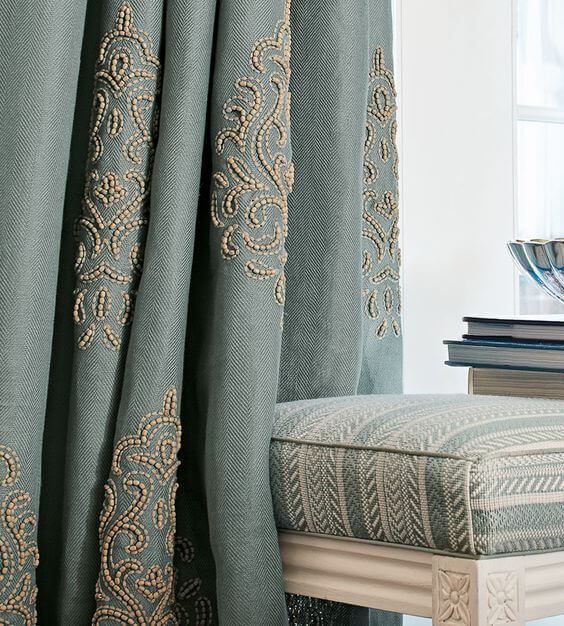
Interior damask is used for curtains, cushions, headboards, occasional furniture and upholstery. A decorative appearance alone does not establish suitability for upholstery. Abrasion resistance, seam strength, lightfastness, snagging, dimensional stability and any applicable flammability requirements must be checked.
Rugs, Tapestries and Wall Coverings
Heavier jacquard constructions may use damask-inspired motifs in rugs, tapestries and wall panels. Printed wallpaper and plastic accessories with similar motifs are better described as “damask-patterned” or “damask-style,” not damask fabric.
Where Is Damask Fabric Produced?

Damask is produced globally wherever mills have suitable Jacquard weaving, yarn preparation and finishing capabilities. There is no useful universal ranking that identifies one country as the largest producer of every type of damask.
A silk apparel damask, cotton table damask and polyester upholstery damask belong to different supply chains. Country-level production rankings for silk, cotton, wool or synthetic fiber do not prove where finished damask fabric is woven.
Buyers should evaluate:
- Experience with the required fiber and end use
- Available loom width and repeat size
- Pattern-development and sampling capability
- Minimum order quantity
- Yarn and color availability
- Finishing resources
- Quality systems and inspection standards
- Testing and documentation support
- Lead time, packaging and shipping terms
FabricsTrades is based in Wujiang District, Suzhou, within a major textile manufacturing and supply-chain cluster. FabricsTrades can help evaluate sourcing options, alternative constructions, fibers, weights, widths, colors and finishes. Sampling, testing coordination, documentation and customization availability should be confirmed against the final specification.
How Much Does Damask Fabric Cost?
Damask has no standard price because the construction can range from commodity polyester décor fabric to high-density silk or custom interior textiles.
The main cost variables are:
- Fiber and yarn quality
- Yarn count and fabric density
- Pattern complexity and repeat size
- Number of colors or yarn systems
- Loom setup and sampling requirements
- Fabric width and weight
- Order quantity and color quantity
- Dyeing and finishing
- Inspection and testing
- Certification or traceability documentation
- Packaging, freight and commercial terms
Handwoven damask can command a premium because of the labor and skill involved, but machine-woven fabric should not be described as an imitation solely because it is made on modern equipment. Computerized weaving is the standard manufacturing method for many genuine damask fabrics.
For meaningful price comparisons, buyers should request quotations based on the same composition, width, weight, repeat, finish, color quantity, test requirements, order volume and delivery terms.
Types of Damask Fabric
Damask can be classified by fiber, weave structure or intended application.
1. Silk Damask
Silk was historically the prestige fiber for damask. It can produce high luster, rich color and an elegant hand, but price and care requirements vary by silk quality, weave density, dyeing and finish.
The phrase “true damask” is sometimes reserved for traditional silk damask, but modern textile usage also recognizes damask woven from other fibers.
2. Cotton and Linen Damask
Cotton and linen are commonly used for table linens, bedding, curtains and some apparel. Their washability and absorbency can be advantageous, although shrinkage, wrinkling and finishing must be evaluated.
3. Wool Damask
Wool damask may be used for apparel, interiors and specialist decorative products. Buyers should confirm wool content, weight, mothproofing or other treatments, pressing response and care method.
4. Viscose and Synthetic Damask
Viscose, polyester and other manufactured fibers can provide luster, color consistency, abrasion performance or cost advantages. They are not interchangeable: moisture behavior, heat sensitivity, durability, hand feel and care vary by fiber and construction.
5. Blended and Stretch Damask
Blends can balance cost, strength, appearance, care and comfort. A small elastane content or engineered stretch construction may add flexibility, but stretch and recovery should be measured rather than assumed.
6. Twill Damask
Twill damask uses contrasting twill-faced areas instead of, or in combination with, the satin and sateen structures associated with classic damask. It may show a more visible diagonal texture.
7. Damask-Patterned Fabric
Printed or embossed products can reproduce a damask motif without using a damask weave. These products may be commercially useful, but their construction should be described accurately.
How to Care for Damask Fabric
There is no universal damask washing temperature or care method. Care should be based on the complete product specification.
- Silk or wool damask may require professional cleaning or carefully controlled hand washing.
- Cotton and linen table damask may be washable, but temperature, bleach use and drying method depend on dye and finish.
- Polyester damask may tolerate routine washing, but high heat can affect finishes, coatings, pleats or dimensional stability.
- Upholstered products should follow the furniture manufacturer’s cleaning code.
- Avoid aggressive rubbing or snagging on fabrics with long floats.
- Test stain-removal products on an inconspicuous area.
- Follow the approved care label for the final product.
Brands should validate care instructions through appropriate testing before assigning a care label.
Environmental Impact and Certification
Damask is a weave, so its environmental profile cannot be determined from the fabric name alone. Relevant factors include raw-material production, energy, water, dyeing, finishing chemicals, manufacturing waste, durability, care and end-of-life options.
Natural fibers are not automatically lower impact, and synthetic fibers are not all equivalent. Cotton, silk, wool, viscose and polyester each have different impact categories and supply-chain risks. A recycled fiber claim can reduce reliance on virgin inputs but does not by itself establish that the entire product is sustainable.
Buyers evaluating environmental claims should request evidence that matches the claim, including certificates, scope documents and transaction or chain-of-custody records where applicable.
Global Recycled Standard
The Global Recycled Standard is a voluntary third-party standard addressing recycled content, chain of custody and additional processing requirements. Certification applies only when the relevant organizations, materials and product claims are within scope.
Textile Exchange published GRS 5.0 on July 1, 2026, with a mandatory date of December 31, 2026. Projects moving through this transition should confirm the applicable standard version and documentation with the certification body.
Silk Mark
India’s Silk Mark is intended to identify products made from 100% natural silk when the label is used by an authorized user. It should not be described as proof that the silk was sustainably produced.
Woolmark
The Woolmark Certification Program covers specified wool yarns, fabrics, apparel and interior products. Products must meet the relevant specifications and be certified through the authorized program before Woolmark claims or logos are used.
No certification should be claimed for a damask fabric unless the exact product and supply chain are covered by valid documentation.
Current Regulatory and Market Update
Damask has no dedicated international regulation simply because it uses a damask weave. Requirements are driven by fiber content, finishing chemistry, finished-product category and destination market.
In the European Union, Regulation (EU) No 1007/2011 governs textile-fiber names and related fiber-composition labeling. Textile products made available to consumers generally need durable, visible and legible fiber-composition information. For business-to-business supply, accompanying commercial documents may replace or supplement labeling in circumstances covered by the regulation.
For the United States, the Federal Trade Commission explains that most covered textile products require disclosures including fiber content, country of origin and the identity of the manufacturer or responsible marketer. Apparel and certain other products may also require validated care instructions.
The EU’s Ecodesign for Sustainable Products Regulation is creating a framework for product-specific ecodesign and Digital Product Passport requirements. The European Commission’s 2025-2030 working plan prioritizes textiles, with a focus on apparel. However, the Commission’s Digital Product Passport guidance states that inclusion in the working plan does not itself create an immediate DPP obligation. Requirements will depend on future product-specific delegated acts; the indicative timetable points to 2027 for textile rules.
Buyers can review FabricsTrades’ overview of ESPR and Digital Product Passport implications for Chinese fabric supply chains as related supply-chain context. The internal article should not be treated as legal advice or automatic evidence that a product complies.
For future-ready sourcing, buyers should begin organizing:
- Exact fiber percentages and material descriptions
- Supplier, production-site and batch information
- Dye and finish declarations
- Recycled-content and chain-of-custody records
- Product and test specifications
- Care and durability data
- Applicable restricted-substance documentation
- Packaging and shipment information
The final legal and retailer requirements must be checked for the destination market, finished-product category and date of sale before bulk production.
Frequently Asked Questions
Is damask a fiber or a fabric?
Damask is a woven fabric construction, not a fiber. It can be made from silk, cotton, linen, wool, viscose, polyester or blends.
Is damask the same as jacquard?
No. Damask is one type of patterned fabric commonly produced with Jacquard weaving technology. “Jacquard” covers a broader group of patterned woven and knitted fabrics.
Is every damask fabric reversible?
No. Classic damask is commonly reversible or shows a reversed tonal pattern on the back, but some modern commercial products are not fully reversible. Buyers should inspect both sides of a sample.
What is the difference between damask and brocade?
Damask generally creates its motif by contrasting warp-faced and weft-faced weave areas. Brocade often uses supplementary patterning yarns and may have a raised, multicolored or metallic design. Commercial terminology can overlap, so construction details should be confirmed.
Is damask fabric stretchy?
Most woven damask has limited stretch. Stretch requires elastane, stretch yarns, mechanical stretch or another engineered construction and should be verified through testing.
Is damask suitable for upholstery?
Some damask fabrics are suitable for upholstery, but the product should be tested for abrasion, seam strength, pilling, snagging, lightfastness and any applicable flammability or contract requirements.
Can damask fabric be machine-washed?
Some cotton, linen and polyester damasks can be machine-washed, while silk, wool, coated or heavily finished constructions may need specialist care. Follow the tested care instructions for the exact product.
What should buyers include in a damask specification?
A useful specification includes fiber percentages, width, weight, yarn and weave information, pattern repeat, motif direction, color, finish, end use, performance tests, care method, inspection standard, order quantity and documentation requirements.
Selecting Damask for a Sourcing Project
Damask combines a woven-in pattern with distinctive tonal depth, but its performance cannot be judged by appearance alone. Fiber, density, float length, finish, repeat size and end use all affect the result.
Before ordering, approve a representative sample and confirm the construction, measurable specification, test plan, care method, shade tolerance, defect standard and required documentation. FabricsTrades can help evaluate sourcing and product-development options in Suzhou’s textile supply-chain cluster, subject to the final material, quantity and project requirements.