
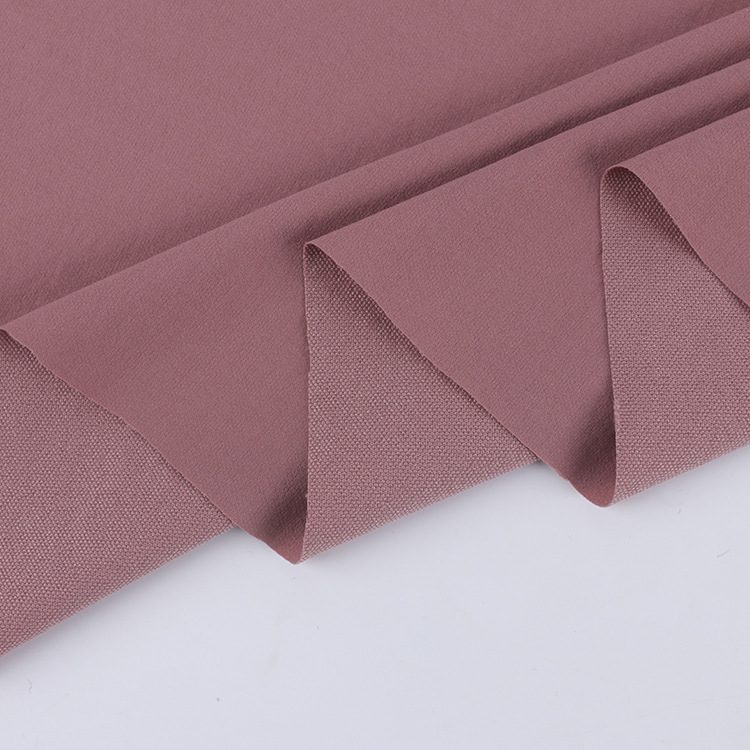


This make-to-order 160D nylon 4-way stretch fabric is designed for hiking pants, outdoor casual trousers, and other mobility-focused apparel. The source describes it as lightweight, breathable, durable, comfortable, and easy to maintain. Custom colors are available, with sampling, OEM, and bulk-production support for international buyers.
For first-time clients, we typically do 30% down payment and 70% before shipping via T/T; For repeat clients, we would consider L/C. Other payment terms can be negotiated.
Payment methods for buying samples:

This 160D nylon 4-way stretch fabric is a make-to-order performance fabric developed primarily for hiking pants and outdoor casual trousers. Its 4-way stretch construction is designed to support movement in multiple directions, helping garments feel less restrictive during walking, climbing, bending, sitting, and other active use.
The source describes the fabric as lightweight, breathable, comfortable, durable, wear-resistant, wrinkle-resistant, and easy to care for. These characteristics make it commercially relevant for outdoor, travel, sportswear, and active-casual programs where buyers need mobility without an unnecessarily heavy fabric.
The precise fiber percentages, weight, width, weave or knit construction, stretch percentage, and finishing specification are not stated on the source page. Buyers should confirm these details with FabricsTrades before sampling or bulk ordering.
| Specification | Available Information |
|---|---|
| Product name | 160D Nylon Hiking Fabric for Outdoor Casual Pants |
| Fabric category | Nylon 4-way stretch fabric |
| Material | Nylon fabric; exact fiber percentages and any additional stretch fiber should be confirmed |
| Yarn denier | 160D |
| Construction | 4-way stretch; exact weave or knit structure is not stated |
| Weight | Confirm with FabricsTrades |
| Width | Confirm with FabricsTrades |
| Stretch | 4-way stretch; exact stretch percentage and recovery data are not stated |
| Appearance and hand feel | Described as lightweight and comfortable; approve against a physical sample |
| Performance descriptions | Breathable, durable, wear-resistant, wrinkle-resistant, and easy to maintain |
| Standard finish | Not stated; confirm whether the quoted quality includes any coating, lamination, water-repellent treatment, or other functional finish |
| Supply type | Make to order |
| Colors | Produced according to customer requirements; custom colors are available |
| Primary applications | Hiking pants and outdoor casual pants |
| Other source-referenced uses | Camping and outdoor activities; categorized under sportswear and costume applications |
| Reference sample | Free A4 reference sample available; confirm availability and delivery cost |
| Lab-dip time | Normally 3-5 days |
| Approval-sample time | Normally 7-10 days for a plain color |
| OEM service | Available depending on the buyer’s requirements |
| Logo customization | Available subject to project requirements |
| Production capacity | More than 3 million meters per month |
| Bulk lead time | The page gives two ranges: normally 15-25 days after the down payment and lab-dip confirmation, depending on the order; the FAQ separately states 3-20 days for mass production. Confirm the applicable schedule before ordering |
| Pricing | Based on required functions, quality, and quantity; the source describes three online quantity tiers, with more favorable pricing for larger quantities |
| Payment terms | T/T and L/C at sight are usually accepted; other arrangements may be negotiated in advance |
| First-order payment | Typically 30% down payment and 70% before shipment by T/T |
| Repeat-order payment | L/C may be considered; confirm the agreed terms in the pro forma invoice |
| Shipping methods | Express and sea freight |
| Unit conversion | 1 yard = 0.9144 meter |
| Factory visits | Welcome by arrangement; airport or station pickup may be available |
Specifications, lead time, payment terms, sample arrangements, and commercial conditions should be reconfirmed for the selected color, finish, quantity, and production schedule.
The 160D designation identifies the stated yarn denier, but it does not by itself define the finished fabric’s weight, thickness, density, or strength. Those properties also depend on the exact construction, fiber percentages, finishing route, and other production variables. Buyers requiring a target GSM, usable width, tensile performance, or particular hand feel should include those requirements in the inquiry.
The confirmed 4-way stretch characteristic allows the material to extend in both principal fabric directions. In outdoor trousers, this can help reduce restriction around the knees, hips, seat, and upper legs. Exact extension and recovery percentages are not supplied, so brands should evaluate recovery, repeated-extension behavior, and potential bagging through sample garments and application-specific testing.
The fabric is described as lightweight and breathable. These qualities can support comfort during hiking, camping, travel, and extended wear, although no measured air-permeability or moisture-management result is provided. Buyers should request the applicable test information when a program has a defined breathability or comfort standard.
The source also describes the fabric as durable and resistant to wear and tear. This supports its positioning for outdoor casual pants, but it is not a quantified abrasion rating. Programs with demanding knee, seat, pocket, or backpack-contact requirements should define the required test method and acceptance level before bulk production.
Hiking pants are the primary application for this 160D nylon 4-way stretch fabric. Multi-directional stretch can improve mobility through articulated knees, gusseted crotches, shaped waistbands, and close-but-comfortable outdoor silhouettes.
The lightweight and breathable descriptions support pants intended for active use and extended wear. For demanding trekking programs, buyers should test abrasion resistance at the knees, seat, inner legs, hems, and pocket openings. Stretch recovery should also be evaluated to reduce the risk of bagging after repeated movement.
The page does not confirm a water-repellent, waterproof, coated, or laminated finish. Buyers requiring rain resistance, stain resistance, wind resistance, or a specific moisture-management function should identify that requirement before quotation and confirm the achievable performance through finished-fabric testing.
The combination of stretch, light weight, wrinkle resistance, and easy-care positioning makes the fabric relevant to outdoor-inspired casual trousers, travel pants, commuter pants, and utility-style bottoms.
Four-way stretch can support slimmer silhouettes and garments designed for long periods of sitting or walking. Wrinkle resistance may help travel garments maintain a cleaner appearance after packing, although buyers should verify crease recovery and dimensional stability on the approved quality.
Pocketing, waistbands, zippers, reinforcement patches, and other components should be selected so they do not restrict the stretch or distort the garment during wear.
The source specifically connects this material with camping and other outdoor activities. It may be considered for lightweight camp trousers, convertible-style pants, pull-on outdoor bottoms, and casual garments worn around campsites or during low-to-moderate intensity activities.
The correct construction should be selected according to expected temperature, abrasion exposure, weather, and layering system. Because the source does not state the fabric’s opacity, wind resistance, thermal performance, or weather protection, these properties should be evaluated through samples rather than assumed from the nylon content.
The product is categorized under sportswear, and its 4-way stretch supports mobility-focused shorts, warm-weather pants, and active-casual bottoms. It should not automatically be treated as a substitute for compression knit, high-support legging, or specialist competition fabric because the exact construction and recovery data are not supplied.
Brands should confirm stretch recovery, opacity under extension, seam compatibility, snagging behavior, and comfort against the skin before selecting it for fitted sportswear.
The page also carries a costume application tag. Its stretch, light weight, and custom-color availability may be useful for stage trousers or movement-oriented costume pieces.
This is a conditional application. Buyers should evaluate opacity, surface appearance under stage lighting, colorfastness, seam strength, and any venue-specific flammability requirement. No flame-retardant property or certification is stated for this product.
Before development begins, confirm the complete composition, GSM, usable width, construction, stretch percentage, recovery, color standard, and finish. “160D” and “4-way stretch” do not provide enough information to finalize fabric consumption, garment engineering, or performance requirements.
For plain colors, the stated lab-dip time is normally 3-5 days and the approval-sample time is normally 7-10 days. Supply a physical swatch, Pantone reference, or another agreed color standard. Evaluate the lab dip under the lighting conditions relevant to the target market.
A4 samples can be supplied for reference. A garment-length sample or trial production quantity may still be necessary to evaluate drape, stretch, sewing behavior, appearance, and wearer comfort.
The pattern should reflect the actual stretch and recovery of the approved fabric. Test the material in both principal directions and confirm the intended orientation before cutting. Waistbands, pocket openings, reinforcement areas, and seams should be engineered so that rigid components do not interfere with movement.
Needle type, needle size, thread, stitch formation, seam type, and sewing-machine settings should be selected after trial sewing. The source does not provide a mandatory sewing specification. Test for seam puckering, skipped stitches, seam slippage, damaged yarns, and unwanted seam extension before production.
Raw-edge behavior is not stated. Confirm whether overlocking, binding, heat cutting, or another edge-finishing method is appropriate for the approved construction.
Depending on the garment and destination market, buyers may need to evaluate:
Testing requirements should be communicated before sampling and quotation so that the selected construction and finish can be assessed against the correct standard.
This product is supplied on a make-to-order basis. Custom colors are available according to customer requirements. OEM service and logo customization may also be evaluated, depending on the requested product, process, quantity, and technical feasibility.
The source provides the following development and ordering information:
Because the page presents two different bulk-production ranges, buyers should request a written schedule for the specific order. Timing can depend on color approval, finish, quantity, greige availability, testing, and production-line scheduling.
Pricing is determined by quantity, required quality, and requested functions. The source describes three online quantity-based pricing tiers and indicates that larger quantities receive more favorable pricing. Request a current quotation rather than relying on an online reference price.
For first-time clients, the stated arrangement is typically a 30% down payment and 70% before shipment by T/T. The page also states that T/T and L/C at sight are generally accepted, that L/C may be considered for repeat clients, and that other terms can be negotiated in advance. The final payment arrangement should be confirmed in the quotation and pro forma invoice.
Available shipping methods include express and sea freight. Confirm freight terms, destination, packaging, roll length, roll diameter, labeling, and required export documents before order confirmation.
FabricsTrades is located in Wujiang District, Suzhou, at the center of a highly concentrated textile manufacturing region. In addition to operating its own 4-way stretch fabric factory, the company works with nearby specialists in weaving, knitting, dyeing, printing, coating, finishing, and garment-support processes.
If the standard 160D nylon 4-way stretch quality does not fully match a project, the team can help evaluate alternative constructions, colors, specifications, finishes, or custom-development routes. Feasibility depends on the required performance, quantity, production process, testing standard, and destination market.
Factory visits are welcome by arrangement, and airport or station pickup may be available. Buyers planning a visit should confirm the date, facility, sampling requirements, and production stages they wish to review.
This product page does not state that the fabric is certified, PFAS-free, waterproof, water-repellent, or compliant with a particular market regulation. Compliance requirements will depend on the final composition, color, finish, garment category, destination market, and date of sale.
For EU-bound outdoor and casual apparel, buyers may need to review the EU REACH PFHxA Restriction and the China Fabric Supply Chain. The restriction is especially relevant when a project requests water repellency, stain resistance, a coating, or another functional finish. Buyers should communicate any restricted-substance or PFAS requirement before sampling and request appropriate chemistry declarations and finished-material testing for the approved specification.
EU apparel programs may also need to prepare for product-information and traceability expectations associated with the ESPR and Digital Product Passport. Product-specific obligations and timelines can evolve, so buyers should identify the required composition records, manufacturing traceability, substances-of-concern information, conformity documents, and supporting technical data for their program.
Requirements vary by destination market, product type, finish, use, retailer, and date of sale. Before bulk production, buyers should confirm their legal and customer-specific requirements. Available test reports, certificates, declarations, technical data sheets, traceability records, or third-party testing support may depend on the final specification and production batch; contact FabricsTrades to confirm what can be supplied.
A plain-color lab dip normally takes 3-5 days. The stated approval-sample time for a plain color is normally 7-10 days.
Yes. OEM service depends on the buyer’s requirements, and logo customization is available subject to project feasibility.
The stated production capacity is more than 3 million meters per month.
The existing FAQ states 3-20 days for mass production. Another section of the page states that delivery normally takes 15-25 days after the down payment is ready and the lab dip is confirmed. Confirm the applicable lead time for the selected color, finish, quantity, and production schedule.
Yes. Factory visits are welcome by arrangement, and airport or station pickup may be available.
Pricing depends on the required quantity, quality, and functions. The source describes three online quantity tiers and states that larger quantities receive more favorable pricing. Request a current quotation for the exact specification.
One yard equals 0.9144 meter.
It is primarily designed for hiking pants and outdoor casual trousers. Its 4-way stretch, lightweight construction, breathable description, and wear-resistant positioning also make it relevant to selected travel, camping, sportswear, and active-casual applications.
These properties and compliance statuses are not stated on the source product page. If the project requires a functional finish, restricted-substance standard, certificate, or test report, specify the requirement before sampling and ask FabricsTrades to confirm feasibility and available documentation.
Confirm the exact composition, GSM, usable width, construction, stretch and recovery, color, finish, MOQ, price, lead time, payment terms, packaging, destination market, test standards, and required documents. Approve a representative sample before bulk production.
To request a quotation, A4 reference sample, lab dip, approval sample, available test report, certificate, declaration, technical data, or custom-development evaluation, provide:
FabricsTrades can then evaluate the suitable specification, sampling route, current price, production schedule, and available supporting documentation.



Error: Contact form not found.