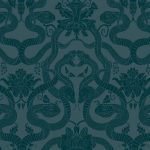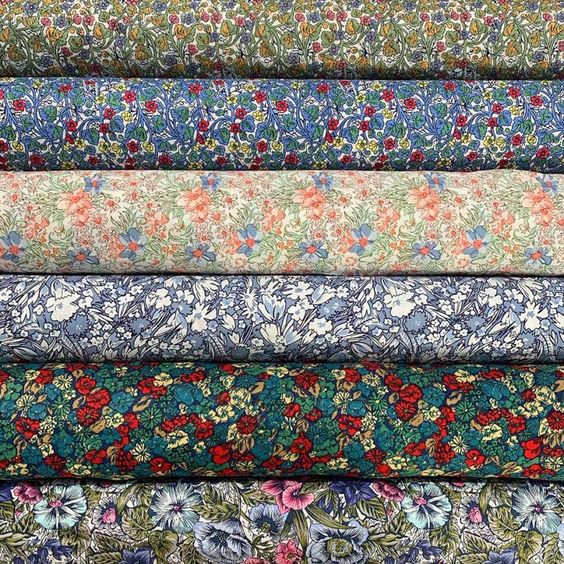
Lawn fabric, also called lawn cloth or cotton lawn, is a fine, lightweight plain-weave textile. Modern lawn is usually made from cotton, although the name historically referred to fine linen cloth and may also be applied to certain blends.
Its fine yarns and close construction give lawn a smooth surface, light hand, and varying degrees of transparency. Cotton lawn is widely used for summer dresses, blouses, shirts, skirts, nightwear, handkerchiefs, children’s garments, lightweight linings, and South Asian lawn suits.
Unlike knitted or elastane-blended fabrics, standard cotton lawn does not have substantial inherent stretch. Buyers should evaluate the actual fiber composition, weight, yarn count, construction, finish, and test results rather than relying on the fabric name alone.
Key Takeaways
- Lawn is normally a lightweight plain-weave fabric made from fine cotton yarns.
- Its characteristic hand ranges from soft to semi-crisp, depending on yarn quality and finishing.
- Lawn is generally breathable and comfortable in warm weather, but performance varies by construction and finish.
- Batiste, voile, organdy, nainsook, and cambric are related fabrics, not universally interchangeable names.
- Thread count is not standardized for all lawn fabrics; EPI, PPI, yarn count, GSM, and usable width provide more useful sourcing specifications.
- Buyers should approve bulk fabric against a physical standard and confirm shrinkage, colorfastness, appearance, and destination-market requirements.
Lawn Fabric at a Glance
| Attribute | Practical description |
|---|---|
| Common names | Lawn, lawn cloth, cotton lawn |
| Typical fiber | Cotton; historically linen; blends are also possible |
| Construction | Fine 1/1 plain weave |
| Appearance | Smooth, lightweight, semi-sheer to nearly opaque |
| Hand | Soft, silky, or semi-crisp depending on yarn and finish |
| Breathability | Generally good in lightweight cotton constructions |
| Inherent stretch | Low unless mechanically engineered or blended with an elastic fiber |
| Typical coloration | Bleached white, piece-dyed, yarn-dyed, or printed |
| Pilling behavior | Depends on fiber length, yarn quality, surface finish, and end use |
| Common uses | Dresses, shirts, blouses, skirts, nightwear, children’s clothing, handkerchiefs, lingerie, linings, and lawn suits |
| Care | Must be confirmed for the finished fabric or garment; printed, embellished, or specialty-finished lawn may require gentler care |
What Is Lawn Fabric?

Lawn is a fine woven textile made in a plain weave, meaning each warp yarn alternates over and under successive weft yarns. This basic 1/1 structure has frequent interlacing points and produces a stable fabric surface. CottonWorks explains the structure of plain weave in more detail.
The defining characteristics of lawn are its fine yarns, light weight, smooth surface, and controlled transparency. Cotton lawn can feel soft and fluid or slightly crisp, depending on:
- Whether the yarn is carded or combed
- Fiber length and yarn uniformity
- Yarn count and thread density
- Mercerization or other preparation
- Sizing and softening treatments
- Dyeing or printing method
- Mechanical and chemical finishing
Lawn is frequently printed because its smooth surface can reproduce fine motifs and detailed colors. Solid-dyed and bleached-white constructions are also common.
Is Lawn Always Made from Cotton?
No. Lawn was historically associated with fine linen, while most lawn sold today is cotton. The trade name describes a type of lightweight woven fabric rather than guaranteeing one fiber composition.
Cotton-rich blends, synthetic blends, and fabrics marketed as “lawn-style” cloth are also available. Buyers should therefore request a verified fiber-content declaration instead of assuming that every fabric labeled “lawn” is 100% cotton.
History of Lawn Cloth
The textile meaning of “lawn” is generally associated with Laon, a city in northern France known historically for fine linen production. The American Heritage Dictionary defines lawn as a light, finely woven cotton or linen fabric and traces the term to Laon.
Early lawn was commonly made from linen. Cotton lawn became more prominent as cotton yarns became widely available and manufacturing moved into large international textile centers.
In South Asia, printed lawn became closely associated with lightweight salwar kameez suits. Seasonal lawn collections remain an important part of fashion culture in Pakistan and India. However, no authoritative global dataset identifies one country as the universal leader in finished lawn-fabric production.
Lawn Fabric Properties
Lightweight and Smooth
Lawn is normally lighter and finer than everyday shirting or broadcloth. Fine yarns and a comparatively close weave create a smooth surface that can feel silky without being a silk fabric.
Weight is not standardized by the name “lawn.” Buyers should specify GSM or ounces per square yard rather than relying on descriptions such as “lightweight” or “summer weight.”
Semi-Sheer Appearance
Lawn can range from noticeably sheer to almost opaque. Transparency depends on yarn fineness, thread density, color, finishing, and fabric weight.
Light colors are often more transparent than dark colors. Garments may require a lining, underlayer, or additional opacity assessment, particularly for dresses and blouses.
Breathability and Warm-Weather Comfort
Lightweight cotton lawn generally allows air and moisture vapor to move more readily than many heavy woven fabrics. This makes it popular for warm-weather garments.
Breathability should not be presented as a universal measured value. Dense construction, coatings, resin finishes, laminated layers, or certain prints can alter air permeability and moisture behavior.
Soft or Semi-Crisp Hand
Combed yarns typically provide a smoother and more refined hand than lower-cost carded yarns. Finishing can make lawn feel softer, more polished, or crisper.
A soft hand does not by itself confirm long-staple cotton, mercerization, a specific yarn count, or premium quality. Those characteristics require specification data or testing.
Limited Natural Stretch
Conventional cotton lawn has little inherent stretch. It may provide minor mechanical give through yarn crimp and finishing, but it should not be described as a stretch fabric unless the construction or fiber blend supports that claim.
Programs requiring close-fitting garments or greater freedom of movement should confirm elongation, recovery, and whether elastane or another stretch technology is present.
Thread Count and Construction
The previous article cited a typical thread-count range of 150–200 and referred to an approximately 80 EPI by 80 PPI construction. Those figures can describe some lawn fabrics, but they are not a universal definition.
A specialty product may differ substantially. For example, Liberty states that its branded Tana Lawn uses a 240 thread-count construction.
For B2B sourcing, request separate construction fields:
- Warp yarn count
- Weft yarn count
- Ends per inch or centimeter
- Picks per inch or centimeter
- Finished GSM
- Finished and usable width
- Fiber composition
- Weave
- Finish
- Tolerance for each measurable specification
How Is Lawn Fabric Made?

Cotton lawn production follows the main stages used for fine woven cotton fabrics, with process settings selected to achieve a smooth, lightweight construction.
1. Cotton Selection and Ginning
Cotton fibers are separated from the seeds during ginning. Fiber length, fineness, maturity, cleanliness, and consistency influence spinning performance and the appearance of the finished lawn.
2. Carding and Optional Combing
Carding opens, cleans, and aligns the cotton fibers. Combing removes additional short fibers and impurities, producing a more uniform fiber assembly.
Combed yarn is generally smoother and can support a finer, more even fabric. It also involves additional processing and cost.
3. Spinning Fine Yarn
The prepared fibers are spun into yarn. Lawn normally uses relatively fine yarns, but yarn numbers must be confirmed for each construction.
Yarn irregularity can create thick and thin places, streaks, reduced strength, or an uneven printed appearance.
4. Warping, Sizing, and Weaving
Warp yarns are arranged on a beam and may be sized to improve weaving performance. The fabric is then woven in a plain 1/1 structure on suitable weaving equipment.
Important control points include:
- Warp and weft tension
- Yarn count
- EPI and PPI
- Missing or broken ends
- Picks, bars, and loom marks
- Width
- Bow and skew
- Fabric cleanliness
5. Desizing, Scouring, and Bleaching
Greige fabric may be desized, scoured, and bleached to remove processing materials, natural waxes, and unwanted color. The required preparation depends on the intended dyeing, printing, and finishing route.
6. Dyeing or Printing
Lawn can be sold white, piece-dyed, yarn-dyed, or printed. Printed lawn is especially common for summer fashion and South Asian lawn suits.
For printed programs, buyers should assess:
- Artwork scale and repeat
- Color matching
- Print registration
- Penetration and reverse-side appearance
- Colorfastness
- Hand-feel change after printing
- Lot-to-lot consistency
7. Finishing
Possible finishing stages include softening, calendaring, mercerization, sanforization or other shrinkage-control processes, and mechanical surface treatments.
Finishes can materially change the hand, luster, stability, opacity, shrinkage, and care requirements. Buyers should identify any required finish during development and avoid treating “cotton lawn” as a complete technical specification.
Lawn Compared with Related Fabrics
Trade terminology varies between regions and suppliers. The following comparison describes common tendencies, not mandatory definitions.
| Fabric | Typical relationship to lawn | Common distinction |
| Batiste | Closely related fine plain-weave fabric | Often soft and very fine; the terms can overlap in commercial use |
| Voile | Lightweight plain-weave fabric | Usually more open, sheer, soft, and fluid |
| Organdy | Fine transparent cotton plain weave | Typically has a much crisper or stiffer finish |
| Nainsook | Sometimes classified as soft-finished lawn | Usually made for a soft, smooth hand and delicate applications |
| Cambric | Fine, dense plain-weave cotton or linen | Often somewhat firmer or less sheer, although naming varies |
| Tana Lawn | A proprietary Liberty Fabrics lawn | Branded construction with its own yarn, thread-count, printing, and quality specifications |
When buying one of these fabrics, use a physical reference sample and measurable specifications. Names alone cannot reliably define weight, opacity, softness, thread density, or performance.
For a more fluid and often sheerer alternative, review FabricsTrades’ voile fabric category.
Common Uses of Lawn Fabric
Dresses, Blouses, and Shirts
Lawn’s low weight and smooth surface make it suitable for summer dresses, blouses, shirts, tunics, and skirts. Opacity should be checked in the final color because some garments require lining.
South Asian Lawn Suits
Printed cotton lawn is widely used for salwar kameez sets and related garments in Pakistan and India. Product programs may combine multiple coordinated printed or embroidered components rather than one uniform fabric.
Nightwear, Lingerie, and Children’s Clothing
Soft lawn may be used for pajamas, nightdresses, lightweight undergarments, babywear, and children’s clothing. Direct-skin-contact applications require careful control of seams, residual chemicals, trims, and colorfastness.
Handkerchiefs and Accessories
Fine lawn has a long history in handkerchiefs. It is also used for scarves, pocket squares, lightweight linings, hair accessories, and decorative craft projects.
Quilting and Home Sewing
Printed cotton lawn is used in quilting and detailed home-sewing projects. Its lower weight can require stabilization or careful pairing with heavier fabrics.
Buyers interested in extra-long-staple cotton options can review the FabricsTrades guide to Pima cotton properties and sourcing. The use of Pima cotton must still be confirmed for the specific fabric.
Where Is Lawn Fabric Produced?
Lawn is produced across established cotton-spinning, weaving, dyeing, and printing regions. China, India, and Pakistan are important to the broader cotton-textile supply chain, while specialist lawn is also produced in Europe and other manufacturing markets.
Raw-cotton production rankings should not be used as proof of finished lawn-fabric production. Cotton may be grown in one country, spun in another, woven elsewhere, and then dyed, printed, or made into garments in another location.
As of July 15, 2026, the USDA projected 2026/27 global cotton production at 117.3 million 480-pound bales and mill use at 122 million bales. China, India, and Pakistan were expected to account for much of the increase in cotton mill use. These are cotton-market forecasts, not lawn-specific production figures, and they may change with weather, demand, inventories, and trade conditions. See the USDA Cotton and Wool Market Outlook.
Buyers should evaluate the complete supply chain rather than relying only on the fabric’s country of shipment.
What Determines Lawn Fabric Cost?
There is no universal market price for lawn. Cost depends on:
- Cotton type and fiber quality
- Carded versus combed yarn
- Yarn fineness and uniformity
- Thread density and finished weight
- Greige width and finished usable width
- Order quantity
- Bleaching, dyeing, or printing method
- Number of colors and artwork complexity
- Mercerization and other finishing
- Shrinkage-control requirements
- Testing and documentation
- Inspection standard
- Packaging and logistics
- Certification or chain-of-custody requirements
Combed-yarn lawn will often cost more than a comparable carded-yarn construction. Detailed printing, specialty finishes, lower minimum quantities, additional testing, and certified supply chains may also increase cost.
Quotations should be compared using the same composition, construction, width, weight, finish, quality tolerances, testing scope, and delivery terms.
Lawn Fabric Quality-Control and Sourcing Checklist
Before approving bulk production, buyers should confirm:
- Fiber content: Obtain the declared composition and confirm whether testing is required.
- Construction: Record yarn count, EPI, PPI, weave, GSM, and width.
- Reference standard: Approve a signed cutting, sealed sample, or equivalent physical standard.
- Hand and appearance: Assess softness, crispness, luster, transparency, and surface evenness.
- Color: Approve lab dips or strike-offs under agreed lighting conditions.
- Print quality: Check registration, repeat, penetration, color variation, and defects.
- Dimensional stability: Test shrinkage using the intended care method.
- Colorfastness: Select tests relevant to washing, rubbing, perspiration, light, and end use.
- Strength and sewing performance: Consider tensile or tear strength, seam slippage, needle damage, and fraying.
- Fabric geometry: Check usable width, bow, skew, and roll length.
- Defect inspection: Define the inspection method, acceptance criteria, and defect classification.
- Documentation: Confirm test reports, declarations, transaction documents, certificates, and destination-market information before shipment.
FabricsTrades’ fabric quality inspection guide provides a broader framework for evaluating fabric before bulk shipment.
Cutting, Sewing, and Care Considerations
Fine lawn can shift, fray, or show needle damage if unsuitable sewing settings are used.
Practical considerations include:
- Use a fine, sharp needle suitable for lightweight woven fabric.
- Test thread size, stitch length, tension, and seam type before production.
- Avoid excessive handling that can distort cut components.
- Evaluate seam transparency on light-colored fabric.
- Precondition or prewash samples when shrinkage is relevant.
- Use an appropriate lightweight interlining where reinforcement is needed.
- Confirm whether the garment requires lining.
There is no single correct washing temperature for every lawn product. Fiber content, dyes, prints, embellishments, and finishes determine the appropriate care method. Finished-product care instructions should be supported by testing.
Environmental and Certification Considerations
Cotton is a plant-based fiber, but that fact alone does not establish that a lawn fabric is sustainable. Environmental impact depends on cultivation, irrigation, agricultural inputs, ginning, spinning, weaving, wet processing, chemicals, energy, transport, product durability, and end-of-life conditions.
Dyes, prints, resins, softeners, coatings, and other finishes can also change the environmental and chemical profile of the final fabric.
Potential certification and verification routes include:
- GOTS: Relevant to qualifying organic textile supply chains. The GOTS logo may be used on the final product only when the applicable supply-chain stages and product meet the program’s requirements. See GOTS certification scope.
- OEKO-TEX STANDARD 100: A voluntary certification for textile articles tested against the program’s harmful-substance criteria. Requirements vary by intended product class. See the OEKO-TEX STANDARD 100 overview.
- Fiber-origin or brand programs: These may apply to particular cotton types or proprietary products, but their scope and claim rules must be checked.
A supplier-level certificate does not automatically prove that a particular fabric, color, finish, or production lot is certified. Buyers should verify certificate numbers, scope, validity, product coverage, transaction evidence, and labeling authorization.
Current Regulatory and Market Update

Lawn fabric does not have one universal compliance standard. Requirements depend on the fiber composition, chemical processing, product category, destination market, intended consumer, and date the product is placed on the market.
Textile Labeling
For the United States, the Federal Trade Commission states that most covered textile products must disclose fiber content, country of origin, and the identity of the manufacturer or another responsible business. Garments are also subject to the FTC Care Labeling Rule. See the FTC apparel-labeling guidance.
In the European Union, Regulation (EU) No 1007/2011 governs textile fiber names and related fiber-composition labeling. Required information must be clear, visible, and provided in the applicable language or languages of the Member State where the product is offered to consumers. See the official text of Regulation (EU) No 1007/2011.
EU Ecodesign and Digital Product Passport Development
The EU Ecodesign for Sustainable Products Regulation, Regulation (EU) 2024/1781, creates a framework for product-specific ecodesign and Digital Product Passport requirements. The European Commission’s 2025–2030 working plan prioritizes textiles, particularly apparel and footwear.
This does not mean that every lawn fabric already needs a Digital Product Passport. Detailed obligations depend on applicable product-specific delegated acts and their implementation dates. EU-bound programs should monitor the development of ESPR and Digital Product Passport requirements for fabric supply chains.
Restricted Substances and Finished-Fabric Evidence
Standard unfinished cotton lawn has a different chemical profile from lawn that is printed, coated, stain-resistant, water-repellent, wrinkle-resistant, or otherwise treated. Buyers should disclose the target market and finish specification before sampling so that relevant chemical restrictions, retailer requirements, and testing can be evaluated.
For a broader overview, see FabricsTrades’ guide to global textile compliance developments.
Documentation should be matched to the finished construction, color, print, treatment, production lot, product category, and destination market. Buyers should verify current legal and retailer requirements before bulk production.
Frequently Asked Questions
Is lawn fabric always 100% cotton?
No. Modern lawn is usually cotton, but lawn was historically made from linen and may also be produced in blends. The actual fiber composition should be confirmed through supplier documentation or testing.
Is lawn fabric transparent?
Lawn is often semi-sheer, but opacity varies with weight, yarn count, thread density, color, finish, and print. Buyers should assess the intended color over skin or a contrasting backing before approving a garment.
Does lawn fabric stretch?
Standard cotton lawn has low inherent stretch. Minor mechanical give is possible, but meaningful stretch requires an engineered construction, elastic fiber, or other stretch technology.
Is lawn the same as voile?
No. Both are lightweight plain-weave fabrics, but voile is generally more open, sheer, and fluid, while lawn normally has a smoother and slightly crisper surface. Commercial terminology varies, so compare physical samples and specifications.
What is the difference between lawn and batiste?
Lawn and batiste are closely related fine plain-weave fabrics, and suppliers sometimes use the names interchangeably. Batiste is often described as particularly fine and soft, but the actual weight, yarn count, density, and finish should determine selection.
Is cotton lawn suitable for summer clothing?
Yes. Lightweight cotton lawn is commonly selected for summer dresses, shirts, blouses, skirts, and sleepwear because it is light and generally breathable. Light colors may require lining.
What specifications should a lawn-fabric buyer request?
At minimum, request fiber composition, yarn count, EPI, PPI, GSM, finished and usable width, weave, finish, color or print standard, shrinkage, colorfastness, defect tolerance, packaging, and required documentation.
Can lawn fabric be certified organic?
A lawn fabric can support an organic claim when its cotton and applicable processing and supply-chain stages meet the selected certification program’s requirements. Organic status should not be assumed from the fabric name or a general supplier statement.
Conclusion
Lawn fabric is a fine, lightweight plain-weave textile valued for its smooth surface, warm-weather comfort, print clarity, and versatility. Modern lawn is usually cotton, but its composition and performance are not standardized by the name alone.
Successful sourcing depends on measurable specifications, approved physical standards, realistic care requirements, quality inspection, and documentation matched to the finished product and destination market.
FabricsTrades is based in Wujiang District, Suzhou, and can help buyers evaluate cotton and cotton fabric sourcing options, alternative constructions, weights, widths, colors, prints, finishes, samples, and testing requests. Availability and support should be confirmed against the final product specification and order requirements.