
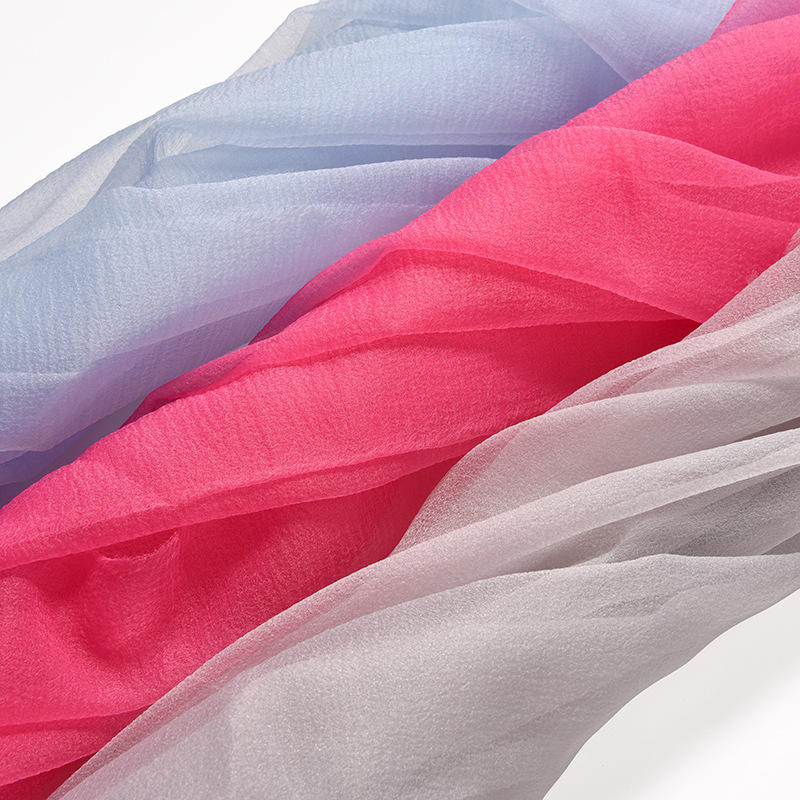
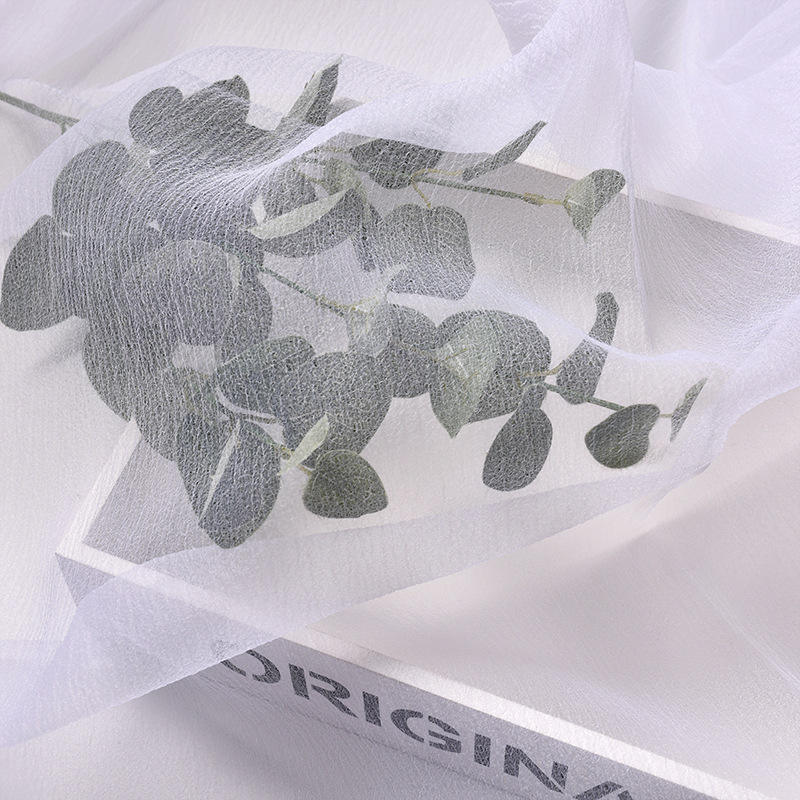


Make-to-order high-density seersucker bubble-crepe organza developed for wedding dresses. Its sheer, lightweight organza character and textured surface add visual depth, movement, and an elegant dimensional effect to bridal designs.
For first-time clients, we typically do 30% down payment and 70% before shipping via T/T; For repeat clients, we would consider L/C. Other payment terms can be negotiated.
Payment methods for buying samples:

This high-density seersucker bubble-crepe organza is a make-to-order bridal fabric designed to combine the transparency and lightness of organza with a distinctive textured surface. The seersucker and bubble-crepe effect gives wedding dresses greater visual depth than a plain organza while retaining the movement and flow required for layered bridal designs.
The fabric is intended primarily for wedding dresses and can be considered for overlays, layered skirts, detachable overskirts, sleeves, ruffles, bows, gathered details, and other decorative bridal components. Because the source page does not state the exact composition, GSM, width, stretch, or stiffness, buyers should approve a physical sample before confirming the final garment construction.
| Specification | Available Information |
|---|---|
| Product Name | High-Density Seersucker Bubble Crepe Organza Fabric for Wedding Dresses |
| SKU / Product Code | 1689 |
| Fabric Type | High-density seersucker bubble-crepe organza |
| Site Classifications | Chiffon Fabric, Crepe Fabric, Organza Fabric, Polyester Fabrics, Polyester Organza, and Seersucker Fabric |
| Composition | The product is listed under Polyester Fabrics and Polyester Organza, but the exact fiber composition is not stated in the visible specification. Confirm with FabricsTrades before ordering. |
| Supply Type | Make to order |
| Surface and Appearance | Textured seersucker and bubble-crepe effect with a sheer organza appearance |
| Hand and Drape | Described as lightweight, with movement and flow; confirm the precise stiffness and hand by sample |
| Weight / GSM | Not stated; confirm with FabricsTrades |
| Width | Not stated; confirm with FabricsTrades |
| Density | Described as high density; no numerical density is stated |
| Stretch | Not stated; confirm whether the selected construction is non-stretch or has any mechanical stretch |
| Colors | Produced according to customer requirements; the source states that any color is available |
| Dyeing and Printing | The fabric is described as suitable for dyeing and printing; confirm process feasibility for the selected color, artwork, and quantity |
| Main Application | Wedding dresses and bridal design components |
| Finish / Treatment | No coating or functional finish is specified; confirm any required treatment before quotation |
| MOQ | Not stated; confirm according to color, specification, and production route |
| Reference Sample | Free A4 reference sample available |
| Lab-Dip Time | Normally 3–5 days |
| Plain-Color Approval Sample | Normally 7–10 days |
| Bulk Lead Time | The page gives two schedules: 3–20 days for mass production, and normally 15–25 days after the down payment and lab-dip confirmation. Exact timing depends on the order and must be confirmed before purchase. |
| Production Capacity | More than 3 million meters per month |
| Price Basis | Determined by the required functions or specification, quantity, and quality level. The listing describes three quantity-based price tiers, with more favorable pricing at higher quantities. Request a current quotation. |
| Large-Order Payment Terms | For first-time clients, typically 30% down payment and 70% before shipment by T/T. L/C may be considered for repeat clients. Other terms are negotiable. |
| Other Payment Terms | T/T and L/C at sight are usually accepted; other arrangements should be negotiated in advance |
| Sample Payment Methods | The page displays Visa, Mastercard, and PayPal |
| Shipping Methods | Express and sea freight |
| Unit Conversion | 1 yard = 0.9144 meter |
| Factory Visits | Factory visits are welcomed, and airport or railway-station pickup may be arranged |
The defining characteristic of this fabric is its combination of organza transparency with a high-density seersucker bubble-crepe surface. Unlike a completely smooth organza, the textured face creates light-and-shadow variation and gives bridal garments a more dimensional appearance.
The organza construction is described as sheer and lightweight, allowing layers to move and flow. This makes the fabric useful where a designer wants visible volume or texture without relying only on a heavy base fabric. Its transparency also means that the color, sheen, and structure of the lining or underlayer can influence the final appearance.
The original listing describes the fabric as durable and easy to clean. Final care instructions should nevertheless be established from the confirmed fiber composition, dye or print process, embellishments, and finished-garment construction. Buyers requiring specific wash, dry-cleaning, abrasion, or colorfastness performance should communicate the test standard before sampling.
The fabric is particularly relevant for transparent overlays placed above satin, lining fabric, or another bridal base. Its sheer organza character allows the underlying color and silhouette to remain visible, while the bubble-crepe texture adds surface depth.
For full or tiered skirts, the fabric can create movement and a dimensional effect without the flat appearance of a smooth transparent layer. Designers should confirm the actual GSM, stiffness, and width before calculating the number of layers or expected skirt volume.
High-density textured organza may be evaluated for detachable overskirts, sculptural skirt panels, trains, and other statement components. The textured surface can help broad areas of fabric appear more visually active under bridal photography and event lighting.
A full-width sample or prototype is recommended because the product page does not state the fabric’s exact body, recovery, or shape-retention characteristics.
The fabric can be sampled for puff sleeves, translucent sleeves, gathered tiers, flounces, ruffles, bows, and other dimensional bridal details. Its lightweight appearance helps these components retain an airy look, while the seersucker bubble texture reduces the visual plainness of large organza areas.
The development team should test how the fabric behaves when tightly gathered, pleated, folded, or layered. Surface texture can affect the consistency of small pleats and the appearance of pressed folds.
The organza can be considered for textured bodice overlays, yokes, neckline panels, back panels, and decorative inserts. Because it is sheer, these applications normally require a lining, modesty layer, interlining, or strategically placed appliqué.
For load-bearing bodice areas, boning channels, closures, or heavily embellished sections, the organza should not be treated as the only structural material without prototype testing and suitable reinforcement.
The source states that the fabric can be dyed and printed. It may also be evaluated as a ground for embroidery, appliqué, beading, or other bridal decoration, but the compatibility of each technique should be tested.
Needle penetration, snagging, distortion, weight from embellishments, print definition, and color appearance can vary with the final construction. Approve a decorated sample before bulk production.
Single-layer body panels, very soft veils, close-fitting sections, or designs requiring complete opacity should be assessed carefully. The fabric is sheer, and its exact stiffness, weight, width, and stretch are not stated. These uses may require lining, reinforcement, additional layers, or an alternative organza construction.
This product is supplied on a make-to-order basis. Available development options described on the page include customer-selected colors, dyeing, printing, OEM service, and logo customization. Feasibility, MOQ, cost, and lead time depend on the final request and should be confirmed during quotation.
For color development, the stated timing is normally 3–5 days for a lab dip and 7–10 days for a plain-color approval sample. A free A4 reference sample is available. Buyers should confirm whether courier charges apply and request a larger cutting or pre-production sample when drape, transparency, layering, or garment construction must be evaluated.
The page contains two different bulk schedules: 3–20 days for mass production and normally 15–25 days after the down payment is ready and the lab dip is confirmed. Because these ranges conflict, the purchase contract should state the agreed production lead time for the actual quantity, color, specification, approval process, and shipping plan.
Monthly production capacity is stated as more than 3 million meters. Actual capacity allocated to this fabric should be confirmed for the required construction, color, quantity, and delivery window.
For first orders, the typical large-order payment structure is 30% down payment and 70% before shipment by T/T. L/C may be considered for repeat clients, and other terms can be negotiated. Express and sea-freight shipping are available.
FabricsTrades is located in Wujiang District, Suzhou, within one of the world’s most concentrated textile manufacturing regions. The company operates its own 4-way stretch fabric factory and also works as a fabric sourcing and product-development partner.
For this organza project, that wider regional network can support communication with specialized weaving, dyeing, printing, finishing, and garment-support facilities. If the standard fabric does not fully meet the required hand, transparency, texture, color, width, or construction, FabricsTrades can help evaluate alternative specifications or custom-development routes.
Availability is not automatic for every finish or modification. Provide a reference swatch, garment photograph, technical sheet, Pantone color, target price, required quantity, and destination-market requirements so feasibility can be evaluated accurately.
For bridal fabrics and finished wedding dresses entering the EU or other regulated markets, buyers should identify the required product information and testing before bulk production. The product page does not state that this fabric is certified or compliant with any specific regulation.
EU apparel programs may need to prepare for product-level composition, process, and traceability information under the ESPR and Digital Product Passport framework. For this product, buyers should first confirm the exact fiber composition, coloration or printing route, product identification, production batch, and relevant supply-chain records.
Buyers supplying multiple markets can also review the 2024–2026 Global Textile Compliance guide when preparing market-specific restricted-substance, labeling, chemical, and documentation requirements.
Requirements vary according to the destination market, finished-garment category, intended use, color, print, finish, trims, production batch, and date of sale. Before bulk production, communicate the applicable buyer RSL, legal standard, retailer protocol, or certification requirement. Contact FabricsTrades to request any available test reports, certificates, declarations, technical data, traceability records, or third-party testing support for the confirmed specification.
It is a textured organza developed for wedding dresses. It combines a sheer, lightweight organza appearance with a high-density seersucker and bubble-crepe surface that adds visual depth and movement.
It can be used in multiple wedding-dress components, but its suitability for an entire gown depends on the design. Because it is sheer, body areas will generally require lining, layering, or another supporting fabric.
Yes. Its transparent appearance and textured surface make it suitable for evaluation in sleeves, ruffles, gathered details, layered skirts, bows, and detachable overskirts. Approve a sample because the exact weight and stiffness are not stated.
A lab dip normally takes 3–5 days. A plain-color approval sample normally takes 7–10 days.
Yes. The page states that a free A4 reference sample can be provided. Confirm courier charges and request a larger sample when full-width drape or garment construction must be assessed.
Yes. OEM service depends on the buyer’s requirements, and logo customization is available subject to feasibility confirmation.
Yes. The page states that colors can be produced according to customer requirements and that the fabric can be dyed or printed. Confirm the artwork, coloration process, MOQ, cost, and approval procedure before ordering.
The stated production capacity is more than 3 million meters per month. Confirm available capacity for this exact fabric, specification, and delivery period.
The page gives two schedules: 3–20 days for mass production and normally 15–25 days after the down payment and lab-dip confirmation. Exact timing varies by order and should be confirmed in the quotation or purchase contract.
Price depends on the required functions or specification, quantity, and quality level. The listing describes three quantity-based price tiers, with more favorable pricing for larger quantities. Request a current quotation for the final specification.
Yes. Factory visits are welcomed, and airport or railway-station pickup may be arranged in advance.
One yard equals 0.9144 meter.
To receive an accurate recommendation and quotation, provide:
Contact FabricsTrades to request a quotation, free A4 reference sample, lab dip, approval sample, available test report, certificate, declaration, technical information, or custom-development evaluation.



Error: Contact form not found.