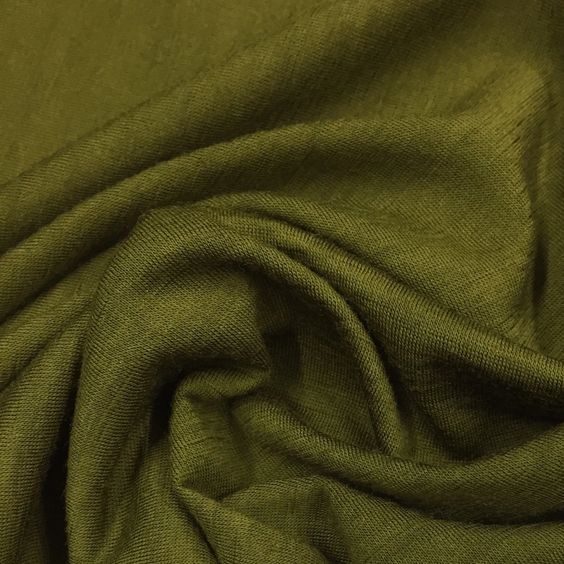
Merino wool fabric is a woven or knitted textile made wholly or partly from the fine fleece of Merino sheep. It is valued for softness, insulation, moisture-vapor management, odor resistance, and elastic recovery. Its actual performance, however, depends on fibre diameter, yarn system, fabric construction, weight, finishing, and any blended fibres.
According to The Woolmark Company’s explanation of wool fibre diameter, Merino fibres commonly range from below 17.5 microns to approximately 22–24 microns. Finer fibres bend more easily against the skin, which is why fine Merino is widely used in base layers, knitwear, underwear, socks, and premium apparel.
Merino wool should not automatically be described as waterproof, pill-proof, inexpensive, sustainable, cruelty-free, or machine washable. Each of these claims depends on the particular fibre, fabric, finish, care treatment, supply chain, and supporting documentation.
Key Takeaways
- Merino wool is a fine sheep-wool fibre; “Merino fabric” can be knitted, woven, felted, brushed, blended, or otherwise finished.
- Fibre diameter is a major influence on softness, but yarn structure, protruding coarse fibres, finishing, and garment design also affect next-to-skin comfort.
- Wool can manage moisture vapor and provide insulation, but untreated Merino fabric is not waterproof.
- Pilling, shrinkage, abrasion resistance, and stretch vary substantially by yarn and fabric construction.
- Australia remains a major source of fine apparel wool, while spinning, dyeing, knitting, weaving, and garment production are distributed internationally.
- Buyers should specify composition, micron range, construction, performance tests, animal-welfare documentation, chemical requirements, and care expectations before bulk production.
| Item | Practical description |
|---|---|
| Fibre source | Fleece from Merino sheep |
| Typical fibre diameter | Commonly below 17.5 to approximately 22–24 microns |
| Main constructions | Jersey, rib, interlock, woven plain weave, twill, suiting, felt, and blends |
| Key performance characteristics | Softness, insulation, breathability, moisture-vapor management, odor resistance, and recovery |
| Common limitations | Pilling, felting shrinkage, insect damage, abrasion sensitivity, and special-care requirements |
| Common applications | Base layers, sweaters, socks, underwear, shirts, dresses, trousers, jackets, blankets, and performance apparel |
| Important sourcing variables | Micron, clean yield, staple length and strength, yarn count, fabric weight, width, finish, testing, traceability, and certification |
| Care | Follow the finished product’s care label; untreated and machine-washable Merino require different laundering conditions |

What Is Merino Wool?
Merino wool is a protein fibre grown by Merino sheep. Calling it “Spanish wool” is historically suggestive but is not a reliable modern commercial synonym: Merino sheep were developed in Spain, but contemporary Merino wool is produced in several countries and traded through global processing networks.
The breed became important to Spain’s wool trade before spreading to other parts of Europe, South Africa, and Australia. Merino sheep arrived in New South Wales in the late eighteenth century, and selective breeding subsequently helped establish Australia as a major supplier of fine apparel wool.
Today, “Merino” identifies the fibre source rather than a single fabric construction. The same fibre may be processed into:
- Smooth worsted yarn for fine knitwear, tailoring, or lightweight woven fabric
- Bulkier woollen yarn for sweaters, coats, blankets, and brushed fabrics
- Jersey or interlock knit for base layers and activewear
- Blends with nylon, polyester, silk, cashmere, cotton, or elastane
- Felted, boiled, brushed, coated, or shrink-resistant materials
How Is Merino Wool Fabric Made?
The production route changes according to the intended yarn and fabric, but the main stages are as follows.
1. Shearing and Wool Classing
Merino sheep are commonly shorn on an annual cycle, although farm practices vary. The freshly shorn fleece is called greasy wool because it contains wool wax, suint, dirt, and vegetable matter.
The fleece is classed into sale lots according to characteristics such as:
- Mean fibre diameter
- Fibre-diameter variation
- Staple length
- Staple strength
- Yield after cleaning
- Vegetable-matter content
- Colour and contamination
- Wool type and intended processing route
These factors influence both processing performance and raw-material price.
2. Scouring
Greasy wool is washed to remove dirt, wool wax, salts, and other contaminants. Woolmark’s wool-processing guidance describes scouring as a controlled sequence of detergent washing, rinsing, and drying.
Lots containing substantial vegetable matter may require additional removal processes. Buyers with chemical, wastewater, or certification requirements should confirm the mill’s scouring and processing route.
3. Carding, Gilling, and Combing
Carding opens and separates fibre clumps, removes some contamination, partially aligns the fibres, and forms a continuous strand.
The next steps depend on the yarn system:
- Woollen processing retains a more randomized fibre arrangement. It generally creates loftier, bulkier, and hairier yarns.
- Worsted processing adds gilling and combing to align longer fibres and remove short fibres, neps, and residual vegetable matter. It generally creates smoother, finer, and more uniform yarns.
Neither route is universally better. Woollen yarn is useful when warmth and bulk are priorities; worsted yarn is often preferred for smooth next-to-skin knits, fine suiting, and clearer fabric surfaces.
4. Spinning
Prepared fibre is drawn and twisted into yarn. Yarn count, twist, ply, fibre length, fibre diameter, and spinning consistency influence:
- Strength
- Surface hairiness
- Pilling
- Abrasion resistance
- Fabric weight
- Drape
- Hand feel
- Knitting or weaving efficiency
5. Dyeing and Fabric Formation
Wool may be dyed as loose fibre, top, yarn, fabric, or finished garment. Dyeing at different stages produces different aesthetic and production effects.
The yarn is then knitted or woven. Knits are widely used for base layers, sweaters, socks, underwear, and sportswear because they provide flexibility and body conformity. Woven Merino fabrics are used for shirts, trousers, dresses, coats, uniforms, tailoring, and blankets.
6. Finishing
Possible finishing operations include washing, fulling or milling, raising, pressing, decating, anti-pilling treatment, shrink-resist treatment, and water-repellent finishing.
Finishing must be specified carefully. For example, “superwash” or machine-washable wool has received a shrink-resist treatment. Untreated wool may felt when moisture, heat, and mechanical agitation cause fibre scales to interlock. A water-repellent finish may also change the chemical and regulatory profile of the finished article.

Key Properties of Merino Wool Fabric
Softness and Next-to-Skin Comfort
Finer fibres bend more readily when they contact the skin. Woolmark indicates that fibres below approximately 19.5 microns are commonly selected for base layers and fine next-to-skin knitwear.
Micron alone does not guarantee comfort. Buyers should also review the distribution of fibre diameters, yarn hairiness, protruding coarse fibres, seams, finishing, and the intended wearer.
Insulation and Temperature Regulation
Wool’s natural crimp helps create air spaces within yarn and fabric. These air spaces provide insulation, while the fibre’s moisture interaction can support comfort across changing conditions.
Fabric weight and construction remain decisive. A lightweight Merino jersey and a dense boiled-wool coating will not provide the same thermal performance.
Moisture Management and Breathability
Wool is hygroscopic, meaning it can absorb and release moisture vapor. This helps manage humidity close to the body. Fabric porosity, garment fit, knitting density, and blending determine how breathable the final product feels.
Merino can manage perspiration effectively, but it is not necessarily as fast-drying as a lightweight hydrophobic synthetic fabric.
Odor Resistance
Wool can retain and later release volatile odor compounds during laundering, helping garments remain fresher between washes. Actual odor performance depends on wear conditions, fabric weight, garment design, finishes, and hygiene requirements.
Elastic Recovery
The crimped fibre structure contributes to resilience, shape recovery, and wrinkle resistance. This natural recovery should not be confused with the high stretch and recovery of elastane.
A Merino knit may stretch substantially because of its looped construction. A tightly woven Merino fabric may offer limited mechanical stretch unless it uses a stretch weave or blended elastic fibre.
Flame Behaviour
Wool is generally harder to ignite than many common apparel fibres and tends to char rather than melt. However, the final fabric must still be tested when it is intended for protective clothing, children’s products, interiors, transport, or another regulated application.
“Natural flame resistance” is not the same as certification to a specified flame-performance standard.
Water and Stain Behaviour
The fibre’s outer cuticle can resist initial wetting and contribute to stain resistance, while the inner fibre can absorb moisture. Woolmark therefore notes that the fibre as a whole should not simply be described as water-repellent.
Untreated Merino fabric is not waterproof. Weather protection depends on fabric density, construction, garment design, lamination, coating, or a verified water-repellent finish.
Pilling and Abrasion
Merino products can pill when loose fibres migrate to the surface and entangle under friction. Pilling is common in high-rub areas, but it is not universally “high” for every Merino fabric.
Risk depends on:
- Fibre length and diameter
- Yarn twist and ply
- Yarn hairiness
- Fabric density
- Knit structure
- Blended fibres
- Finishing
- Abrasion during wear and washing
A buyer should request a pilling test method and acceptance grade suited to the product instead of relying on a general fibre description.
Merino Wool Micron Ranges
A micron, written as µm, is one-millionth of a metre. Lower fibre-diameter values generally indicate finer wool.
Commercial terms such as fine, superfine, extrafine, and ultrafine are not applied identically by every seller or certification program. The following ranges are therefore practical sourcing bands rather than a universal legal classification.
| Approximate fibre diameter | Typical positioning | Common considerations |
|---|---|---|
| Below 17.5 µm | Superfine or ultrafine programs | Very soft; limited supply and generally higher raw-material cost |
| 17.5–19.5 µm | Fine next-to-skin Merino | Base layers, underwear, fine sweaters, shirts, and premium knitwear |
| 19.5–22 µm | Medium-range apparel Merino | General knitwear, outer layers, woven apparel, and blankets |
| Approximately 22–24 µm | Broader Merino | More robust outerwear and applications where next-to-skin softness is less critical |
The micron value should be supported by an appropriate test report or certificate. Buyers should also check fibre-diameter distribution because an average can conceal a proportion of coarser fibres.
Advantages and Limitations
Advantages
- Soft hand in appropriately selected fine-micron constructions
- Effective insulation relative to fabric weight
- Moisture-vapor management
- Natural odor and wrinkle resistance
- Elastic recovery from fibre crimp
- Suitability for both knitted and woven fabrics
- Renewable animal-fibre source
- Biodegradability under suitable environmental conditions
- Broad application range from base layers to tailoring
Limitations
- Can felt or shrink if care and finishing are unsuitable
- Pilling varies and must be tested
- Fine fibres and lightweight knits may have limited abrasion resistance
- Susceptible to moth and carpet-beetle damage during storage
- Animal-welfare and land-management risks require supply-chain verification
- Farm-stage methane, land use, scouring, dyeing, and finishing contribute environmental impacts
- Fine, traceable, or certified lots can command substantial price premiums
- Blends and coatings may change recyclability, biodegradability, care, and labeling requirements
Common Uses of Merino Wool Fabric
Apparel
Merino is used in:
- Base layers and long underwear
- T-shirts and lightweight tops
- Sweaters and cardigans
- Socks
- Underwear
- Hoodies and midlayers
- Dresses and skirts
- Trousers
- Suiting and jackets
- Scarves, gloves, and hats
- Outdoor and travel clothing
- Uniform and specialist garments
A fine jersey designed for a base layer requires different yarn, pilling, dimensional-stability, and moisture-management specifications from a woven suiting fabric or heavy sweater.
Home and Interior Products
Merino may also be used for blankets, throws, bedding, upholstery blends, felt products, and decorative textiles. Coarser or bulkier constructions are often suitable where insulation and loft matter more than direct skin contact.
Where Is Merino Wool Produced?

Merino sheep are raised in Australia, South Africa, New Zealand, Argentina, Uruguay, the United States, and other regions. Australia remains especially important to the fine-apparel-wool supply chain. The Australian Department of Agriculture describes the country as one of the world’s largest wool producers and estimates that it supplies around 25% of greasy wool sold on the world market.
Raw-wool origin and fabric-manufacturing origin are not necessarily the same. Australian wool may be scoured, combed, spun, dyed, knitted, or woven in China, India, Italy, the Czech Republic, or other textile-producing countries.
Buyers should distinguish among:
- Country where the sheep were raised
- Country where the wool was shorn
- Scouring and top-making location
- Yarn-spinning location
- Dyeing and finishing location
- Fabric-manufacturing location
- Garment-manufacturing location
- Legally applicable country-of-origin marking
How Much Does Merino Wool Fabric Cost?
Merino wool should not be described as universally inexpensive. Its price can range from accessible commercial knitwear levels to premium luxury-fibre levels.
Important price variables include:
- Fibre diameter and diameter distribution
- Staple length and strength
- Clean yield
- Vegetable-matter content
- Woollen or worsted processing
- Yarn count, ply, and twist
- Fabric construction, gauge, weight, and width
- Solid, mélange, yarn-dyed, or piece-dyed coloration
- Shrink-resistant, brushed, coated, or other finishing
- Wool content and blended fibres
- Traceability, animal-welfare, or organic documentation
- Testing and destination-market requirements
- Order quantity and production route
Price quotations should therefore identify the exact yarn and fabric specification. Comparing only the price per kilogram or metre can conceal major differences in usable width, weight, defects, testing, and performance.
Sustainability, Animal Welfare, and Certification
Merino wool is renewable and can biodegrade under suitable conditions, but no textile fibre is impact-free. A credible assessment should consider farm management, methane emissions, land and biodiversity, animal welfare, scouring, dyeing, finishing chemistry, durability, laundering, and end-of-life treatment.
Animal-welfare status should be supported by documented sourcing rather than a general statement about Merino wool.
Useful programs and documents include:
- Responsible Wool Standard: The Textile Exchange RWS addresses animal welfare, land management, social criteria, and chain of custody. Its farm requirements include non-mulesing.
- AWEX National Wool Declaration: This voluntary declaration records attributes including mulesing status. AWEX also offers consignment-level mulesing-status certificates. A declaration is not identical to a third-party sustainability certification.
- Woolmark certification: The Woolmark Certification Program verifies specified wool content and product performance requirements. It should not be described as automatic proof that wool is organic, cruelty-free, or sustainably farmed.
- GOTS: GOTS covers processing and chain-of-custody requirements for textiles made with certified organic fibre. Raw wool entering the GOTS system must be certified to an accepted organic-production standard.
- OEKO-TEX STANDARD 100: STANDARD 100 tests textile articles and components for harmful substances. It is not an organic-farming or animal-welfare certificate.
Buyers should verify certificate scope, validity, named facilities, product coverage, transaction documentation, and claim wording. A supplier’s company-level certificate does not automatically cover every yarn, fabric, color, or shipment.
Merino Wool Care
Always follow the finished garment or textile’s care label. Suitable care depends on whether the wool has received a shrink-resistant treatment and whether the construction has been validated for machine washing or tumble drying.
General precautions include:
- Use the wool, delicate, or specified care cycle.
- Use a mild detergent appropriate for wool.
- Avoid unnecessary heat, agitation, twisting, or wringing.
- Wash dark and pale colors separately.
- Reshape knitwear after washing.
- Dry flat unless the care label expressly permits another method.
- Tumble dry only when the product is labeled for tumble drying.
- Store clean and dry with appropriate protection from textile pests.
Woolmark’s care guidance recommends checking the individual care claim because machine-washable, hand-wash-only, dry-clean-only, and total-easy-care products require different treatment.
Merino Wool Fabric Quality and Sourcing Checklist
Before sampling or ordering bulk fabric, define:
- Wool percentage and every blended fibre
- Required Merino micron range
- Woollen or worsted yarn system
- Yarn count, ply, and twist
- Knit or weave construction
- Finished weight and tolerance
- Usable width and tolerance
- Color standard and shade-lot requirements
- Shrinkage and dimensional-stability limits
- Pilling and abrasion requirements
- Colorfastness requirements
- Spirality or skew limits for knitted fabric
- Hand-feel and surface appearance
- Shrink-resistant or other finishing route
- Restricted-substance requirements
- Animal-welfare, organic, or traceability claims
- Required scope and transaction certificates
- Care-label validation
- Destination-market labeling and documentation
Inspection should compare the approved sample with bulk production and verify measurable tolerances. FabricsTrades’ fabric quality inspection guide provides additional context for fabric procurement and pre-shipment checks.
Current Regulatory and Market Update
Australian Supply Outlook
The Australian Wool Production Forecasting Committee’s April 2026 report forecast total Australian shorn-wool production of 255.4 million kilograms greasy for the 2025/26 season, 8.8% below the preceding season’s estimate. Its first forecast for 2026/27 was 243.9 million kilograms, another 4.5% decrease. Merino represented 78.6% of first-hand Australian auction wool offered from July 2025 through March 2026.
These are national wool-supply figures, not a guaranteed indicator of a particular Merino fabric price. Fine-micron availability, exchange rates, auction prices, processing capacity, finishing, certification, and minimum order quantity still affect individual quotations. Buyers should confirm validity periods and raw-material assumptions when placing long-lead-time orders. Australian Wool Innovation’s April 2026 forecast provides the underlying market data.
Textile Fiber Labeling
For products placed on the EU market, Regulation (EU) No 1007/2011 governs textile fibre names and composition labeling. Only products composed exclusively of one fibre may normally use descriptions such as “100%,” “pure,” or “all,” subject to the regulation’s specified tolerances and conditions. Multi-fibre products must disclose constituent fibres by weight as required by the regulation.
In the United States, the FTC Wool Products Labeling Rules require covered wool products to disclose fibre content, the responsible manufacturer or marketer, and the country where the product was processed or manufactured. Apparel also requires appropriate care instructions under the applicable care-labeling rules.
Final requirements depend on the product, market, sales channel, and date of sale. Buyers should approve label copy only after confirming the finished composition and destination-market rules.
EU Digital Product Passport Preparation
The EU Ecodesign for Sustainable Products Regulation establishes a framework for product-specific ecodesign and Digital Product Passport requirements. The Commission’s 2025–2030 ESPR Working Plan prioritizes textiles and apparel, with 2027 as the indicative timeline for adopting the relevant measure.
This does not mean every Merino fabric already requires a DPP. Detailed obligations will depend on future product-specific rules and their application dates. EU-facing programs should nevertheless begin organizing composition, supplier, material-origin, processing, chemical, durability, and certification data. FabricsTrades’ overview of ESPR and Digital Product Passport preparation for fabric supply chains provides related sourcing context.
PFAS and Water-Repellent Finishes
Untreated Merino wool does not require PFAS to deliver its basic moisture-management and insulation properties. If a fabric is given a durable water-repellent or stain-repellent finish, buyers should confirm the chemistry and destination market.
France’s Ministry for Ecological Transition states that restrictions applying from January 1, 2026 cover PFAS-containing consumer clothing and footwear, subject to defined scope, thresholds, and exemptions. Its professional guidance also explains that a PFAS-treated fabric roll may remain marketable as a material but cannot be used to manufacture covered consumer apparel in France.
Programs involving treated Merino apparel should review the official French requirements and the related FabricsTrades guide to the France PFAS restrictions and fabric supply chains. Testing and documentation needs should be communicated before sampling and quotation.
Frequently Asked Questions
Is Merino wool itchy?
Fine Merino wool is often comfortable next to the skin because its fibres bend more easily than coarser wool. Comfort still depends on micron distribution, yarn hairiness, finishing, seams, fabric construction, and individual sensitivity.
Is Merino wool waterproof?
No. Untreated Merino wool is not waterproof. Its fibre structure can resist initial wetting and manage moisture vapor, but waterproof performance requires an appropriate construction, membrane, coating, or verified finish.
Does Merino wool pill?
Merino wool can pill, especially in areas exposed to friction. The risk depends on fibre length, yarn twist, surface hairiness, fabric density, finishing, blended fibres, laundering, and wear conditions.
Can Merino wool be machine washed?
Some Merino products are machine washable, while others require hand washing or dry cleaning. Follow the finished product’s care label and do not assume that all Merino fabric has received a shrink-resistant treatment.
Is Merino wool suitable for warm weather?
Lightweight Merino fabric can be suitable for warm conditions because it is breathable and manages moisture vapor. Fabric weight, construction, fit, and activity level determine whether a particular garment will feel comfortable.
What is the difference between Merino wool and ordinary wool?
Merino wool comes from Merino sheep and is generally finer than many broader sheep-wool types. “Ordinary wool” is not a technical grade and may refer to fibres from many breeds with different diameters and end uses.
How can a buyer verify non-mulesed or responsibly sourced wool?
Request documentation appropriate to the claim, such as RWS certification and transaction records, applicable GOTS documents, or AWEX National Wool Declaration and mulesing-status information. Verify that the documents cover the relevant material, facility, lot, and transaction.
Where is Merino wool fabric manufactured?
The sheep may be raised in Australia or another wool-producing country, while the fibre can be scoured, spun, dyed, knitted, woven, and sewn in several different countries. Buyers should request a supply-chain map instead of treating wool origin and fabric-manufacturing origin as the same fact.
Sourcing Merino Wool Fabric
A successful Merino program begins with the end use rather than a generic request for “soft wool.” Buyers should define the target micron range, construction, weight, width, stretch, pilling, shrinkage, colorfastness, care method, certification, chemical restrictions, and documentation.
FabricsTrades is based in Wujiang District, Suzhou and works with textile manufacturing and finishing resources as a sourcing and product-development partner. Its OEM fabric-development category provides a starting point for discussing custom specifications. Availability of Merino constructions, testing, finishes, certificates, samples, and minimum quantities should be confirmed for each project.