


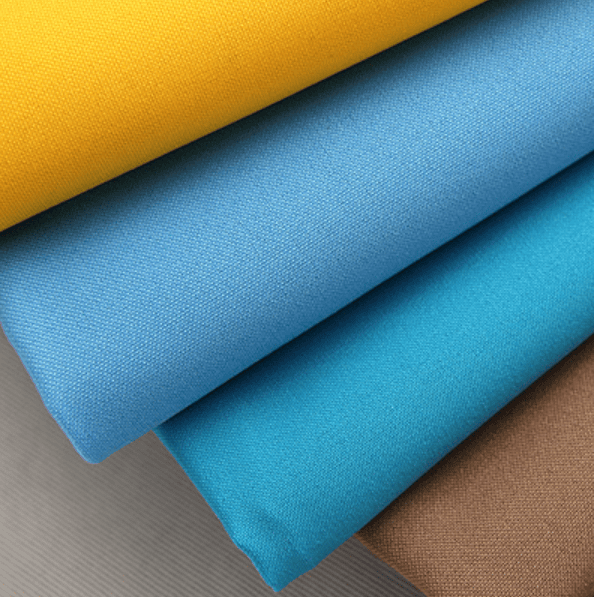


100% polyester 300D Minimat (Mini Matt) fabric developed for chair covers, event textiles, sofa covers, bags, luggage, garments, lining, and other home-textile applications. It is available in custom colors, 140–185 gsm weights, and a listed width of 57–67 in / 150–170 cm.
For first-time clients, we typically do 30% down payment and 70% before shipping via T/T; For repeat clients, we would consider L/C. Other payment terms can be negotiated.
Payment methods for buying samples:

This 100% polyester Minimat fabric—also searched as Mini Matt fabric—is designed primarily for chair covers requiring a practical balance of durability, appearance, easy care, and competitive bulk pricing. The source describes the material as strong, sturdy, versatile, and suitable for repeated use, making it relevant to event planners, hospitality suppliers, venue operators, chair-cover manufacturers, and home-textile producers.
Available specifications include 140–185 gsm weights, custom colors, and a listed width of 57–67 inches / 150–170 cm. Buyers may select plain-dyed fabric or discuss silver, PA, PU, or PVC-coated versions according to the intended application. Functional requirements such as waterproofing, flame retardancy, anti-static performance, tear resistance, or shrink resistance must be confirmed for the exact finish and production specification before ordering.
| Parameter | Available Product Information | Buyer Confirmation |
|---|---|---|
| Product | Custom-color polyester Minimat / Mini Matt fabric | Developed primarily for chair covers, with additional listed uses |
| Material | 100% polyester | Confirm whether a composition declaration or test report is required |
| Source-listed density/yarn reference | 300D | The original page lists 300D under “Density.” Confirm the exact warp-and-weft yarn specification and fabric construction before ordering |
| Weight | 140–185 gsm | Confirm target weight and acceptable tolerance |
| Width | 57–67 in / 150–170 cm | These listed inch and centimeter ranges are not exact equivalents; confirm nominal and usable width |
| Color | According to the customer’s requirements | Lab-dip approval is recommended before bulk dyeing |
| Technique and finish options | Plain dyed; silver; PA, PU, or PVC coated; or plain-dyed fabric without coating | Optional finishes must not be treated as standard features |
| Source-listed features | Waterproof, flame retardant, anti-static, tear-resistant, and shrink-resistant | Availability and performance may depend on the selected finish; confirm the test method, target result, and supporting documents |
| Primary application | Chair covers | Particularly relevant to event, hospitality, banquet, wedding, and venue programs |
| Other listed uses | Bags, bedding, lining, garments, home textiles, sofas, and luggage | Sample and test the selected construction for the intended end product |
| MOQ | 2,000 meters per color | Confirm whether sample quantities or trial orders are available |
| Lab-dip time | Normally 3–5 days | Applies to color development |
| Plain-color approval sample | Normally 7–10 days | Timing may depend on the requested specification |
| Bulk-production lead time | 3–20 days | Confirm after color, finish, quantity, and sample approval |
| Reported daily output | Up to 150,000 meters | Scheduling depends on the final specification and current production plan |
| Reported monthly capacity | More than 3 million meters | Confirm capacity allocation for the required construction and delivery window |
| Standard roll packaging | 50, 100, or 200 meters per roll | Other packing details may be customized |
| Source-listed container reference | Approximately 100,000 meters per 20GP and 200,000 meters per 40GP “as usual” | Actual loading depends on roll length, width, weight, packing method, and container limits |
| Payment | T/T: 30% advance payment and 70% upon receipt of a copy of the bill of lading | Confirm final terms on the proforma invoice |
| Pricing | Determined by quantity and quality; the source refers to three online quantity tiers, with more favorable pricing at higher quantities | Request a current quotation for the final specification |
| Unit conversion | 1 yard = 0.9144 meter | Retained from the original product information |
| Model or SKU | Not stated | Identify orders by confirmed composition, weight, width, color, finish, and approved sample |
| Shipping method | Not stated in the product description | Confirm the available shipping method, port, freight terms, and delivery destination |
The confirmed fiber composition is 100% polyester. The original specification places “300D” in the density field, but 300D is a denier-style yarn reference rather than a complete fabric-density description. Buyers should therefore confirm the exact warp yarn, weft yarn, weave or construction, and thread density if these details are important to cutting efficiency, strength, appearance, or performance.
The 140–185 gsm range allows buyers to select a lighter or more substantial version according to the required drape and structure. For chair covers, the approved weight should be tested on the actual chair shape: a lighter version may drape more easily, while a heavier version may provide greater visual coverage and body.
Plain-dyed versions can provide a solid, understated surface suitable for many event themes and hospitality environments. Optional silver, PA, PU, or PVC-coated versions may change the surface appearance, hand feel, drape, air permeability, laundering behavior, and sewing response. Confirm which side is coated and approve a physical sample before bulk production.
The existing product description characterizes the fabric as strong, sturdy, durable, versatile, and easy to care for. These are descriptive product claims rather than quantified laboratory results. Buyers with defined performance requirements should communicate the relevant test method and acceptance criteria before sampling.
Chair covers are the principal application identified for this Minimat fabric. Its source-described sturdy handle and durable construction can help create covers with a clean, secure appearance for wedding venues, banquet halls, hotels, restaurants, conferences, and corporate events.
For reusable or rental chair covers, buyers should evaluate opacity, seam strength, dimensional stability, colorfastness, stain-release requirements, and appearance after laundering. Test the selected weight on the actual chair model because fit, drape, corner definition, and stress around the seat and backrest depend on the pattern as well as the fabric.
Plain-dyed fabric may be preferable when soft drape and uncomplicated care are priorities. A coated version may be considered when the project requires a different surface effect or added functional performance, but coating can also affect flexibility, breathability, seam behavior, and washing conditions.
The fabric’s custom-color availability and solid appearance can support coordinated hospitality or event-decoration programs. Potential products include decorative chair coverings, venue panels, removable sofa coverings, and other sewn décor items.
Color approval is especially important when the fabric must coordinate with table linens, curtains, branding, flowers, or venue interiors. Confirm color under the intended lighting and request batch-control requirements where multiple production lots must match.
Sofa and home-textile uses are listed in the source. The 140–185 gsm range may provide useful body for removable decorative covers and other sewn home-textile products.
For upholstery-adjacent or high-contact applications, buyers should confirm abrasion resistance, pilling, seam slippage, colorfastness to rubbing, cleaning method, and dimensional stability. The product should not be represented as upholstery-grade solely because “sofa” appears among its listed uses.
Bags and luggage are included in the original application list, and the product page also associates the fabric with purses and totes. Plain-dyed or coated versions may be evaluated for lightweight bag panels, organizers, promotional bags, linings, or decorative components.
The source-listed tear-resistant and waterproof features may be commercially relevant, but no test methods, ratings, or coating-performance values are provided. Bag and luggage buyers should test tear strength, tensile strength, seam performance, coating adhesion, abrasion resistance, water resistance, and hardware compatibility for the selected specification.
Garment and lining applications are listed, while the product tags associate the fabric with coats and jackets, suits, industrial wear, military clothing, sleepwear, and outdoor products. These should be treated as conditional applications rather than proof that one standard version meets every garment requirement.
At 140–185 gsm, the fabric may feel more substantial than a lightweight conventional lining. Designers should evaluate hand feel, drape, breathability, skin comfort, opacity, seam response, and wash care before approving it for a garment.
If flame-retardant, anti-static, waterproof, or other protective performance is required for workwear or specialist clothing, communicate the exact market, end use, standard, test method, and target result before sampling. The source does not provide certified protective-performance grades.
Bedding is included in the original use list. Depending on the chosen finish and hand feel, the fabric may be evaluated for selected decorative or supporting components. Because the page does not state softness, breathability, skin-contact safety, or bedding-specific test results, buyers should approve a sample for the exact component rather than assuming suitability for direct-contact bed linen.
The product’s attached page tags include outdoor, tent, umbrella, footwear, and toy applications. These uses require application-specific evaluation. Waterproofing, flame behavior, weathering, UV resistance, hydrostatic pressure, coating adhesion, safety, and restricted-substance requirements are not quantified in the source.
The page also carries a sun-protective-clothing tag, but no UPF value or UV test result is supplied. Do not market the fabric as sun-protective unless the final specification has been tested to the buyer’s required standard.
Custom colors are available according to buyer requirements. The source also offers plain-dyed and optional silver, PA, PU, or PVC-coated versions. OEM service can be evaluated according to the project, and logo customization may be available depending on the buyer’s request. Confirm whether the logo will be applied to the fabric, packaging, label, or finished product.
The standard MOQ is 2,000 meters per color. Sample-order quantity and sample charges are not stated and should be confirmed before ordering.
The source provides the following timing:
Production timing begins only after the required specifications, color, finish, sample, quantity, payment, and delivery schedule have been confirmed.
The source reports daily output of up to 150,000 meters and monthly production capacity exceeding 3 million meters. Buyers with large or phased programs should confirm current capacity allocation and whether the same approved construction can be maintained across multiple lots.
Standard packaging may use rolls of 50, 100, or 200 meters. Customized packaging can be discussed. The original page gives approximate container references of 100,000 meters per 20GP and 200,000 meters per 40GP “as usual”; actual loading must be calculated from the final roll dimensions and packing method.
Payment is listed as 30% by T/T in advance and 70% upon receipt of a copy of the bill of lading. Pricing depends on the required quality and quantity, with more favorable pricing indicated for larger orders. Shipping method, port, freight terms, and sample-payment arrangements should be confirmed in the quotation.
Factory visits are welcome, and the source states that airport or station pickup may be arranged. For unit planning, 1 yard = 0.9144 meter.
FabricsTrades is based in Wujiang District, Suzhou, within a concentrated textile-manufacturing and finishing region. In addition to operating its own four-way-stretch fabric factory, the company works as a fabric sourcing and product-development partner.
For Minimat programs, the team can help evaluate available constructions, coordinate dyeing or coating requirements, develop custom colors, organize samples, and assess alternative specifications through specialized supply-chain partners. Feasibility must be confirmed for each requested finish, function, MOQ, test standard, and delivery schedule.
The product page reports more than 10 years of experience with polyester taffeta, satin, Oxford, and related fabrics. It also notes customer experience in the Middle East, South America, and Europe. Buyers should provide complete project requirements so the sourcing team can identify the most appropriate production route.
For coated or waterproof Minimat programs, buyers should review chemical requirements for the destination market before confirming the finish. The EU REACH Universal PFAS Restriction may be relevant when an EU-bound product requires water-, oil-, or stain-repellent performance. A PA, PU, or PVC coating does not by itself prove either the presence or absence of PFAS. Communicate any PFAS or restricted-substance requirement before sampling and request suitable information or testing for the final color, coating, and production batch.
Buyers supplying textile products to the EU may also need to monitor the ESPR and Digital Product Passport framework. Product-specific obligations and implementation dates can vary, but buyers may need organized records covering fiber composition, supplier identity, batch traceability, chemical controls, durability information, and end-of-life data.
These resources provide sourcing context and do not establish that this fabric is certified, PFAS-free, or compliant with a particular legal or retailer requirement. Requirements vary by destination market, product category, end use, finish, and date of sale.
When necessary, ask FabricsTrades about available composition declarations, technical data, coating information, restricted-substance reports, flame-retardant or anti-static test reports, certificates, traceability records, pre-shipment inspection, or third-party testing support. Document availability depends on the final specification, production batch, testing request, and destination market.
It is made from 100% polyester. The listed range is 140–185 gsm, with custom colors and a source-listed width of 57–67 inches / 150–170 cm.
Yes. Chair covers are the product’s primary stated application, and the source describes the material as strong, sturdy, durable, and easy to care for. Buyers should test fit, opacity, seam strength, colorfastness, shrinkage, and laundering performance on an actual chair-cover sample.
Not necessarily. These features appear in the source, but the page also lists several plain-dyed and coated options. Confirm which properties apply to the selected version and specify the required test method and target result before ordering.
A lab dip normally takes 3–5 days. The source lists 7–10 days for a plain-color approval sample.
Yes, depending on the buyer’s requirements. The source also states that logo customization can be discussed.
The source reports daily output of up to 150,000 meters and monthly production capacity of more than 3 million meters. Confirm current capacity for the required weight, width, color, finish, and delivery schedule.
The listed bulk-production time is 3–20 days. Final timing depends on specification confirmation, color and sample approval, quantity, production scheduling, and payment.
Yes. Factory visits are welcome, and airport or station pickup may be arranged.
Pricing is based on the required quality and order quantity. The source refers to three online quantity tiers and states that larger quantities receive more favorable pricing. Request a current quotation for the exact specification.
One yard equals 0.9144 meter.
The listed MOQ is 2,000 meters per color. Confirm sample availability, sample charges, and any trial-order options separately.
The product page lists 30% payment by T/T in advance and 70% upon receipt of a copy of the bill of lading. Final terms should be confirmed in the quotation and proforma invoice.
For an accurate quotation or sample evaluation, provide the intended application, required weight, confirmed width, color, plain-dyed or coated finish, functional requirements, quantity per color, packaging, destination market, testing or documentation requirements, and target delivery date.
Contact FabricsTrades to request a quotation, lab dip, approval sample, available technical or compliance documents, third-party testing support, or an evaluation of a custom Minimat fabric specification.



Error: Contact form not found.